The best time to visit the Philippines depends on more than choosing between the dry and rainy seasons. December to April is the standard recommendation, and it is broadly useful. But weather varies by region, while the months with the clearest skies can also bring the highest prices, largest crowds and greatest pressure on transport.
The Philippines rewards travellers who plan around tradeoffs rather than searching for one perfect month. Calm seas may come with crowded islands. Lower prices may come with disrupted plans. Clear skies may arrive with exhausting heat. The official PAGASA climate guide explains why conditions cannot be reduced to one national calendar.Table of Contents
Why the Standard Advice Is Not Enough
Why the Standard Dry-Season Advice Is Incomplete
Standard advice assumes one weather system and one kind of trip. The Philippines has neither. A resort stay in Boracay, a ferry-heavy route through Palawan and a surfing trip to Siargao can require different conditions during the same month.
Rainfall is only one variable. Sea conditions affect ferries and island hopping. Humidity changes how much activity a traveller can tolerate. Heavy rain can disrupt mountain roads, while clear skies can make exposed outdoor itineraries physically punishing. A month can therefore be technically dry and still be badly suited to the trip you planned.
Human movement creates a second layer. Holy Week, Christmas, New Year and major festivals place unusual pressure on airports, ports, roads and accommodation. Perfect weather means little when transport is sold out and every popular destination is absorbing the same crowd.
The useful question is not simply, “Which month has the least rain?” It is, “Which conditions does my specific itinerary need, and what disruption am I willing to absorb?”
The Two Main Seasons (And the Dangerous Hinge)
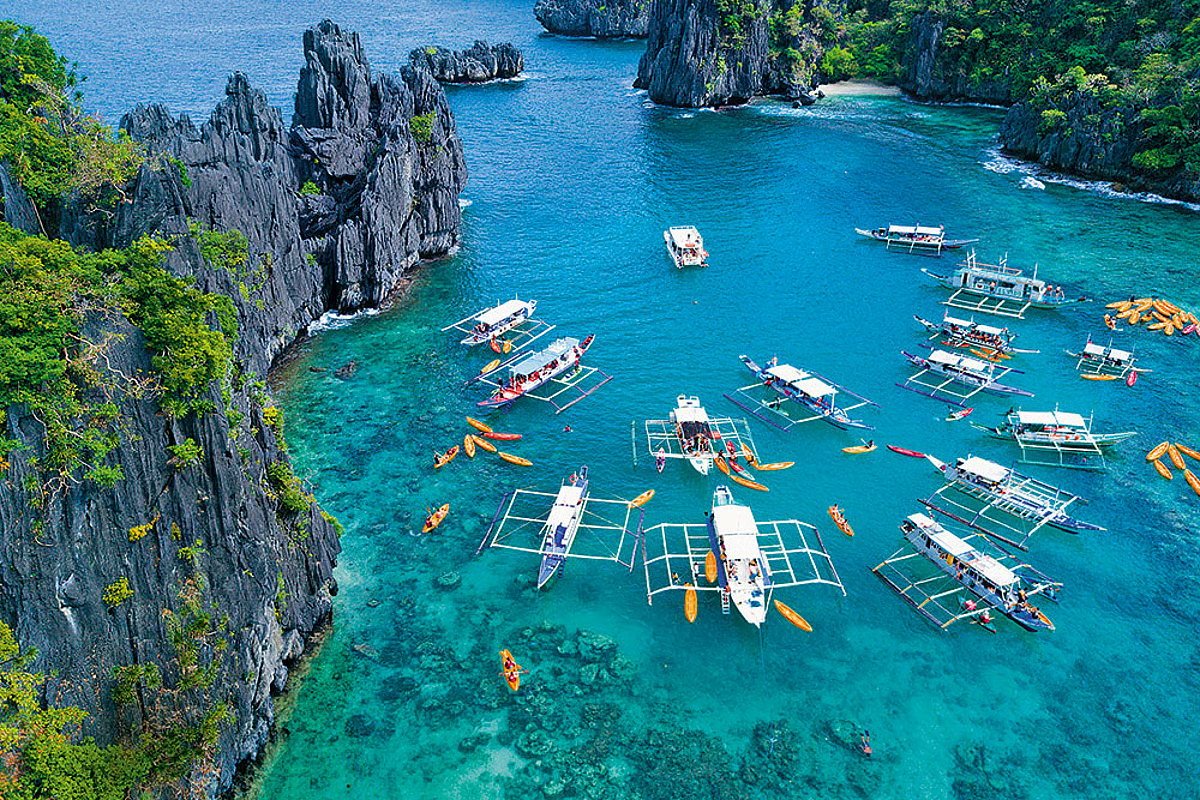
The Philippines broadly experiences a dry season and a rainy season, with a peak heat period from March to May. These national patterns are only a starting point because rainfall and weather conditions vary considerably by region. See PAGASA’s official climate guide for the country’s four recognised climate types.
Travelling between March and May requires more than sunscreen. Read our complete guide to heatstroke in the Philippines before planning a full outdoor itinerary.
Rainfall is generally lower across many western destinations. December to February brings the most comfortable conditions, while heat and humidity rise sharply from March.
Rain does not necessarily continue all day. Some destinations experience brief afternoon downpours, while others face several days of unstable weather. The main tropical cyclone period runs from July through October.
This is the hottest part of the dry season, not a separate official season. High humidity can make conditions feel more intense than the recorded temperature suggests, particularly for visitors arriving from cooler climates.
The Months You Should Avoid (Infrastructure Collapse Windows)
Weather is only half the equation. The other half is human movement. Twice a year, the Philippines experiences internal migration so large that airports, ports, roads, and hotels operate beyond normal capacity. If you are searching for the best time to visit the Philippines, these are the windows you should actively avoid.
Regional Climate Anomalies That Most Guides Ignore
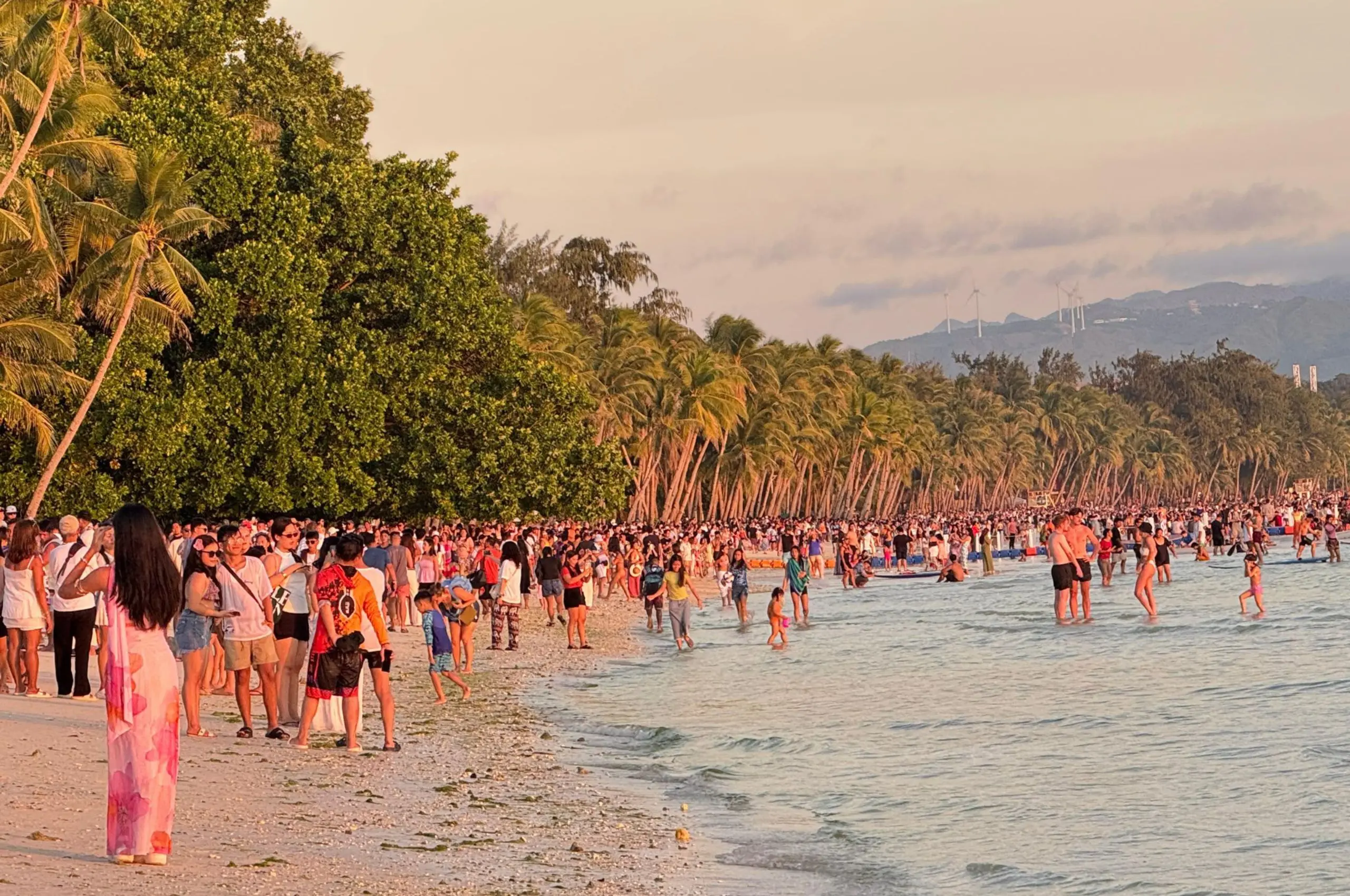
The Philippines does not have one weather pattern. It has at least four. The most important divide is between the western seaboard and the eastern seaboard. Understanding these regional differences is essential to determining the best time to visit the Philippines for your specific destination.
Best Time to Visit the Philippines MONTH
This is the unpolished month-by-month breakdown. No fluff. Each month reveals a trade-off: weather versus crowds, heat versus solitude, cost versus risk. Read carefully. Your tolerance for discomfort decides the best time to visit the Philippines for you.
The Economic Reality: How Prices Change by Season
Your budget will vary dramatically depending on when you visit. Here is the honest breakdown.
How Domestic Migration Affects Your Trip
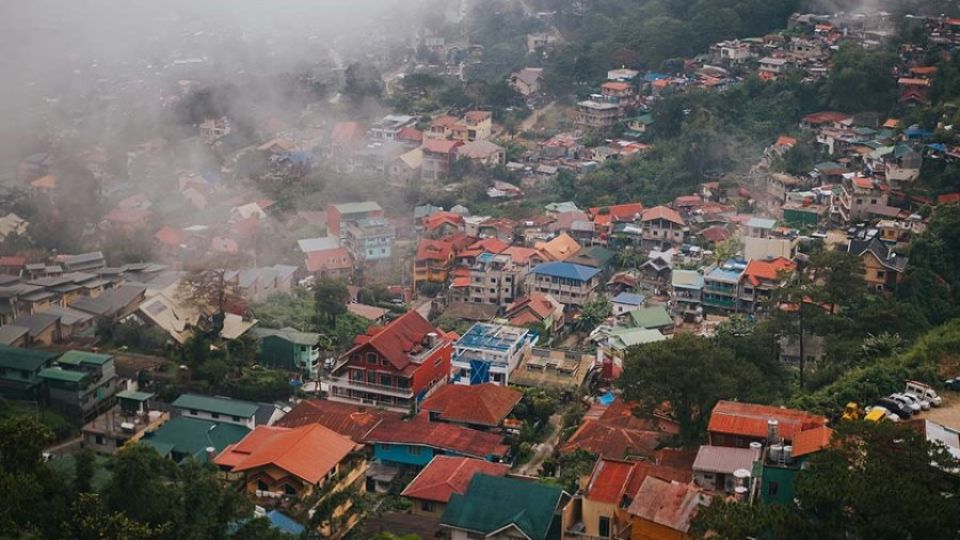
The Philippines has a unique travel dynamic that foreign tourists often misunderstand. Filipinos travel domestically in massive numbers during specific holidays. These internal migrations affect availability and pricing even for international tourists.
Christmas and New Year. As discussed, this is the largest migration. Overseas Filipinos return. Domestic workers return to provinces. Every major transport hub is saturated.
Holy Week. The second largest migration. Many Filipinos use this week for beach trips and family gatherings. Resorts in popular destinations like Boracay, Puerto Galera, and Panglao are fully booked months in advance.
All Saints Day and All Souls Day (November 1 and 2). This is a smaller but still significant migration. Families travel to their home provinces to visit cemeteries. Avoid travel on November 1 if possible. The airports and bus terminals are crowded.
Local festivals (Sinulog, Ati Atihan, Panagbenga, etc.). Each major festival draws regional crowds. Cebu becomes very crowded during Sinulog (January). Kalibo is packed during Ati Atihan (January). Baguio sees high traffic during Panagbenga (February). If you want to experience these festivals, book early and accept the crowds. If you do not, avoid those destinations during festival weeks.
Practical Tactics for Navigating Philippine Seasons
Here is the tactical advice that most guides leave out.
The mid January rule. If you can only travel once, schedule your arrival after January 10 and before February 15. This window offers the best combination of weather, manageable crowds, and reasonable prices. The Christmas crowd has left. The Holy Week crowd has not arrived. The heat has not peaked.
The 48 hour buffer rule. Never book a same day connection between an international flight and a domestic ferry or a remote island flight. If your flight from Manila to Cebu is delayed by a typhoon (common from June to November), you could miss your connection. Build a non negotiable 48 hour buffer in a major hub (Manila or Cebu) at the end of your trip, especially during rainy season.
The insurance rule. Basic credit card travel insurance often excludes weather related cancellations or has low limits for trip interruption. When traveling during typhoon season (June to November), purchase a comprehensive policy that explicitly covers cancellations due to tropical storms and Coast Guard sea travel bans. This is not an upsell. It is a necessity.
The heat management rule. If you travel from March to May, treat the midday sun as a hazard. Plan outdoor activities from 6am to 10am and from 3pm to 6pm only. Stay indoors or in shade between 10am and 3pm. Drink water before you feel thirsty. Wear a hat and loose, light colored clothing. Do not underestimate the humidity. It will drain your energy faster than the temperature alone suggests.
The Verdict: When Should You Actually Go?
The Honest Truth No Brochure Will Tell You
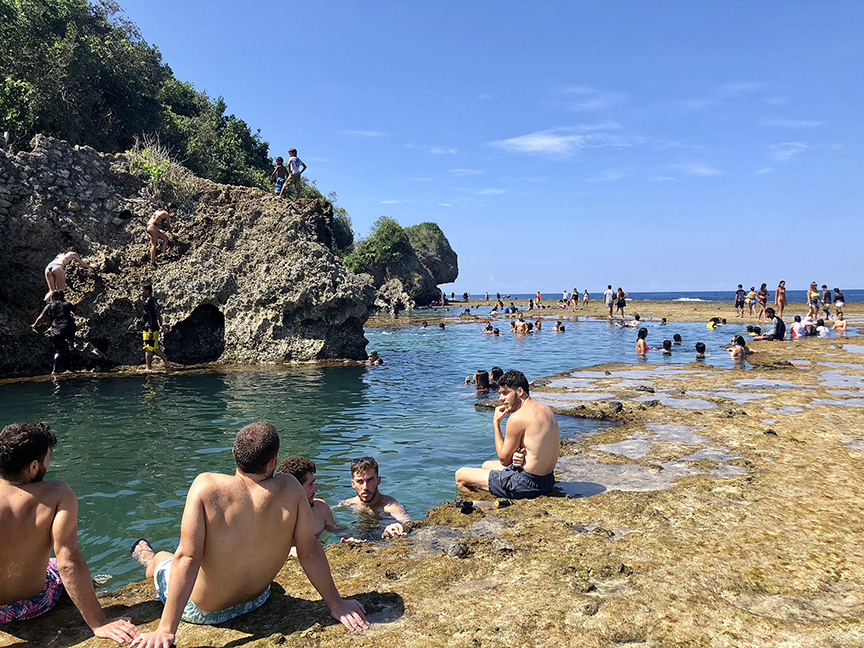
The best time to visit the Philippines is a compromise. No single month offers perfect weather, empty beaches, low prices, and no risk of cancellations. You choose what matters most to you, and you accept the tradeoffs.
The months that look perfect on a weather chart (March to May) bring extreme heat and the chaos of Holy Week. The months that offer solitude (September to October) bring the highest typhoon risk. The months that balance everything well (November, late January, February) still have occasional rain or moderate crowds.
But here is the perspective that matters. The Philippines is not a place that operates on a predictable schedule like a European capital or a Japanese railway. The ferries cancel. The rains arrive early or late. The typhoon shifts direction at the last moment. Traveling here requires a different mindset. You build buffer days. You buy insurance. You accept that some plans will change.
And when everything aligns, when the sky clears after a storm, when you find a beach with no other tourists, when the jeepney arrives exactly when you need it, the country rewards you in ways that a perfectly predictable destination never could.
That is the real best time to visit the Philippines. When you arrive with patience, flexibility, and the knowledge that you have chosen the right window for your own tolerance of heat, crowds, and uncertainty.
This article is part of our Philippines destination ecosystem. For a deeper understanding of Filipino culture, daily life, and the rhythm of movement and return, read our main Philippines page. For a focused warning on the extreme heat of March to May, read our guide to heatstroke in the Philippines. For real time weather updates, refer to the official PAGASA website before booking travel during typhoon season.