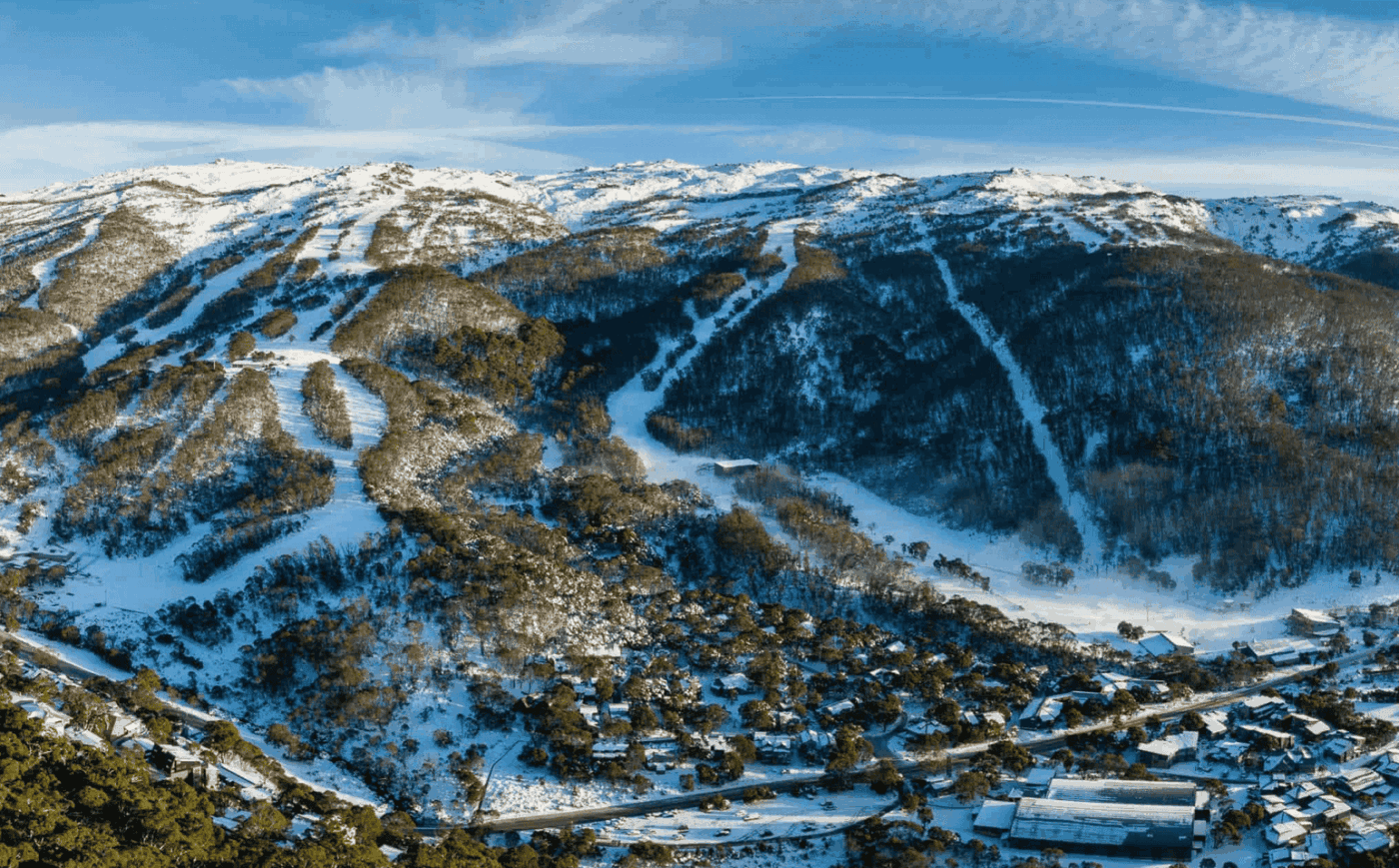
Thredbo is a ski village in the Snowy Mountains of New South Wales, built into a steep valley beneath the Ramshead Range, roughly 500 kilometres south of Sydney and 150 kilometres from Canberra. It holds Australia’s longest ski run, its highest lift-accessed terrain, and the only chairlift in the country that carries walkers directly to the summit track of Mount Kosciuszko. Most people planning a trip to the Australian Alps have never heard that last part, and it is arguably the single most interesting fact about the resort.
Most visitors to the Australian Alps default to Perisher because it is larger and better known, and that is exactly the decision Thredbo rewards people for reconsidering. The terrain here is steeper, the valley is narrower, and the village was built with more attention to atmosphere than to scale. It is not a bigger or smaller version of Perisher. It is built around a different idea of what a ski trip should feel like.
The numbers back up the reputation rather than just the marketing. Thredbo’s vertical drop is close to double Perisher’s and more than triple Charlotte Pass’s, the kind of gap that shows up on the mountain long before it shows up on a spec sheet. Understanding why that difference exists, and who it actually suits, is the difference between booking the resort that matches how you actually ski and spending a week wondering why everyone else looks more comfortable on the slopes than you do.
Table of Contents
What Is Thredbo
Thredbo sits in the valley of the Thredbo River, also called the Crackenback River, inside Kosciuszko National Park. The village runs along a single main road hemmed in by the valley walls, which gives it a compressed, alpine-town feel that flatter resorts cannot replicate. Base elevation is 1,365 metres and the top of the lift system reaches 2,037 metres, a vertical range that makes Thredbo the resort with the greatest lift-accessed vertical drop in Australia. The skiable area covers around 480 hectares across more than fifty trails, served by fourteen lifts.
The scale of the permanent town does not match the scale of the resort. With roughly 477 permanent residents against thousands of beds, Thredbo operates on a seasonal population that swells dramatically through winter and again, to a lesser extent, through the summer hiking and mountain biking season. Understanding this ratio matters for trip planning, since it means accommodation, dining and lift access are all built around peak-capacity demand rather than year-round infrastructure, and prices reflect that.
Why Thredbo Feels Different From Perisher and the Rest of the Alps
Thredbo’s identity comes directly from its topography. Because the village sits in a narrow valley rather than on an open plateau, the terrain drops steeply from the top of the lift system down to the village floor, producing longer, more consistently graded runs than the spread-out, gentler terrain typical of Perisher. The Supertrail and the Village Trail, Thredbo’s five-kilometre run from the top of Karel’s T-bar down to Friday Flat, is the longest run in Australia, and skiing it top to bottom gives a sense of continuous descent that shorter, plateau-style resorts cannot offer.
This terrain shapes the resort’s reputation. Thredbo is generally regarded as the more demanding of the major New South Wales resorts, better suited to intermediate and advanced skiers who want vertical and consequence in their runs rather than wide, forgiving beginner terrain. That does not mean beginners are excluded, Thredbo runs its own ski school and has dedicated learner areas, but the resort’s character and marketing lean toward skiers who already know what they are doing, which is a meaningfully different pitch to families weighing up Perisher’s breadth against Thredbo’s intensity.
The European Origins of Thredbo's Village Character
Thredbo’s alpine-village atmosphere, sloped lodge roofs, European-style dining, a character distinctly different from the more functional layout of most Australian resorts, is not a marketing choice. It is a direct legacy of who built the place, and the full sequence of how that happened is laid out below. What matters more than the dates themselves is why a ski village in the Australian bush ended up looking like it was transplanted out of the Tyrol.
The answer is homesickness turned into infrastructure. The people who built Thredbo were not trying to invent an Australian ski resort from a blank page, they were trying to recreate something they had already lost when they left post-war Europe to work on the Snowy Mountains Hydro-electric Scheme, arriving in a country with almost no alpine culture of its own. That is a fundamentally different design instinct to a domestic tourism operator building for a local market, and it shows in the details: the roofline, the fondue on the menu, the village square. It explains why Thredbo still reads as imported rather than homegrown nearly seventy years later, and why that imported feeling gets sold as a selling point rather than something the resort has ever tried to shake off.
Thredbo in Winter
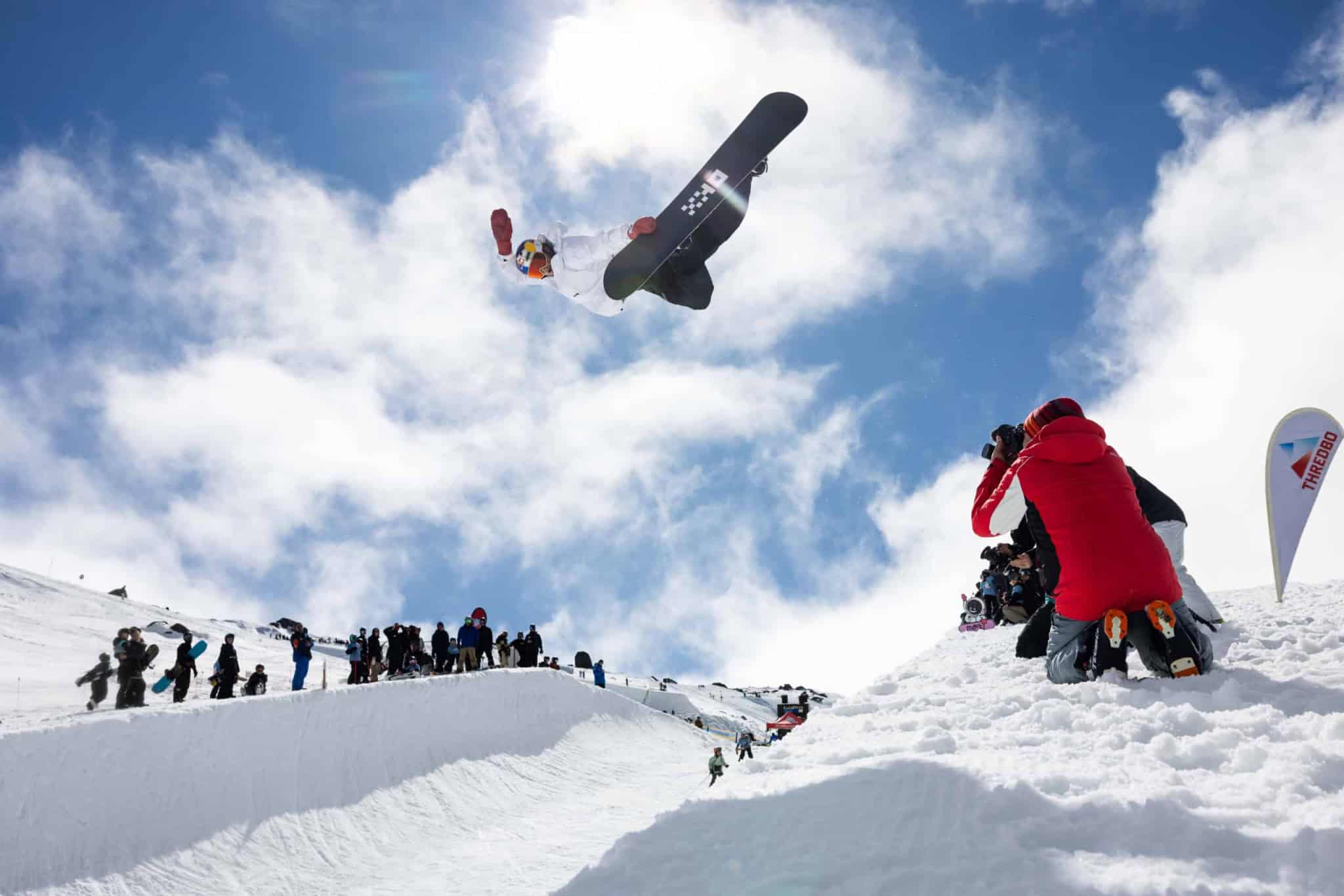
The ski season at Thredbo typically runs in line with the rest of the Australian Alps, opening in June and continuing through early October, with average annual snowfall around 2,040 millimetres recorded at the resort. Around 700,000 winter visitors pass through in a typical season, drawn by the combination of vertical terrain, the village’s restaurant and bar scene, and its reputation as the more serious option among the NSW resorts. Lift infrastructure includes the Kosciuszko Express Chairlift, Snowgums Chairlift, Merritts Gondola and Gunbarrel Express, giving access to terrain across multiple aspects of the mountain rather than a single face.
Snow reliability follows the same broader pattern affecting the whole Australian Alps system, meaning natural snowfall is supplemented heavily by snowmaking, particularly early and late in the season. Travellers booking a Thredbo trip should treat July and August as the highest-probability window for consistent natural cover, the same guidance that applies across the range as a whole.
Thredbo in Summer: Mountain Biking and Hiking
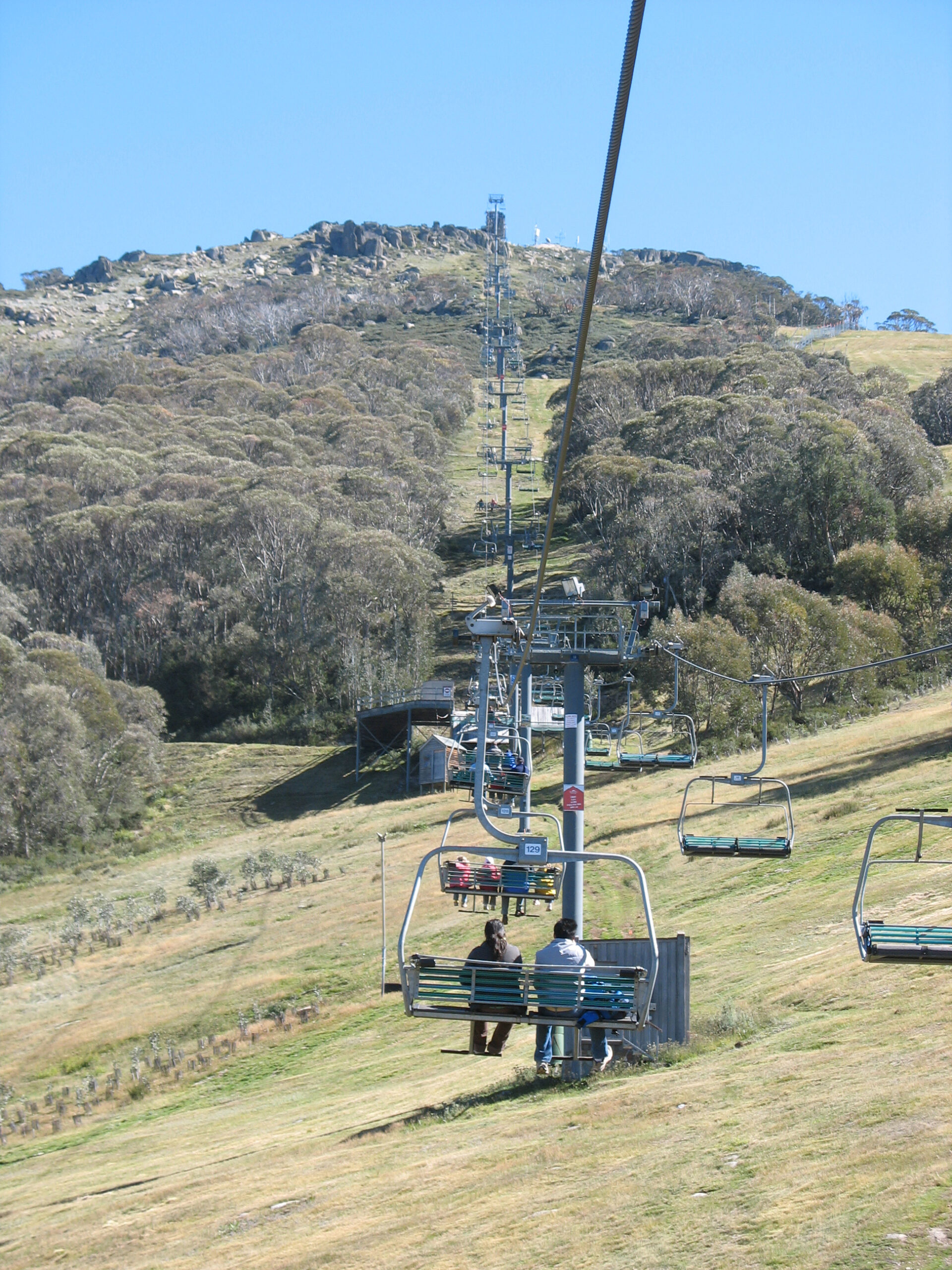
Thredbo’s summer season is not an afterthought built to fill empty beds, it is a genuine second identity for the resort. The Thredbo Mountain Bike Park is the only lift-accessed mountain bike park in Australia, giving riders access to more than forty kilometres of trail via the same chairlifts used for skiing in winter. The signature track, Cannonball Run, drops 600 vertical metres and has built Thredbo a reputation among Australian mountain bikers that rivals its winter standing among skiers.
See the full trail map and difficulty ratings on Thredbo’s official Mountain Bike Park page.
Hiking is the other major summer draw, and Thredbo’s network of self-guided trails ranges from short, family-friendly walks near the village to full-day alpine routes across the Main Range. The chairlift access that defines Thredbo’s winter terrain does the same job in summer, carrying walkers up to the alpine zone without the multi-hour climb that would otherwise be required, which is the direct lead-in to the resort’s single most distinctive feature.
The village itself stays active outside the ski season, which is unusual for an Australian alpine town. Thredbo hosts an annual blues music festival that draws a crowd well beyond the hiking and mountain biking visitor base, and the lodges and bars built in the resort’s European mould, several still carrying names and menus tracing back to the Austrian and Central European tradespeople who built the place, stay open year-round rather than shuttering once the snow melts. This is part of what separates Thredbo from resorts that effectively close down for two-thirds of the year and reopen as a ghost town once winter ends.
The Kosciuszko Summit Walk From Thredbo
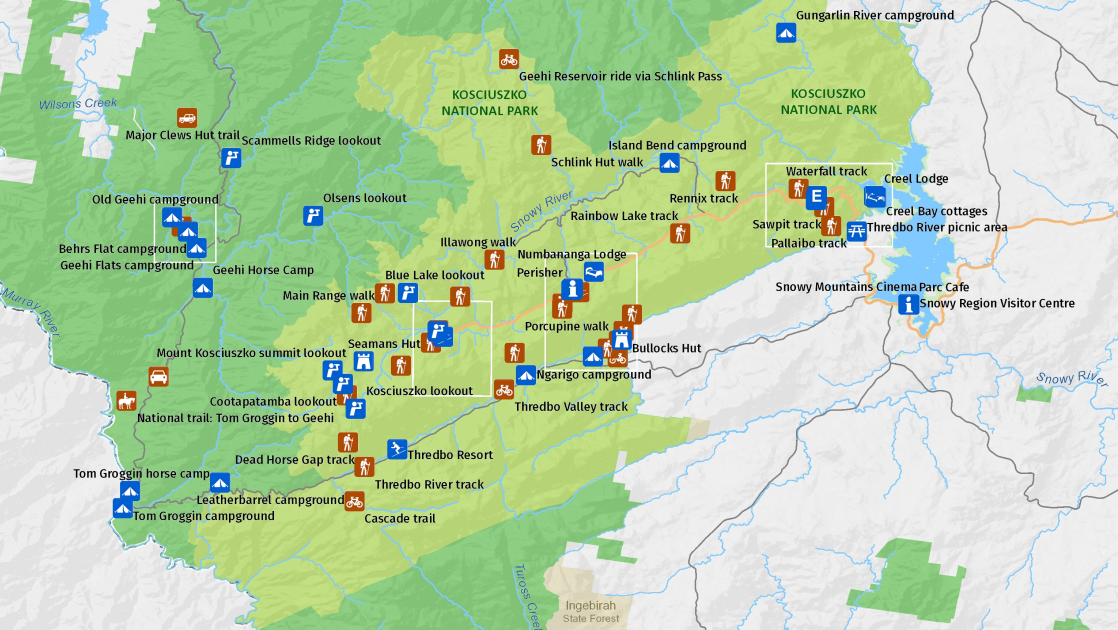
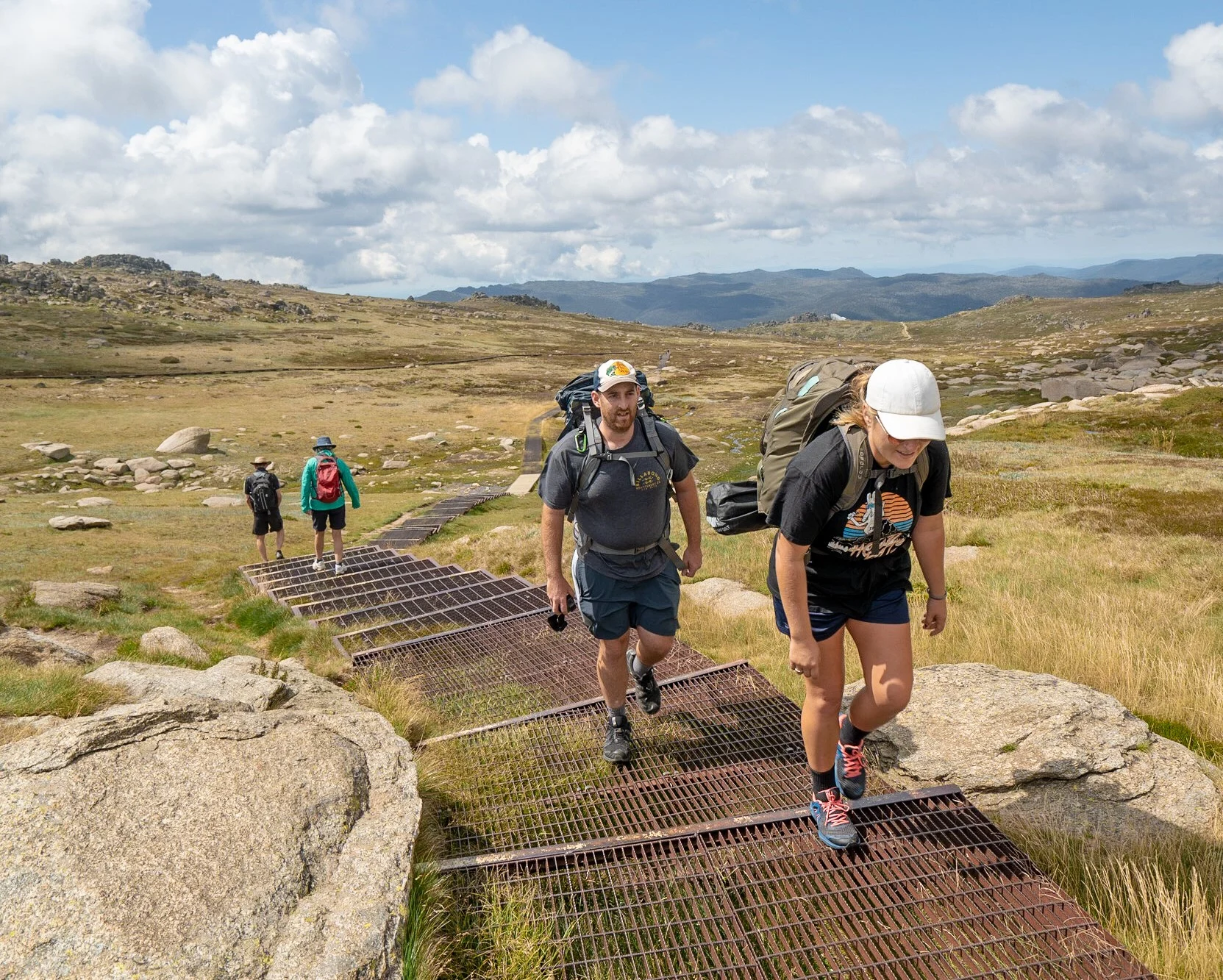
Thredbo is the only place in Australia where a chairlift takes you directly to the start of the walking track to the country’s highest point. The Kosciuszko Express Chairlift carries visitors from the village to 1,930 metres in around fifteen minutes, and from there the summit track continues past the granite outcrops of the Ramshead Range, over the headwaters of the Snowy River, and past Lake Cootapatamba before the final climb to the 2,228-metre summit. The full return walk covers 13 kilometres and typically takes four to six hours, graded as moderate rather than technical, with a steel mesh walkway protecting the fragile alpine environment for most of the route.
This access point is what separates Thredbo from every other resort in the Alps. Perisher, Falls Creek, Mount Hotham and Mount Buller all offer excellent terrain and their own hiking networks, but none of them puts a visitor within a single chairlift ride of the summit track to the highest point on the Australian mainland. For a traveller weighing up which single alpine village to base a trip around, that is a structural advantage the others simply cannot replicate.
The walk is only open in the warmer months, since the track is generally snowbound from June to October, and NSW National Parks recommends carrying water, sun protection and weather-appropriate clothing regardless of how mild conditions look at the base, since alpine weather above the treeline can shift quickly even in summer. Park entry fees apply, and hiring a personal locator beacon, available free at the Snowy Region Visitor Centre in Jindabyne, is worth doing for the Main Range extension rather than the standard return walk.
Getting to Thredbo
Thredbo is reached via the Alpine Way, accessed from Sydney by following the M5 and Federal Highway through Cooma before continuing along the Alpine Way through Berridale and Jindabyne into the village, a drive of roughly five hours covering approximately 500 kilometres. From Canberra, the nearest major city, the drive is considerably shorter, making Thredbo a realistic weekend option for Canberra-based travellers in a way it generally is not for those coming from Sydney or Melbourne. Regular bus services also run from both Canberra and Sydney during the season for travellers without a car.
Snow chains are a legal requirement for two-wheel-drive vehicles on designated sections of the approach roads during winter, specifically between June and the October long weekend, and this applies regardless of how capable the vehicle otherwise is. The same broader access logic covered in our guide to getting around Australia applies here in a more extreme form, distances are long, alternatives are limited, and weather can close roads with little notice.
Where to Stay: Thredbo Village or Jindabyne
Accommodation directly in Thredbo Village puts visitors within walking distance of the lifts, which matters enormously for a resort where the terrain itself is the main draw, but that convenience carries a significant price premium, particularly during peak winter weeks and school holidays. Jindabyne, roughly 35 kilometres away on the shores of Lake Jindabyne, offers considerably cheaper beds in exchange for a daily drive, and functions as the practical base for travellers prioritising value over ski-in convenience, the same trade-off that applies across the wider Alps region, covered in more general terms in our before you go planning guide.
For a short trip built specifically around skiing Thredbo’s terrain or walking to the summit, staying in the village removes the daily commute and the risk of road closures affecting access. For a longer or more budget-conscious trip that also takes in Perisher or Charlotte Pass, Jindabyne’s central position makes it the more flexible base.
What Travellers Get Wrong About Thredbo
The most common mistake is assuming Thredbo functions the same way Perisher does, spread out, beginner-accommodating, built around volume. Thredbo’s terrain rewards a traveller who already has some skill on skis or a board, and visitors expecting the gentler, more forgiving character of a larger plateau resort can find the steeper runs and narrower valley more demanding than anticipated.
The second mistake is treating Thredbo as a winter-only destination and overlooking its summer identity entirely. The mountain bike park and the chairlift-assisted summit walk are not minor add-ons, they are significant enough on their own to justify a visit outside ski season, often at a fraction of the cost and crowd density of the winter months.
The third mistake is underestimating how tightly Thredbo’s small permanent population and finite bed count constrain supply during peak periods. Because the village exists almost entirely to serve visitor demand rather than a resident population, prices and availability swing sharply between shoulder periods and school holidays, and booking well ahead of peak weeks is one of the more effective ways to avoid paying a premium for a compressed, crowded experience.
There is also a pattern worth naming directly. Visitor reviews of Thredbo repeat the same complaint with unusual consistency, the food is overpriced, the lift pass is expensive, the shuttle buses are packed, yet almost none of those same reviewers say they regret going. This is not really a pricing complaint. It is the cost of choosing the resort that markets itself as the serious, demanding option rather than the accessible one. People are not just paying for a lift ticket, they are paying for the version of the trip that lets them say they skied the steepest terrain in the country, and complaining about the price afterward is part of how that choice gets justified to themselves and to everyone they tell about it later.
Perspective
Thredbo is not a smaller alternative to Perisher, it is the more demanding, more vertically dramatic counterpart within the same alpine system, and its chairlift access to the Kosciuszko summit track gives it a feature no other resort in the Australian Alps can match. Anyone weighing up which village to base an Alps trip around should judge Thredbo on that specific strength rather than comparing it directly to resorts built around a different kind of terrain entirely.