
A work visa Philippines application starts with a contradiction. The country wants your capital, your skills, and your company’s regional headcount. It does not, structurally, want you to have an easier time getting a job than a Filipino would. Every document in this guide exists to resolve that contradiction, one signature at a time.
Getting a work visa Philippines employers will actually accept starts with understanding that a tourist visa, a job offer, and good intentions are not enough. Every year, thousands of foreign nationals arrive in the Philippines assuming otherwise. The Philippines regulates foreign employment through two separate government bodies that do not report to each other, using instruments that sound interchangeable but are legally distinct. Get the wrong one, or get the sequence wrong, and the consequence is not a fine. It is deportation, blacklisting, and an employer facing its own exposure with the Bureau of Immigration.
The confusion is not accidental. A work visa is an immigration status. A work permit is a labor authorization. An Alien Employment Permit is a specific DOLE-issued document that most people mistake for the visa itself. All three are needed at different points, issued by different agencies, and none of them substitute for one another. This guide breaks down every visa and permit a foreign worker in the Philippines might need, what changed in the law as recently as last year, and where the process actually breaks down for people who assume their home country’s immigration logic will transfer.
NOTE: This article has been fully revised from its original version. Everything below reflects current conditions, verified facts, and updated practical details as of this revision. Immigration and labor rules are managed by separate agencies in the Philippines and change periodically. Verify current requirements directly with the Bureau of Immigration or DOLE before applying.
Work Visa Philippines: Visa, Permit, or AEP - The Distinction That Trips Up Everyone
A work visa is issued by the Bureau of Immigration (BI) and determines whether you are legally allowed to remain in the Philippines for the purpose of employment. A work permit, in the Philippine legal context, most often refers to the Alien Employment Permit (AEP) issued by the Department of Labor and Employment (DOLE), which determines whether you are legally allowed to be employed at all, separate from your immigration status. A foreign national can, in theory, hold a valid visa and still be working illegally if the AEP lapses, and can hold a valid AEP while still being out of status if the visa side was never converted from tourist to working.
The two agencies operate independently. BI cares about your right to be in the country. DOLE cares about whether your employment displaces a Filipino worker who could do the job instead. This is the structural tension that defines almost every rule in this guide: the Philippines needs foreign capital, foreign expertise, and multinational headcount to function competitively, but its labor policy is built around protecting domestic employment first. Every foreign worker becomes, procedurally, a test case for whether their presence is necessary.
Immigration status
Issued by the Bureau of Immigration. Governs your legal right to stay in the country for employment purposes. Examples: 9(g), 47(A)(2), Special Non-Immigrant (ROHQ).
Labor authorization
Issued by DOLE. Confirms no qualified Filipino worker is available for the role and that your employment clears the government's labor market tests. Required before or during 9(g) processing.
SWP and PWP
Issued by BI for narrow, time-boxed situations: short engagements (SWP) or bridging employment while a full visa is pending (PWP). Neither replaces a work visa long-term.
How the Work Visa Philippines System Actually Works
Understanding the system requires separating it into three layers: the immigration layer (BI, governing entry and stay), the labor layer (DOLE, governing whether the job itself is permissible), and the incentive layer (PEZA, BOI, and other investment promotion agencies, which grant faster or more favorable treatment to foreign personnel of registered enterprises). Most foreign workers only ever interact with the first two. Executives of PEZA or BOI-registered companies interact with all three.
This redundancy is often read by newcomers as dysfunction. It is closer to institutional design. Cross-agency verification is the Philippine bureaucracy’s structural answer to a country with limited enforcement capacity and a long history of foreign labor arrangements that bypassed local hiring altogether. The paperwork is not there to slow you down for its own sake. It exists because no single agency trusts another agency’s approval to be sufficient proof of legitimacy on its own, and because the Labor Code’s underlying premise, unchanged since 1974, is that a foreign hire must be justified, not assumed.
What makes the current period distinct is that the justification bar keeps rising while the incentive to attract foreign capital and talent has not fallen. That is the contradiction sitting underneath every rule change described in this guide. DOLE tightened the Labor Market Test, added an Economic Needs Test, and made skills transfer mandatory for incentivized employers, all while PEZA and BOI continue actively courting the same foreign executives and specialists those rules are designed to scrutinize. Neither position is wrong on its own terms. Labor protection and investment promotion are both legitimate state interests. But a foreign worker or employer navigating this system is, in effect, standing in the middle of two government objectives that were never fully reconciled with each other, and the paperwork is where that lack of reconciliation becomes visible.
The Alien Employment Permit: Foundation of Legal Work Authorization
The Alien Employment Permit is a labor authorization issued by DOLE under Article 40 of the Labor Code of the Philippines, which states that no foreign national may be admitted for employment purposes without a permit issued by the Secretary of Labor or an authorized representative. It confirms that a specific foreign national is cleared to hold a specific position with a specific employer, after DOLE has determined that no qualified, willing, and available Filipino worker exists for that role. Take a Canadian operations manager hired by a Cebu-based BPO: her employer can secure her 9(g) visa in full and still have her working illegally on day one if the AEP filing lags behind, because the two approvals run on separate clocks. The current requirements and application checklist are maintained by DOLE’s regional AEP portal, which should be checked directly before filing since regional offices update their document lists periodically.
What Changed in 2025: The New AEP Rules
In January 2025, DOLE issued Department Order No. 248, Series of 2025, replacing the prior framework and taking effect that February. This is the single most consequential regulatory shift in Philippine foreign employment policy in nearly a decade, and it is the part most existing guides online have not caught up on. A detailed legal breakdown of the order is available from ACCRALAW’s immigration practice. Three changes matter most for anyone actually filing.
Labor Market Test, expanded
A newspaper ad no longer suffices. The vacancy must also run on PhilJobNet and the local Public Employment Service Office, valid 45 days, with the AEP filed within 15 days of contract execution.
Economic Needs Test, new
A discretionary layer on top of the Labor Market Test. DOLE regional offices can now deny an AEP on national-interest grounds even when the vacancy test is technically satisfied.
Understudy or Skills Development Program
Incentivized employers must train at least two Filipino understudies per foreign hire, with progress reports filed to DOLE. Failure is now standalone grounds for AEP revocation.
AEP Validity, Renewal, and Exemptions
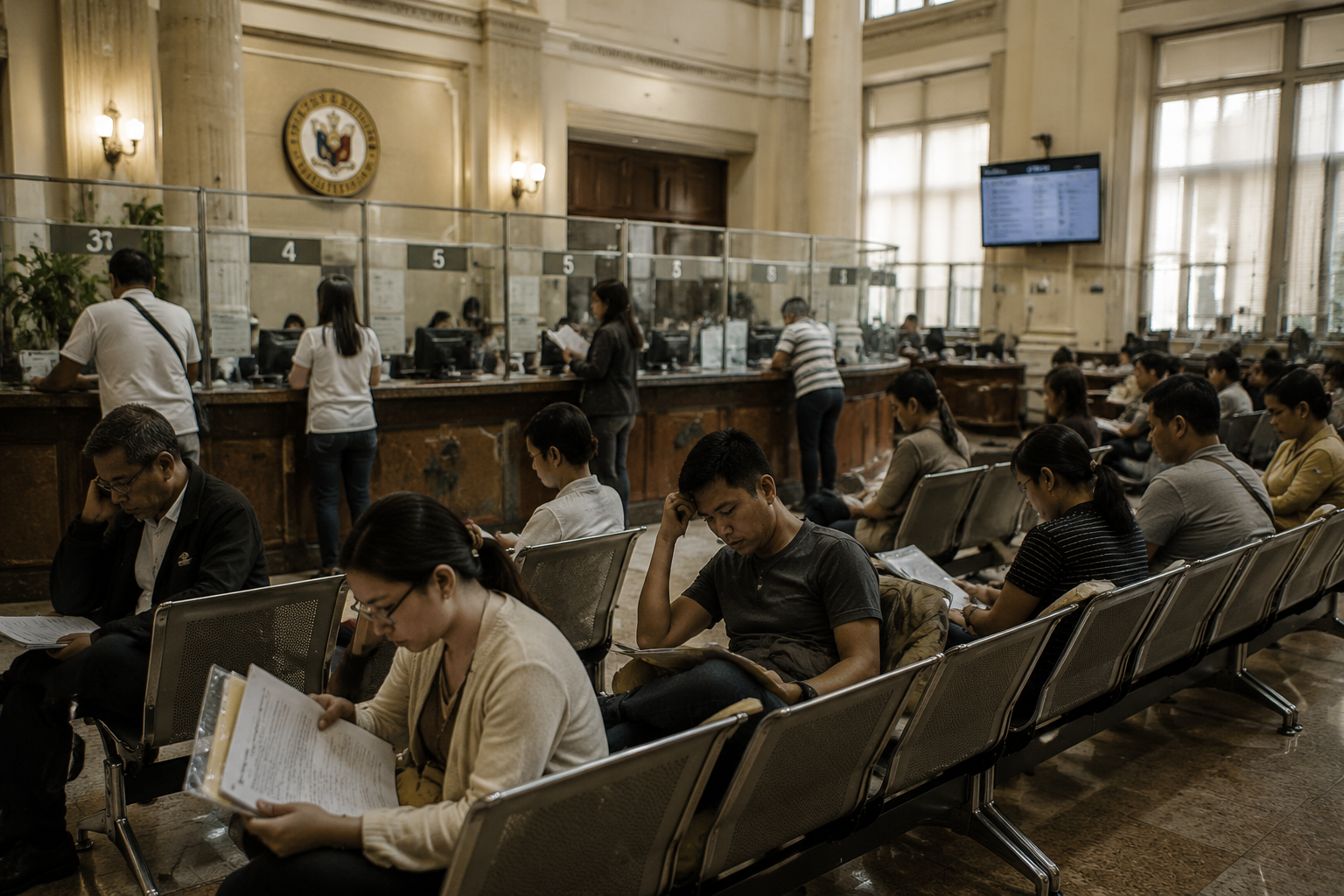
An AEP is currently valid for one year from issuance, or the duration of the employment contract, whichever is shorter. This is a change from the older framework many still-circulating guides describe, where permits could be issued for up to five years at once. Renewal applications must be filed at least 15 days before expiry, and for covered employers, renewal now requires the Understudy or Skills Development Program’s accomplishment report. Certain categories are exempt from the AEP requirement altogether, including dependent spouses of diplomatic personnel, accredited officials of international organizations, embassy staff, holders of resident visas, and recognized refugees or stateless persons. Under the new rules, this exemption is no longer automatic in practice: exempt individuals must now formally secure an AEP Certificate of Exemption from DOLE, where previously this was optional documentation.
Work Visas: Which One Applies to You
Once employment is authorized on the labor side, the immigration side determines how you legally remain in the country. The visa that applies depends on your role, your employer’s registration status, and how long the engagement runs.
Pre-Arranged Employee Visa
The standard work visa for foreign employees of Philippine-registered companies. Multiple entry and exit privileges for the visa’s duration, which should match the employment contract.
- Requires an approved AEP as a prerequisite
- Total processing (visa plus AEP) typically runs 2–3 months
- A Provisional Work Permit can bridge the gap if work must start earlier
Missionary Visa
For foreign nationals engaged in missionary, social, rehabilitation, or medical mission work, sponsored by a locally registered organization. Applicant must not receive local income.
- Valid for 1 year, renewable while the engagement continues
- Processing typically takes 1–2 months
Special Non-Immigrant Visa
Created under Section 47(A)(2) of the 1940 Immigration Act, this covers investors and employees of PEZA or BOI-registered enterprises, and oil-drilling industry personnel. Company-specific and capped at under 5% of total workforce per employer.
- Valid for the shorter of the contract term or 1 year
- Exempt from the ACR I-Card requirement
Regional Headquarters Visa
Issued under E.O. 226 as amended by R.A. 8756, for executives of regional or area headquarters and regional operating headquarters of multinational companies, plus spouse and unmarried children under 21.
- Valid for 3 years, tied to the employment contract
- Must earn at least USD 12,000 annually, paid by the headquarters
- Exempt from AEP, ACR I-Card, ECC, and most clearance fees; 15% withholding tax on compensation income
PEZA and BOI: The Fast Lane, With Conditions Attached
Companies registered with the Philippine Economic Zone Authority (PEZA) or the Board of Investments (BOI) occupy a distinct position in this system. They are the enterprises the government most wants to attract, which is why several of the visa categories above, the 47(A)(2) and the ROHQ visa among them, exist largely to serve their foreign personnel. But registration status is also precisely why PEZA and BOI-registered employers face the sharpest end of the 2025 Economic Needs Test: the New AEP Rules explicitly name incentivized industries as a factor the DOLE-RO must weigh, which means the same registration that unlocks faster visa categories also invites closer scrutiny of whether a given foreign hire is developing local capability or substituting for it. A PEZA-registered BPO hiring a foreign operations executive faces a different evidentiary bar than a domestic retailer hiring the same role, precisely because the state expects more skills transfer in exchange for the incentives it grants.
Two other categories intersect with employment without being work visas in the strict sense. The Special Investor’s Resident Visa (SIRV) is fundamentally an investment-based residence visa, but holders who take on employment are still subject to AEP requirements unless otherwise exempted. The Special Resident Retiree’s Visa (SRRV) under the Philippine Retirement Authority is not a work visa at all; SRRV holders who wish to work still need to secure the applicable work visa and AEP separately, on top of their retiree status.
The 9(d) Treaty Trader or Treaty Investor Visa: A Narrower Door
Section 9(d) of the Immigration Act creates a visa most guides skip entirely because it only applies to three nationalities: citizens of the United States, Japan, and Germany, the only countries with a bilateral treaty of commerce and navigation with the Philippines that supports this category. It covers two profiles: treaty traders carrying on substantial trade between their home country and the Philippines, and treaty investors developing and directing an enterprise they, or their employer, have invested substantial capital into. Employees of a treaty investor can also qualify, but only if they share the same nationality as the company’s majority shareholder, a detail that catches out otherwise-qualified applicants working for a US-owned company if the applicant themselves holds a different passport.
The 9(d) visa is valid for one year, renewable, with spouse and unmarried children under 21 eligible to enter on the same visa and validity period. It still requires an AEP for the employment component, plus a Bureau of Immigration clearance certificate and documentation proving the trade volume or capital investment involved. Full requirements are published on the Bureau of Immigration’s 9(d) page. For nationals of the three treaty countries running a genuine trade or investment operation, it is often a cleaner fit than the 9(g), because it is built around the commercial relationship rather than a straightforward employer-employee contract. For anyone outside those three nationalities, it is not available regardless of investment size, and the 47(A)(2) or standard 9(g) route applies instead.
Short-Term Work Authorization: SWP and PWP
Not every foreign engagement needs a full 9(g) visa and AEP. For short, defined assignments, the Bureau of Immigration issues two narrower instruments, and confusing them is one of the most common compliance failures foreign workers make.
Special Work Permit
For genuinely short-term, defined engagements: consultants, performers, athletes, coaches, journalists, film crews, and service suppliers not drawing a Philippine-sourced salary. Governed by BI Operations Order JHM-2019-008. Full current requirements are listed on the Bureau of Immigration’s official SWP page.
- Initial validity 3 months, one extension to a 6-month maximum
- Non-renewable beyond 6 months; convert to 9(g) and AEP if the engagement continues
- Manual laborers are excluded under BI policy
- Holder’s underlying status remains tourist throughout, so tourist visa extensions may still be needed separately
Provisional Work Permit
A bridge permit for foreign nationals on tourist visas who need to start working while their 9(g) visa or AEP is still being processed.
- Valid up to 3 months, or until the 9(g) visa is issued, whichever comes first
- Extendible until the underlying work visa is approved
- An AEP is not required to obtain a PWP; proof of a pending AEP application is sufficient
The practical rule: SWP is for work that is genuinely temporary and will end. PWP is for work that is genuinely permanent but the paperwork hasn’t caught up yet. Using an SWP as a stand-in for a role you intend to keep indefinitely is the mistake that most often surfaces during a BI audit or a routine renewal check.
The Digital Nomad Visa: What's Confirmed and What Isn't
The Philippines created a legal pathway for a Digital Nomad Visa through Executive Order No. 86, signed in April 2025 and took effect that May, directing the Department of Foreign Affairs, the Bureau of Immigration, and the Department of Information and Communications Technology to jointly operationalize a visa for foreign nationals working remotely for employers or clients based outside the Philippines. The full order is published on the Official Gazette. The stated framework allows an initial stay of up to one year, renewable for a second year, with multiple-entry privileges and no permission to take local employment or draw Philippine-sourced income. One condition worth flagging specifically: the order builds in a reciprocity requirement, meaning the applicant’s home country must offer a comparable remote-work visa to Filipino citizens, which narrows eligibility more than most summaries of the program mention. A freelance designer from a country with no such visa on offer, for instance, cannot rely on this pathway no matter how clean her income documentation is.
Until specific figures are confirmed through official channels, remote workers who want to be in the Philippines legally without local employment should treat the standard tourist visa, extendable well beyond the initial 30 days for most nationalities, as the fallback option. That route has its own rules and penalties for overstaying that are worth understanding before relying on it, and it does not confer resident status or the tax clarity the Digital Nomad Visa is intended to provide.
Tax Obligations That Come With the Visa
A work visa and an AEP do not exempt anyone from Philippine tax registration. Every foreign national earning Philippine-sourced income must secure a Taxpayer Identification Number (TIN) from the Bureau of Internal Revenue, using BIR Form 1902 for employees, and register with the Revenue District Office covering the employer’s location. The RDO is typically stricter with foreign applicants and may request additional proof, such as the passport page showing the date of arrival, on top of the standard requirements.
How much tax gets withheld depends entirely on a single number: days physically present in the Philippines within the calendar year. A foreign national present for more than 180 days becomes a Non-Resident Alien Engaged in Trade or Business (NRAETB), taxed on net Philippine-sourced income at the same graduated rates as Filipino citizens, currently 0% to 35% depending on the income bracket. Stay 180 days or less, and the classification becomes Non-Resident Alien Not Engaged in Trade or Business (NRANETB), taxed at a flat 25% on gross Philippine-sourced income, withheld at source, with no annual return required for that income. Most standard 9(g) work visa holders, by the nature of a full-time contract, cross the 180-day threshold within their first year and fall under the graduated NRAETB rates rather than the flat 25%.
The employer, not the employee, carries the withholding obligation. This is one of the few points in the process where the paperwork burden shifts decisively toward the company rather than the individual, and it is also where DOLE’s Understudy Training Program requirements and BIR’s withholding obligations start to overlap: a company under-reporting a foreign hire’s actual role to minimize either compliance burden is exposed on two fronts at once, not one.
Bringing Dependents: Spouse and Children
The core work visa Philippines requirements run through two agencies in a specific order, and the most common cause of delay is trying to shortcut that order.
Business permit secured
The employer must already hold its local city or municipal business permit. AEP processing cannot begin until this exists.
Labor Market Test
Job vacancy published in a newspaper of general circulation, on PhilJobNet, and with the local PESO or Job Placement Office, containing DOLE’s mandated content fields.
AEP filed
Filed at the DOLE Regional Office with jurisdiction over the jobsite, 15 days after publication, within 15 days of the employment contract’s execution.
9(g) visa filed with BI
Filed once the AEP is approved or pending, alongside passport, contract, and company documents. A PWP can be requested if work needs to start immediately.
Documents fall into two sets. On the employee side: a completed AEP application form, passport bio-page and latest admission stamp, two 2×2 photos taken within six months, and a notarized employment contract specifying position, salary, duration, and duties. On the employer side: SEC or DTI registration, the Mayor’s or Barangay business permit, and, for PEZA or ecozone-registered companies, the relevant zone authority certification. Regulated professions or covered industries add the Understudy Training Program documentation described above.
☕ If this article saved you a few hours of research, helped answer a lingering question, or made sense of something that wasn't entirely clear before, consider buying me a coffee. It helps keep the guides coming, the curiosity well caffeinated, and the occasional rabbit hole worth exploring.
☕ Buy Me a CoffeeWork Visa Philippines Requirements: Documents, Agencies, Timelines
Most compliance failures are not fraud. They are the result of misunderstanding basic work visa Philippines requirements by applying a home-country mental model to a system that does not work the same way.
Working on a tourist visa
An Australian carpenter flew in on a 30-day tourist stamp to “help set up” a resort build for a friend. No visa covers that, casual or not, and BI does not treat a favor as an exception.
Treating the AEP as optional paperwork
A German engineer’s 9(g) cleared months before his AEP did. He started work anyway, assuming one approval covered both. It didn’t, and the gap became the employer’s problem during a routine BI check.
Confusing SWP with PWP
A UK trainer flown in for a six-week rollout used a PWP meant for pending long-term visas instead of the SWP built for exactly her situation. Wrong permit, wrong signal to BI about her actual intent.
Letting renewals lapse
AEP renewal must be filed 15 days before expiry. A lapsed AEP means the employment itself becomes unauthorized, even if the visa is still technically valid.
Changing employers without a new filing
An American marketer moved to a near-identical role at a competitor and assumed her existing AEP carried over. It didn’t. A new employer means a fresh Labor Market Test from zero.
Overstaying while “waiting on paperwork”
Processing delays are common, but they do not pause your visa’s expiry clock. Extensions must be filed proactively, not assumed.
Assuming a spouse’s visa includes work rights
A Japanese executive’s wife arrived on his derivative visa and took a part-time teaching job, assuming residency covered it. It didn’t. She needed her own AEP, filed as if she had no connection to his approval at all.
Ignoring the Understudy Training Program until renewal
A PEZA-registered firm skipped the training documentation on its foreign plant manager’s first AEP. At renewal, DOLE asked for progress reports that never existed, and the renewal stalled.
Renewing, Converting, and Downgrading Your Status
Three distinct actions get conflated under the general label of “renewing a visa,” and each has a different trigger:
- Renewal extends an existing visa or permit under the same terms, typically because the underlying employment contract continues past the current validity period.
- Conversion changes the visa category entirely, most commonly a tourist visa converting to a 9(g) once employment is secured, or a PWP or SWP converting to a full work visa once the engagement extends past its original scope.
- Downgrading happens when employment ends before the visa’s validity expires, at which point the former employee must either secure new sponsorship, convert back to tourist status, or depart, since the visa itself is tied to the job, not to the individual independently.
The AEP does not survive a change of employer or position under the current rules:
- A foreign national moving to a new company, even in a near-identical role, needs a new Labor Market Test and a new AEP filed from scratch, not an amendment to the existing one.
- This is a frequent point of friction for professionals who assume seniority or an existing visa history smooths a job change; procedurally, it does not.
Compliance: What Happens After You're Approved
Approval is the start of an ongoing obligation, not the end of one. Employers must withhold and remit the correct taxes on the foreign employee’s income, report any change in position, salary, or employment status to DOLE, and, where an Understudy or Skills Development Program applies, submit progress evaluations within five working days of each periodic review. Employees are responsible for keeping their AEP and visa aligned with their actual role and initiating renewal filings with enough lead time to survive normal processing delays.
The legal consequences of falling out of compliance scale with how long the gap runs. A short lapse discovered and corrected quickly is usually resolved through fines and back-processing. A pattern of unauthorized employment, or working on an expired or mismatched permit for an extended period, escalates toward deportation and blacklisting, which affects future entry to the Philippines entirely, not just the current job.
What Employers Are Exposed To
The employer’s liability does not end at filing the paperwork. A company that continues to engage a foreign national after their AEP or visa has lapsed is treated by DOLE and BI as a knowing party to unauthorized employment, not a passive bystander. This exposure includes administrative fines, potential suspension of the company’s authority to hire foreign nationals going forward, and, for covered employers, revocation grounds tied directly to a failed or abandoned Understudy or Skills Development Program. For PEZA and BOI-registered enterprises, immigration non-compliance can also surface dur
Practical Advice for Employers and Foreign Workers
- Start the AEP process the moment the contract is signed, not when the foreign national is ready to board a flight. The 15-day filing window after contract execution, combined with the 15-day gap after publication, means the realistic minimum runway before someone can legally start is measured in weeks, not days, even before accounting for DOLE’s discretionary review under the Economic Needs Test.
- Budget for delay as the default, not the exception. Government processing timelines are estimates, not guarantees, and the 2025 rule changes have added review steps that regional DOLE offices are still calibrating. Employers in incentivized sectors should build the Understudy or Skills Development Program into the hiring plan from day one, since retrofitting it after an AEP denial costs more time than doing it upfront.
- Avoid intermediaries who promise guaranteed approval or unusually fast processing outside official channels. Legitimate fixers exist and can be useful for navigating regional office variation, but anyone promising to bypass the Labor Market Test or Economic Needs Test entirely is offering a shortcut that does not exist in the current framework.
- Keep a single, organized file of every document submitted to both agencies, including proof of publication, receipts, and correspondence. Regional DOLE offices are still calibrating how they apply the Economic Needs Test, which means the same application can receive different scrutiny depending on where it is filed. A complete paper trail is the difference between a quick clarification request and a denial that forces the entire process to restart from the Labor Market Test.
- Treat an employer change as a full restart, not an update. Resign, start, and file dates need to be sequenced so there is no gap where the AEP tied to the old employer has lapsed but the new one has not yet been approved. Employers inheriting a foreign hire from an acquisition or restructuring should confirm independently whether the existing AEP survives the corporate change or requires refiling, since the answer depends on whether the legal employer entity itself has changed.
Already have the paperwork sorted and just need to get there: Comparing flights and accommodation while your visa processes is a separate problem worth solving early. Trip planning
Frequently Asked Questions
What are the basic work visa Philippines requirements for foreign employees?
Two separate approvals: an AEP from DOLE authorizing the job itself, and a work visa, most commonly 9(g), from the Bureau of Immigration authorizing your stay. Both are required for standard employment, filed with two separate agencies.
Can I start working while my 9(g) visa is still being processed?
Only with a Provisional Work Permit from the Bureau of Immigration, valid up to 3 months or until the 9(g) is issued. Working without it, even with a pending application, is unauthorized employment.
How long does the full work visa process take?
Combined AEP and 9(g) processing typically runs 2 to 3 months from complete document submission, not including the mandatory publication windows now required under the 2025 AEP rules.
What is the Economic Needs Test and how is it different from the Labor Market Test?
The Labor Market Test confirms no qualified Filipino worker is available for the role. The Economic Needs Test, introduced in 2025, goes further, evaluating whether the hire serves the national economic interest at a sector level. DOLE can deny an AEP under the Economic Needs Test even after the Labor Market Test is satisfied.
Is the Digital Nomad Visa available now?
The legal framework exists through Executive Order No. 86, and government agencies are operationalizing it. Specific income thresholds, fees, and processing details are still being finalized and vary across sources, so confirm current status directly with the Department of Foreign Affairs or Bureau of Immigration before relying on it.
Can I convert an SWP into a longer-term work visa?
Not directly. The SWP is capped at 6 months and is non-renewable. If the engagement continues past that, you need to apply for a 9(g) visa and AEP as a separate process.
What happens if my AEP expires while I'm still employed?
Your employment becomes unauthorized even if your visa is still valid. Renewal must be filed at least 15 days before expiry to avoid this gap.
Are all foreign employees required to get an AEP?
No. Certain categories are exempt, including diplomatic dependents, accredited international organization staff, embassy personnel, resident visa holders, and recognized refugees. Under the 2025 rules, exempt individuals must now formally secure an AEP Certificate of Exemption rather than relying on the exemption informally.
Will I owe Philippine income tax on my salary?
Almost certainly, if the income is Philippine-sourced. The rate depends on how many days you spend in the country during the calendar year: more than 180 days puts you on the same graduated 0 to 35 percent rates as Filipino citizens; 180 days or less means a flat 25 percent final withholding tax on gross income instead.
Does my visa automatically cover my spouse and children?
Residence, usually yes, depending on the visa category. Employment, no. A dependent who wants to work still needs their own AEP and applicable work visa, processed as an independent application.
I'm a US, Japanese, or German citizen investing in a Philippine business. Is the 9(d) visa better than the 9(g)?
Often, yes, if the arrangement is genuinely trade or investment-based rather than a standard employment contract. The 9(d) is restricted to nationals of the three treaty countries and requires proof of trade volume or capital invested, but it is built around the commercial relationship itself rather than an employer-employee structure.
What This Means If You’re Actually Doing This
The system is more demanding than it was even two years ago, not less. The 2025 AEP rules did not simplify anything, they added evaluative layers that require employers to think further ahead and foreign workers to stop treating the AEP as a formality. That is not a reason to be intimidated by the process. It is a reason to sequence it correctly from the start: confirm the employer’s business permit is in place, run the Labor Market Test properly, file the AEP within the contract execution window, and treat every renewal date as a hard deadline rather than a soft one. The foreigners who move through this smoothly are rarely the ones with the most resources. They are the ones who understood, early, that Philippine work authorization is not a single approval but a relationship between two agencies that each need to be satisfied on their own terms, on their own timeline, in the correct order.
For those planning to stay well beyond a single contract, it is worth looking further down the road than the current AEP cycle. Foreign nationals of Filipino descent sometimes have a faster, entirely separate path available through dual citizenship, which removes the work visa question altogether. For anyone putting down longer-term roots, the practical realities of property ownership as a foreigner are governed by an entirely different, and equally protectionist, set of rules.

3 Responses
I do agree with all the ideas you have introduced on your post They are very convincing and will definitely work Still the posts are very short for newbies May just you please prolong them a little from subsequent time Thank you for the post
Normally I do not read article on blogs however I would like to say that this writeup very forced me to try and do so Your writing style has been amazed me Thanks quite great post
It was great seeing how much work you put into it. Even though the design is nice and the writing is stylish, you seem to be having trouble with it. I think you should really try sending the next article. I’ll definitely be back for more of the same if you protect this hike.