You already know the image. The fitted uniform, the controlled smile, the effortless composure moving down a narrow aisle as if the space itself was designed around her. The sexy air hostess stereotype doesn’t need explanation. It’s instantly recognized, quietly accepted, and rarely questioned, even in a time when airlines insist the role is about safety, not image.
What’s more revealing is not that the image exists, but that it has survived so easily. Decades after airlines began repositioning flight attendants as trained safety professionals, the stereotype continues to circulate through films, advertising, and everyday conversation. It appears in passing comments, social media posts, and even the way passengers observe cabin crew without realizing it. The image hasn’t disappeared, it has simply adapted, becoming less obvious but more embedded.
Most people dismiss the sexy air hostess stereotype as outdated or harmless, something carried over from a different era. That assumption is where the illusion begins. The stereotype persists because it still performs a function. It shapes expectations, influences behavior, and quietly reinforces how service, gender, and control are perceived in a confined space like an aircraft cabin. This is not about attraction. It is about why this particular image continues to work, even when we claim to have moved past it.
What this reveals → Flight Attendant Life Reality Eviscerated: The Brutal Cost No One Talks About
Table of Contents
7 Reasons Why the “Sexy Air Hostess” Stereotype Still Persist
The pattern becomes clearer when you stop treating the image as a surface-level stereotype and start reading it as a system. What looks like a simple cultural leftover is actually a layered structure built over time. It is shaped by marketing, reinforced by behavior, and sustained by quiet psychological agreement. Once you break it down, the persistence stops feeling surprising. It starts feeling predictable. The reasons behind it are not random. They follow a structure.
1. It Was Engineered as the Ultimate Marketing Weapon
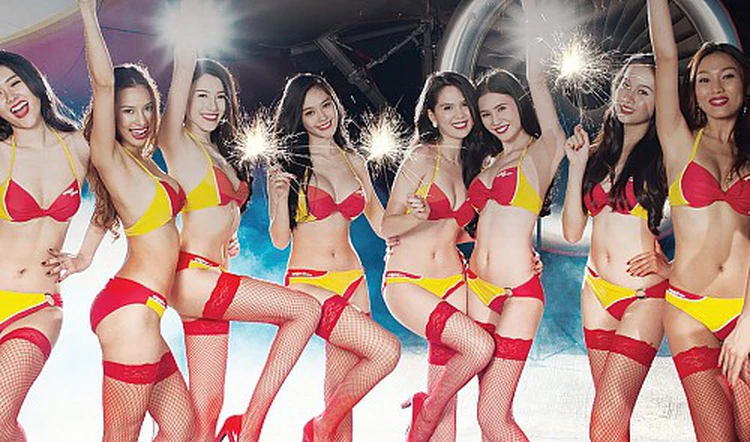
The sexy air hostess stereotype was not an accident of culture. It was a calculated commercial decision. In the 1960s and 1970s, airlines faced intense competition and needed a way to stand out. They turned their cabin crew into the product. Uniforms were shortened, advertising focused on youth and physical appeal, and the flight attendant became the visible promise of the airline experience.
The strategy was simple. Sell the feeling before the flight even begins. Attraction became a proxy for service, and appearance became a signal of quality. It worked because it reduced decision-making. Passengers did not need to evaluate. They reacted. That reaction is what the industry built around. And once a system is built on a reaction that converts, it is rarely removed.
2. The Uniform Became a Perfect Visual Shortcut
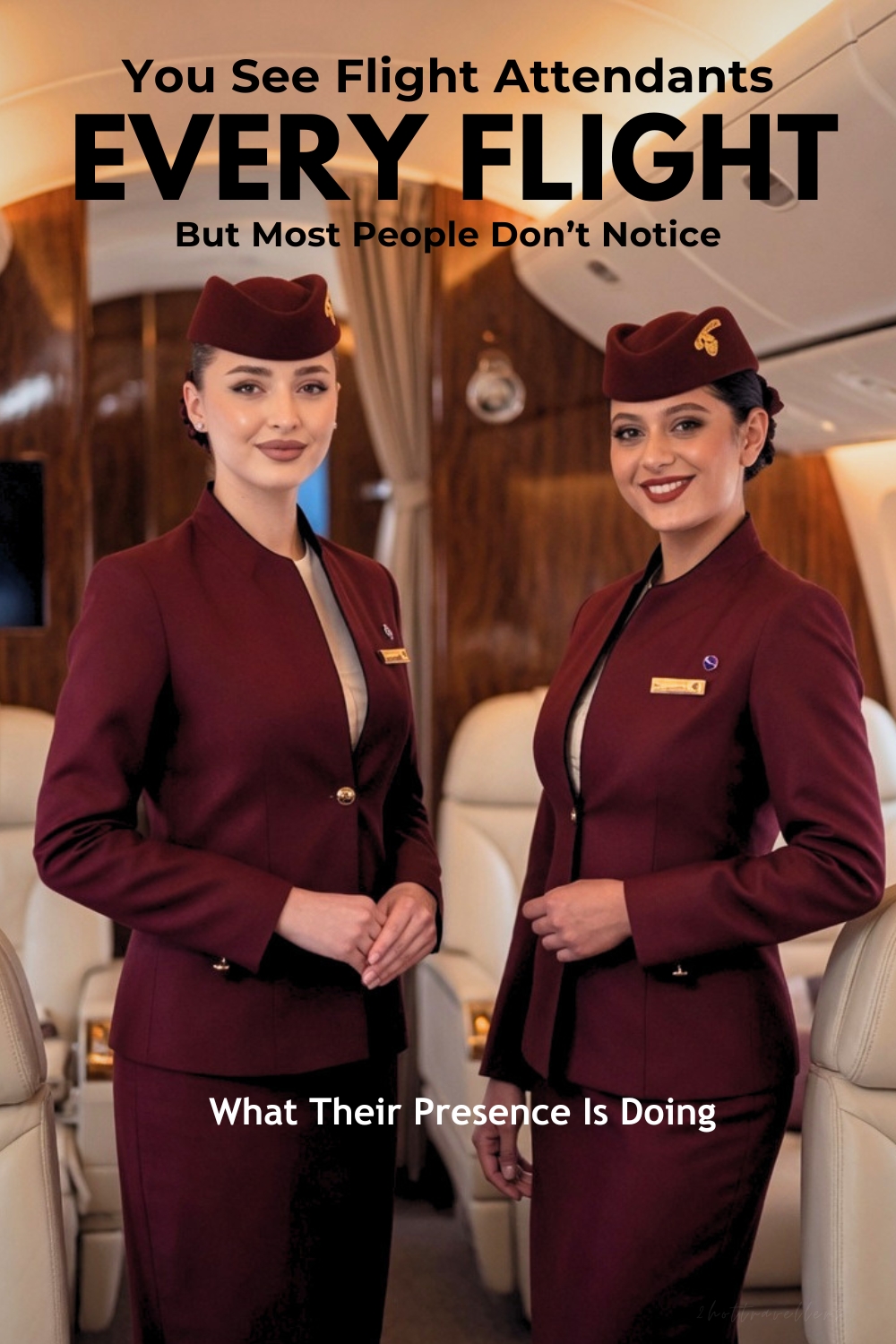
A single glance at a flight attendant in uniform triggers a set of assumptions. The fitted cut, the color, the controlled presentation signal glamour, availability, and discipline. It works instantly and across cultures. The brain resolves the image before conscious thought has time to question it. That speed is the advantage. It removes friction, simplifies judgment, and locks the impression in place. This is why the stereotype survives. It is efficient. It is functional. And systems rarely discard what still works.
Magnify the focal point → What Flight Attendant Uniforms Quietly Reveal About Control, Identity and Cultural Pressure
3. It Satisfies Deep, Unspoken Psychological Needs
The stereotype persists because it satisfies needs most people prefer not to examine. It offers a controlled fantasy packaged as normal service. Not extreme, not explicit, just acceptable enough to pass without scrutiny.
At a deeper level, it reinforces a familiar dynamic. Care delivered by someone attractive. Warmth presented without resistance. Attention that feels personal but is structured and repeatable. For the passenger, it creates a sense of ease and quiet validation. For the system, it standardizes behavior without needing to explain it.
What makes it effective is not the image itself, but the agreement around it. Passengers accept the performance. Airlines design around it. No one needs to say it out loud for it to function. That silence is not accidental. It is what allows the pattern to continue without being challenged.
Where this becomes visible → Flight Attendant Psychology: The Hidden System Behind Cabin Behavior Decoded
4. It Hides the Real Emotional Labor Behind the Role
The glamorous image performs one of its most important functions by concealing the actual demands of the job. The role demands sustained emotional labor behind the performance, not just surface-level service. The stereotype reduces all of that complexity to appearance and charm. This simplification benefits airlines by keeping attention away from real working conditions. It also lets passengers enjoy the service without confronting the human cost behind the smile. The stereotype survives because it protects everyone from seeing the raw reality.
5. It Became a Global Cultural Default
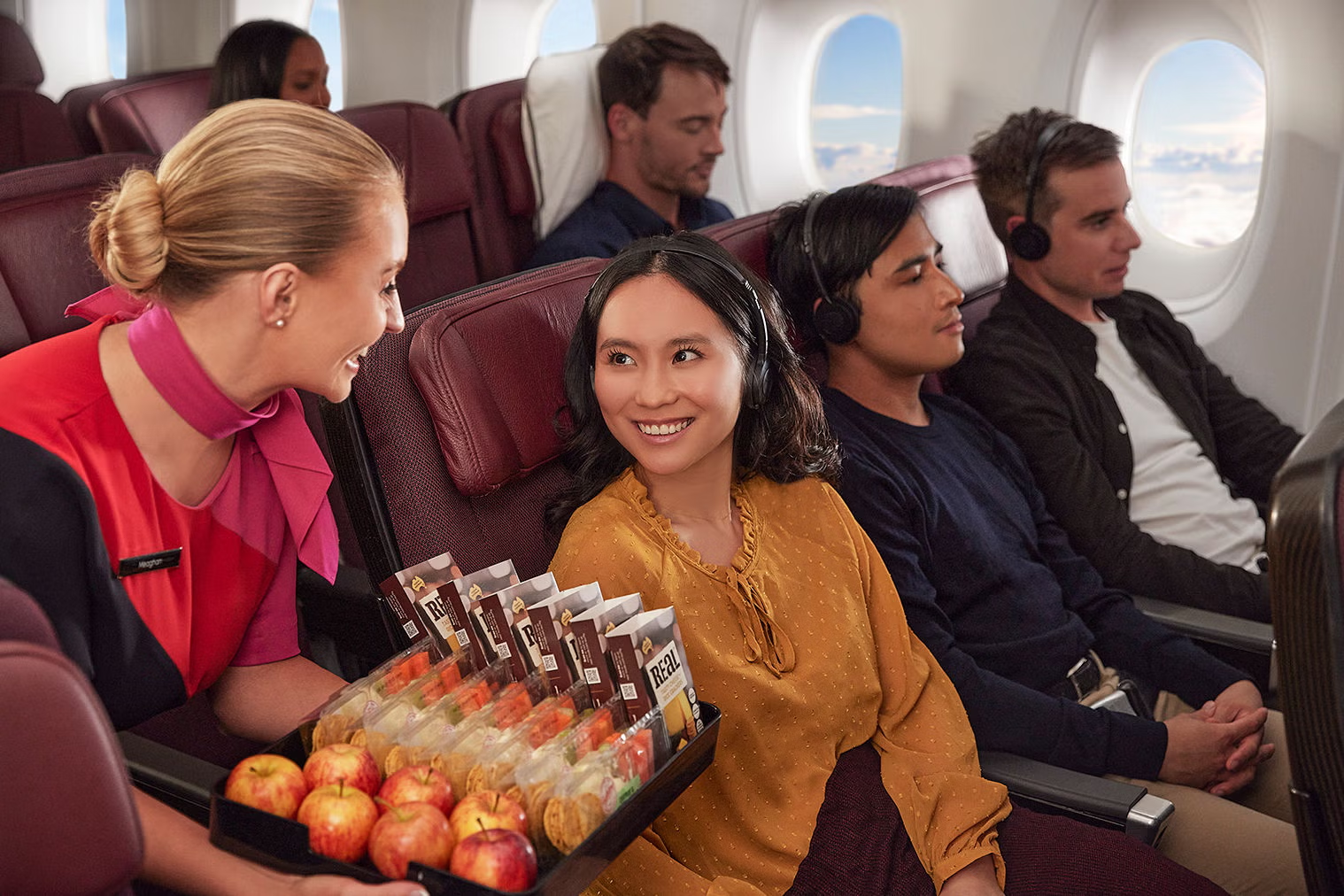
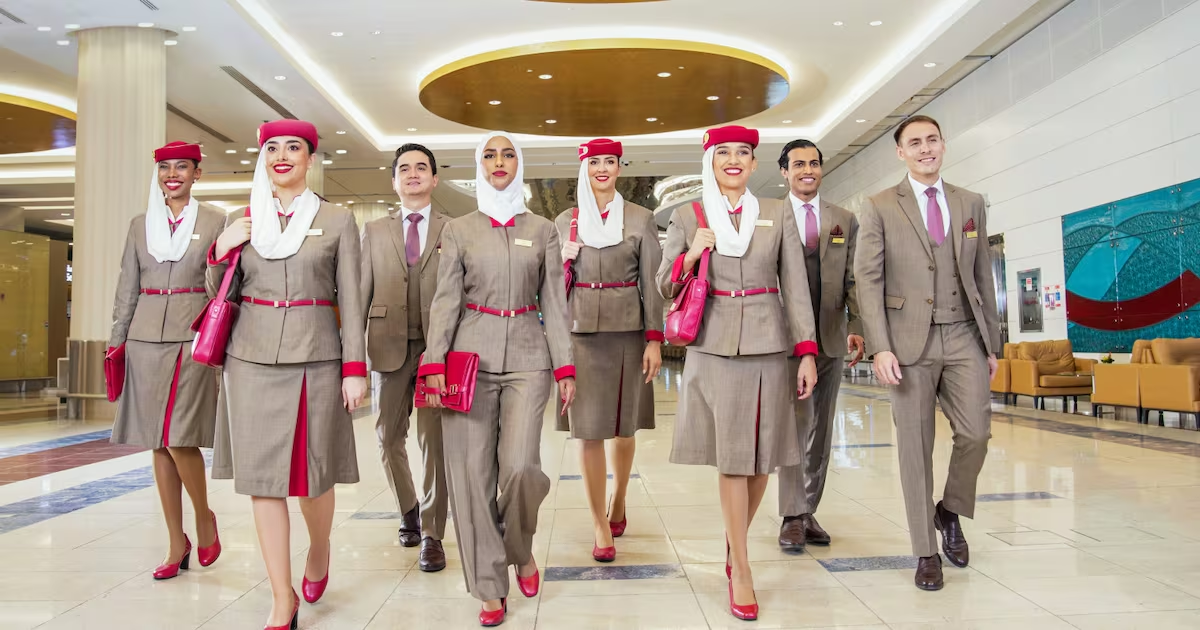
Once created in the West, the stereotype spread and adapted. Asian carriers refined it into elegant grace while keeping the focus on youth and flawless presentation. Middle Eastern airlines blended it with luxury and sophistication. The core idea remained the same: the flight attendant as an object of aesthetic and emotional appeal. This global spread turned the stereotype into a shared visual language that feels almost natural now. It no longer belongs to one country or one airline. At this point, it doesn’t feel designed anymore. It feels natural which is exactly why it’s difficult to challenge.
Beyond the surface → The System Behind the “Sexy Air Hostess”
6. It Survives Because It Still Sells
The stereotype continues to sell tickets, sell fantasies, and sell the idea that air travel can be more than just transport. Airlines may publicly emphasise professionalism and safety, but the underlying marketing still benefits from the lingering image. Viral lists, social media content, and old advertising keep feeding the stereotype because it generates clicks, engagement, and desire. As long as it delivers commercial value, it will not be allowed to die quietly. The audience doesn’t just consume the image, they reward it with attention, clicks, and bookings.
7. It Reflects Something Raw About How We See Service and Gender
At its core, the stereotype exposes something most people prefer not to examine. It reveals how service, gender, and appearance are still quietly linked in the way we respond, even when we claim they are not.
The expectation is not always spoken, but it is felt. Care should look a certain way. It should feel warm, effortless, and visually pleasing. When it does, it is accepted without question. When it does not, it creates friction. That reaction is not random. It is conditioned.
What passengers respond to is not just service. It is presentation layered onto service. Appearance becomes a filter through which competence is judged before any real interaction happens. This is why the stereotype feels outdated in theory but continues to operate in practice.
The uncomfortable part is this: the system is not sustained by airlines alone. It is reinforced every time the image is rewarded with attention, preference, or trust. People say they value professionalism, but they still respond faster to presentation. That gap is where the stereotype survives.
☕ If this article saved you a few hours of research, helped answer a lingering question, or made sense of something that wasn't entirely clear before, consider buying me a coffee. It helps keep the guides coming, the curiosity well caffeinated, and the occasional rabbit hole worth exploring.
Buy Me a Coffee ☕What Changes When You Finally See the Pattern
Once you see the pattern, the flight stops feeling effortless. The smile, the posture, the controlled appearance no longer read as natural. They read as trained, repeated, and managed.
You notice the timing of interactions. The consistency of tone. The way calm is maintained even when the situation is not. What looked like ease starts to look like discipline under pressure.
Nothing about the experience changes on the surface. But your interpretation does. And once that shifts, the stereotype loses its grip. Not because it disappears, but because you stop accepting it at face value.
If You’re Thinking of Becoming a Flight Attendant
If you are drawn to the role, it is worth asking what exactly you are responding to. The image, or the work behind it. The job is not built around glamour. It is built around control. Emotional control, physical endurance, and the ability to maintain composure in situations most passengers never see. The appearance is part of the system, not the reward.
Those who enter expecting the image tend to struggle with the reality. Those who understand the system adapt faster. The difference is not motivation. It is clarity.
Final Reflection
The “sexy air hostess” stereotype does not survive by accident. It survives because it continues to produce results. It simplifies perception, reduces uncertainty, and shapes behavior without needing explanation.
What it reveals is less about the airline and more about the audience. People say they value professionalism, but they respond faster to presentation. They say they want authenticity, but reward performance that feels effortless and familiar. The system persists because it is reinforced from both sides. Designed by the industry, and confirmed by the people moving through it. The question is not whether the stereotype is outdated. It is why it still works.
Look closer → 22 Flight Attendant Secret Codes That Expose What They Really Think About You