Why the Philippines feels chaotic to foreigners is one of the most consistent and deeply felt observations made by first-time visitors. They step off the plane carrying expectations of tropical ease, orderly movement, and predictable daily life, only to encounter traffic that seems to defy logic, plans that shift without clear announcement, conversations that stretch far longer than expected, and a general atmosphere where nothing appears to run on a fixed schedule. The immediate internal verdict is almost always the same: this country feels chaotic. The observation is not wrong. The interpretation is.
The feeling of chaos does not come from carelessness or disorganization. It arises because foreigners unconsciously apply a mental framework that was never designed for this particular environment and history. They bring with them expectations shaped by highly structured societies that place premium value on predictability, linear time, direct communication, and mechanical efficiency. When those imported expectations collide with Philippine daily reality, the gap feels jarring, frustrating, and often overwhelming. They are witnessing a different kind of order: one shaped by human connection, rapid adaptability, and the need to preserve social harmony under constant uncertainty.
→ NOTE: This article does not offer practical tips or survival hacks. It is a careful, psychologically grounded examination of the deeper cultural patterns, environmental realities, and perceptual mismatches that make the Philippines feel chaotic to outsiders and why those same patterns make perfect internal sense once you understand the logic that created them.
The Immediate Sense of Disorder
Most foreigners experience the same sequence of sensations upon arrival. The traffic in major cities, especially Manila, feels anarchic. Appointments rarely begin at the stated time. Simple tasks that should take thirty minutes stretch into hours. Conversations meander without clear purpose. Help is offered with genuine warmth, yet formal processes move slowly or indirectly. The cumulative effect is a powerful, almost visceral sense that everything is running without proper structure.
This reaction is not a lack of awareness. It is a predictable psychological response. It is a normal psychological response. The human brain is highly attuned to detecting deviations from familiar patterns. When those patterns include strict punctuality, clear cause-and-effect processes, and direct communication, the contrast with Philippine daily life registers as disorder.
What foreigners rarely recognise in the moment is that these behaviours are coherent responses to specific historical, environmental, and social conditions.
The Philippines is an archipelagic nation of over 7,000 islands, regularly battered by typhoons, prone to earthquakes and flooding, and shaped by centuries of colonization, economic volatility, rapid urbanisation, and large-scale overseas labour migration. In such a context, rigid, top-down systems are often less effective than the ability to read the immediate situation and adjust while maintaining relationships. What looks like chaos from the outside is frequently a sophisticated, collective form of resilience.
If you’re seeing things at surface level, start with→ 7 Philippines Travel Insights Most Travellers Get Wrong

Why Flexibility Feels Like Disorganisation
One of the earliest and most persistent patterns foreigners misread is flexibility. Plans that were confirmed change at short notice. Routes are altered without detailed explanation. A seemingly straightforward arrangement is modified because circumstances on the ground have shifted. Many visitors interpret these frequent adjustments as evidence of poor planning, lack of seriousness, or even incompetence.
In truth, flexibility in the Philippines is not the absence of structure. It is a different and highly refined structure that has been cultivated over generations. When the external world is inherently unpredictable like sudden typhoons, flooding that blocks roads for days, power outages, or traffic that can turn a thirty-minute journey into three hours, the ability to adjust quickly and without emotional resistance becomes far more valuable than the ability to enforce a fixed plan at all costs.
Foreigners often feel frustrated because their sense of control is tied to the original plan. Once they begin to understand that the priority here is rarely the plan itself but the people involved and the need to keep the group functioning, the apparent chaos starts to reveal its own quiet logic. Flexibility is not laziness. It is a practical survival skill developed in response to an environment that repeatedly demonstrates the limits of rigid control.
Why Time Perception Creates Deep Confusion
Time in the Philippines is perhaps the most emotionally charged source of misunderstanding. Foreigners repeatedly complain about “Filipino time”, the widespread habit of starting late, arriving late, or allowing schedules to slip without apparent concern. They experience these delays as disrespect, inefficiency, or even a lack of basic professionalism.
Time here operates relationally rather than mechanically. A genuine conversation with another human being often carries more weight than arriving at the next appointment with perfect punctuality. Helping someone who needs immediate assistance in the moment can take precedence over protecting an arbitrary deadline. This does not mean time is unimportant or ignored. It means time is measured and valued through the quality of human connection and the demands of the immediate context rather than the strict movement of the clock.
For foreigners from highly scheduled societies, this creates significant psychological tension. Their own sense of reliability, respect, and personal worth is often deeply linked to punctuality. When that expected signal is missing, they interpret the situation as personal disrespect or systemic failure. The more accurate and useful reading is that respect and care are being expressed in a different currency: one based on presence, relational awareness, and contextual priority rather than precise chronological adherence.
The external environment reinforces this cultural pattern. Traffic congestion in Manila can turn a short commute into hours. Typhoons and flooding can disrupt entire schedules for days. In such conditions, rigid adherence to the clock becomes less practical and often less humane than relational flexibility.
Why Communication Feels Indirect and Frustratingly Vague
Communication style may be the most psychologically difficult pattern for foreigners to navigate. In many Western-influenced cultures, directness is considered the highest expression of honesty and respect.
In the Philippines, directness can sometimes be perceived as rude or aggressive because it risks damaging social harmony or causing someone to lose face.
As a result, communication frequently operates on multiple layers simultaneously. A hesitant or qualified “yes” may actually mean “I will try, but the circumstances will make it difficult.” Silence accompanied by a polite smile can function as a gentle refusal. Important information is often conveyed more through tone, context, timing, and what is deliberately left unsaid than through explicit statements.
This layered style is not vagueness or evasiveness. It is a sophisticated cultural mechanism designed to protect individual dignity and maintain overall social harmony in a society where good relationships have significant practical and emotional value. Filipinos tend to be highly skilled at reading these subtle layers. They have to be. This ability represents a refined form of social intelligence that has been developed and passed down over many generations.
Foreigners who insist on blunt, immediate clarity often miss the real conversation that is taking place right in front of them. What feels frustratingly indirect is actually a carefully balanced system that allows people to express difficult truths while still preserving face and relationships for everyone involved.
Direct refusal is often softened or avoided to preserve dignity. Meaning is carried through tone, timing, and context rather than explicit wording. What appears indirect is often deliberate, allowing difficult messages to be communicated without damaging relationships.
When you learn to listen for these layers instead of demanding straightforward answers, communication in the Philippines becomes significantly clearer and more respectful than it first appears.
Why Social Responsiveness Feels Inconsistent
Social behaviour in the Philippines is highly contextual. The same individual can be warm, talkative, and generous in one setting and noticeably reserved or formal in another. Help may be offered freely and enthusiastically in one moment and politely withheld in another, depending on the relationships involved and the immediate needs of the group at that time.
Many foreigners interpret these shifts as inconsistency, unreliability, or even hypocrisy. The deeper pattern is that behaviour is carefully calibrated to maintain balance within the specific social field at that particular moment. Decisions are made based on who is present, what the shared history is, and what will best preserve overall group harmony rather than what a universal or abstract rule dictates.
This contextual responsiveness is one of the main reasons the Philippines can feel both deeply welcoming and, at times, unexpectedly frustrating. The warmth is genuine. The frustration usually arises from the expectation that social responses should be uniform regardless of context.
The External Realities That Amplify the Feeling of Chaos
The external factors you highlighted extreme traffic congestion, rapid and uneven urbanization, stark wealth inequality, frequent environmental disasters, bureaucratic inefficiencies, political volatility, and energy emergencies are not minor background noise. They are powerful, daily realities that shape how life is lived.
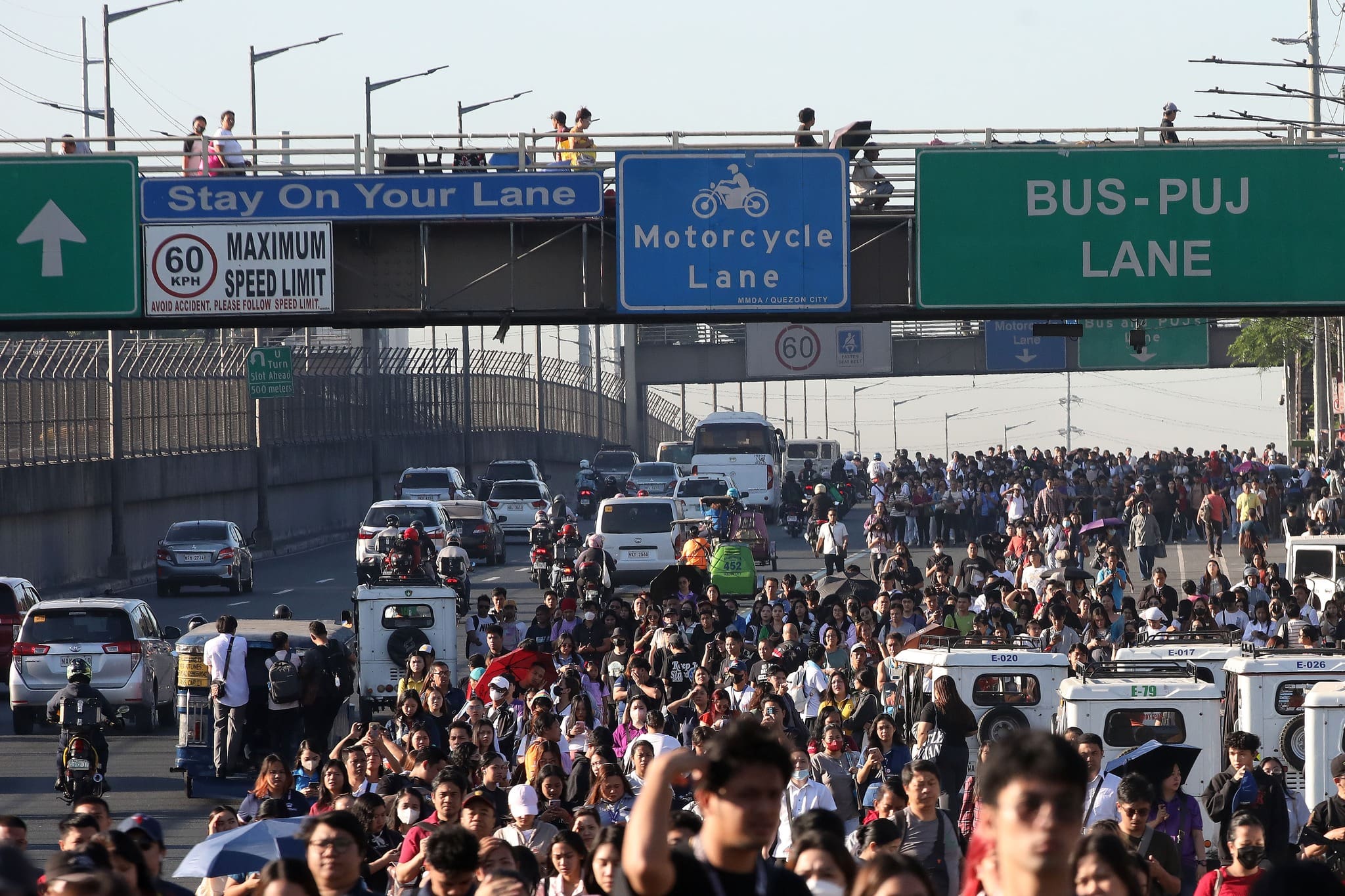
Manila’s traffic is legendary for its intensity and duration. Wealth gaps are visible and jarring, with modern skyscrapers and luxury malls standing beside congested, impoverished neighborhoods. Typhoons regularly disrupt daily life, sometimes for days or weeks. Bureaucratic processes can be slow, opaque, and frustrating. Political tensions and energy shortages add further layers of instability.
These conditions create a high-intensity environment that amplifies the patterns foreigners already struggle to interpret. For foreigners, they amplify the cultural patterns they already find confusing. The traffic makes relational time feel even slower. The inequality makes social responsiveness feel even more contextual. The frequent disruptions make flexibility feel even more necessary.
The chaos foreigners perceive is therefore not imaginary. It is the product of real external pressures interacting with cultural adaptations that have evolved to cope with those pressures.
What Changes When You Stop Misreading the Patterns
The most meaningful shift usually happens quietly, often without fanfare. One day you realise you have stopped constantly comparing everything you see to the systems you grew up with. You wait without repeatedly checking your watch. You listen for the layers beneath the words instead of demanding immediate clarity. You begin to adjust your own pace and expectations more naturally, even gracefully.
This shift is not about lowering your standards or accepting lower quality of life. It is about updating your mental model so you can finally perceive the intelligence, care, and quiet sophistication that have been operating beneath the surface all along.
The Philippines does not ask you to abandon structure completely. It simply asks you to recognise when structure is being provided through people rather than rigid processes, through adaptation rather than strict prediction, and through social context rather than universal rules.
Most travellers never reach this level of understanding. They pass through quickly, collect their photographs, and return home with stories about how chaotic and inefficient everything felt. Those who stay longer, slow down, and observe with genuine curiosity and openness discover something far more valuable and lasting: a country that operates on a coherent, intelligent, and deeply human logic once you stop insisting it must follow the same rules as your own.
That realisation remains one of the most rewarding and enduring things you can take home from the Philippines.