
The most watched person on the aircraft is also the least free to react. The smile that reassures four hundred strangers is the one expression she is not permitted to withhold, no matter what the last six hours actually felt like.
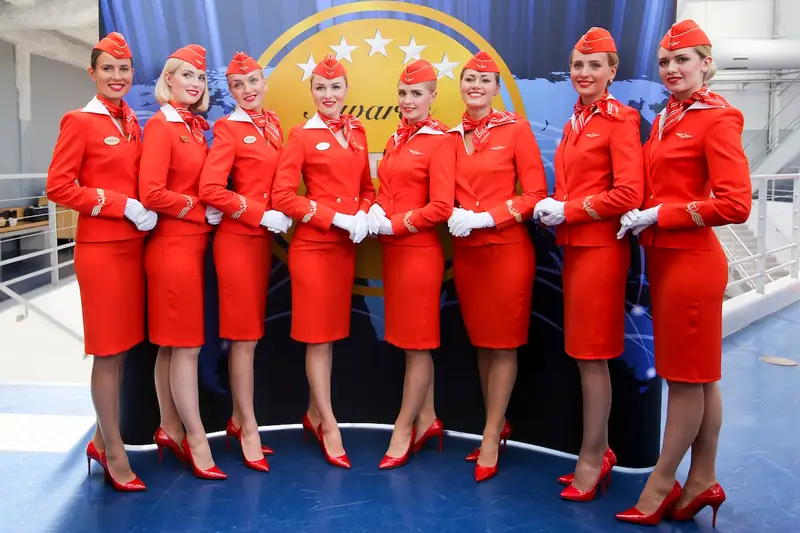
Flight attendant uniforms are not a style choice. They are a behavioural contract, an agreement, written into grooming manuals rather than signed on paper, that trades personal variation for a fixed standard of posture, tone, and emotional output. Passengers read the uniform as fashion. Airlines built it as a control system, and the polish you see is not the point. The polish is proof the system worked.
Most content about flight attendant uniforms stops at admiration: which airline has the “best” look, which crew photograph the most polished. That framing misses the actual mechanism. Once you understand what the uniform is built to enforce, you stop seeing an outfit and start seeing a system, one with a documented legal history, a measurable psychological cost, and cultural variation that says as much about the passengers as it does about the crew.
Table of Contents
What a Flight Attendant Uniform Actually Is
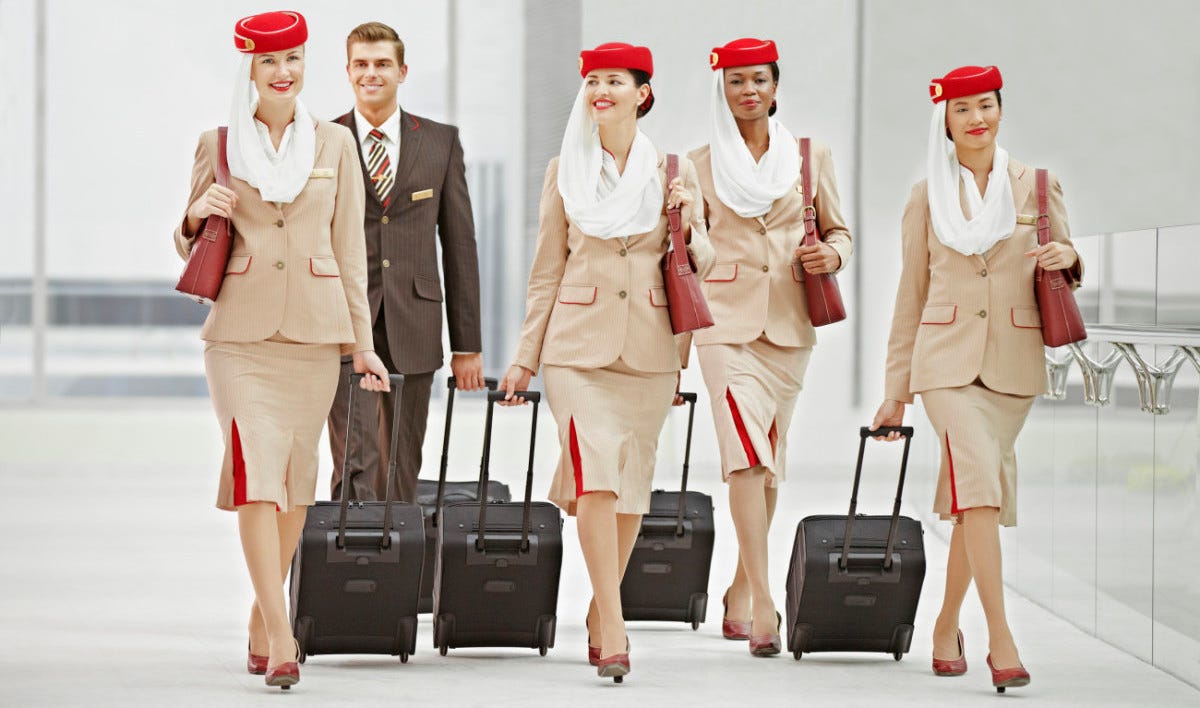
A flight attendant uniform is a standardised presentation system, covering clothing, grooming, posture, and permitted emotional expression, that airlines use to guarantee consistent service behaviour regardless of who is wearing it. The garment itself is roughly ten percent of the requirement. The remaining ninety percent is procedural: deportment training, grooming checks, and disciplinary review for anyone who drifts from the standard. Airlines like American have kept versions of that grooming policy on record for decades.
The uniform does four specific jobs at once, and none of them are decorative:
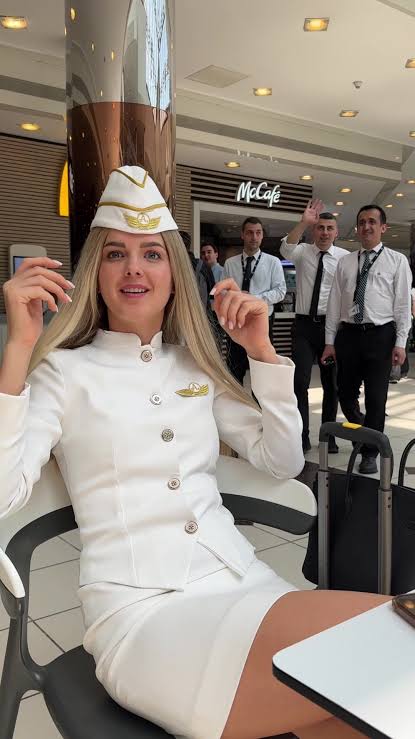
@aria_in_sky Share your smile to me👇☺️🥰#cute #stewardess #amazing #followers ♬ Airplane Mode - Outer Circle
@air.lady.jett #reaction #fashion #style #aviation #us @uniform.teamline ♬ sonido original - Bailesdebodaoriginales.com
The Singapore Airlines Template: Control Quantified
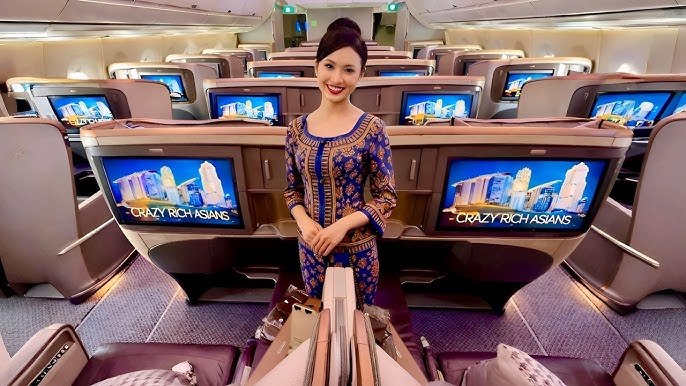
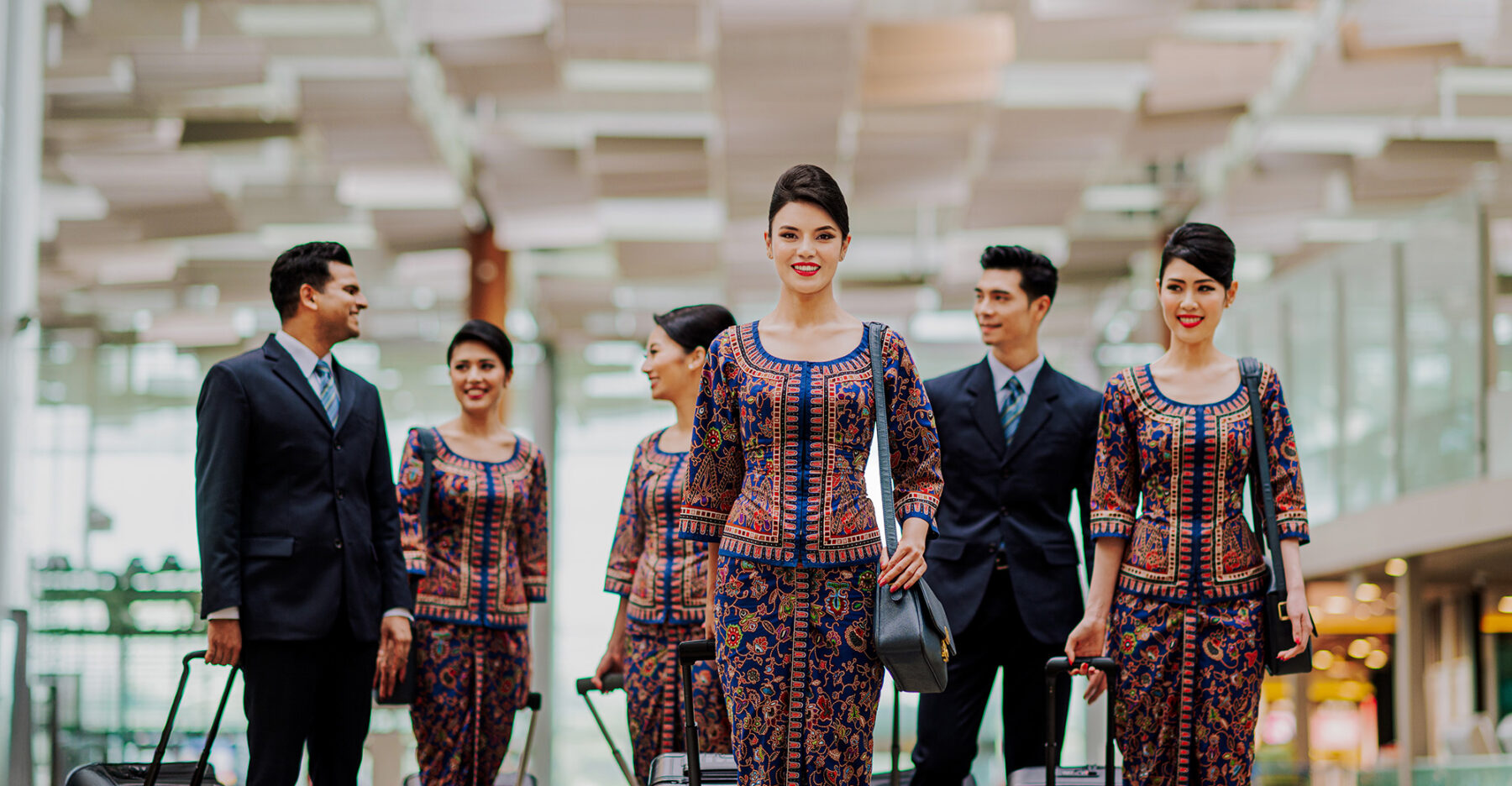
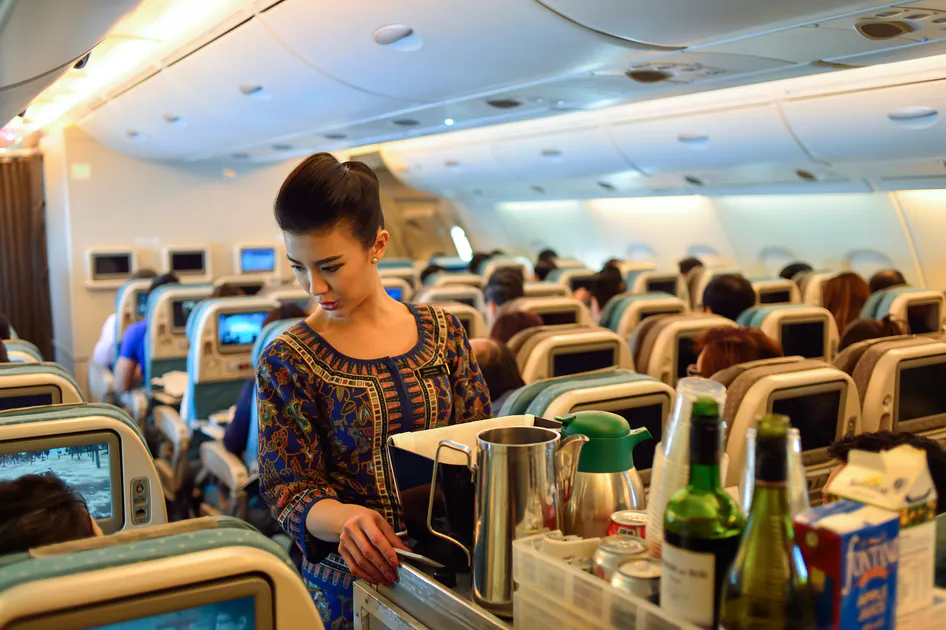
Singapore Airlines built the clearest documented case of uniform-as-control in commercial aviation, and the specifics are on record rather than speculation. Cabin crew trainees complete a programme that runs roughly fourteen weeks, close to double the industry standard, covering safety and first aid alongside deportment, cosmetics, and etiquette. The sarong kebaya, designed by Pierre Balmain in 1974, has no standard sizing. Each one is custom tailored, with more than twenty darts around the neckline alone.
The grooming rules extend well past the uniform itself:
- Hair worn in a bun measured to a prescribed 6.5 to 7 centimetre standard
- Assigned hairstyles, makeup shades, and nail polish colours drawn from a fixed company palette
- A minimum height requirement, 1.58 metres for female crew and 1.65 metres for male crew, justified operationally by the need to reach overhead compartments
- Kebaya colour coded by rank, from blue for Flight Stewardess through to purple for Inflight Manager, so hierarchy is visible at a glance.
Cabin Crew Training Length: Singapore Airlines vs. Industry Standard
Weeks of pre-service training before a new hire works a live cabin
Singapore Airlines trains new cabin crew for close to double the industry standard length, covering deportment, cosmetics, and etiquette alongside safety and first aid.
None of this is hidden. Singapore Airlines publishes the training length and grooming standard because the discipline is the brand asset. The “Singapore Girl” was never one woman. She is a specification, reproduced identically across thousands of individuals, and the training exists to close the gap between the person and the specification.
Western Carriers: The Leash Is Longer, Not Gone
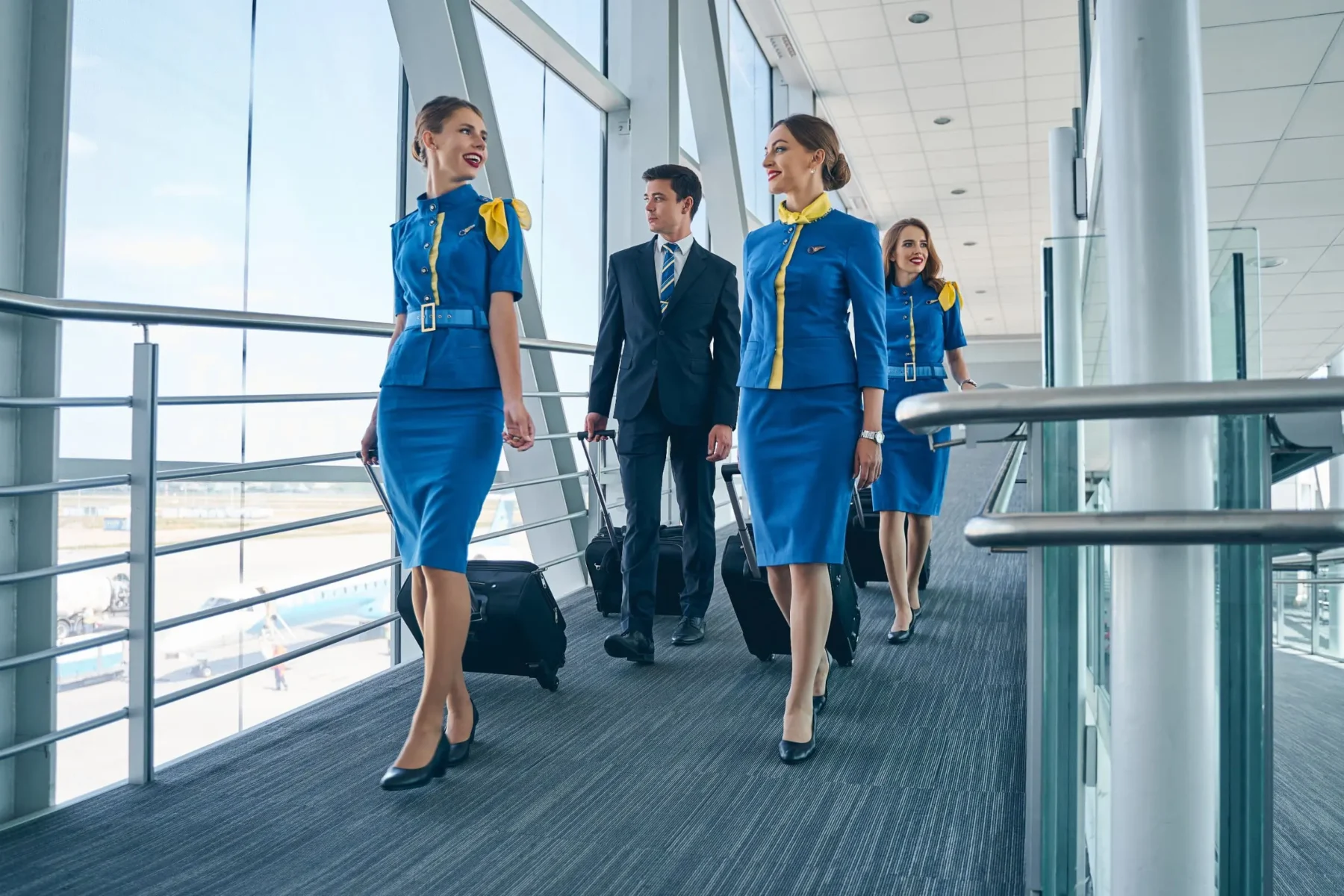
- Expression and personality are permitted only inside boundaries the airline defines, never the individual
- Emotional warmth remains a trained output, not a spontaneous one
- The appearance of flexibility functions as its own kind of control. It makes the system harder to see, not less present
Makeup still mandatory on duty
Discretion sits with "tasteful," not a rule
Permitted, with named exceptions to avoid
Opt-out since 2019, within an approved palette
Position reflects how much of the standard is opt-out rather than mandatory. It is not a measure of overall strictness, a discretionary rule can still be enforced, just less visibly.
The Legal History Airlines Don't Put in the Brochure
- American Airlines became the first US carrier to enforce a mandatory retirement age of 32 for stewardesses, in 1953
- Marriage was treated as grounds for dismissal at most airlines from the mid-1930s onward. Braniff fired stewardess Betty Green Bateman in 1965 after discovering she had married in secret. An arbitrator overturned the firing under Title VII, a ruling other airlines were eventually forced to follow
- Girdle checks and strict weight limits were routine. A stewardess at 5’2″ could be capped near 118 pounds, and pregnancy meant automatic dismissal at most carriers into the 1970s
- By 1967, the EEOC ruled against the industry’s discriminatory hiring and retirement practices, treating them as sex discrimination under Title VII of the Civil Rights Act
- Enforcement stayed slow and uneven after that. Marriage bans fell airline by airline through the late 1960s and 70s, and weight restrictions, the most resistant of all, were not fully dismantled until 1991, through further litigation
What ended these rules was not airline goodwill. It was flight attendants organising, documented in detail in the Great Stewardess Rebellion. Groups like Stewardesses for Women’s Rights used the same Title VII protections built for race discrimination to fight age, weight, and marriage bans, and their cases became some of the earliest workplace sex-discrimination precedents in US labour law. That history rarely makes it into a listicle about “iconic uniforms through the decades.” It is arguably the single most important fact in the subject, because it proves the uniform was never just fabric. For most of aviation history, it was a legal mechanism for deciding who got to keep her job.
The Psychology of Sustained Performance
The uniform does more than shape appearance. It shapes emotional output on a schedule the wearer does not control. Because the clothing is designed to look polished, it creates an expectation that the person wearing it will match that image in behaviour at all times, and passengers frequently mistake trained warmth for personal interest rather than skilled labour. Look Closer → 7 Reasons Why the “Sexy Air Hostess” Stereotype Refuses to Die
The flattering cut and polished presentation blur the line between professional service and personal availability, which is one reason experienced crew develop deliberate strategies for holding a professional boundary while still delivering the performance the uniform demands.
The psychological cost is real and cumulative. Crew members manage their own fatigue while simultaneously managing the emotions of hundreds of passengers, often under jet lag, irregular meals, and difficult behaviour. The uniform makes any crack in that performance highly visible. A tired expression or a momentary lapse in posture stands out immediately against the standard the uniform has already set. This matches what sociologist Arlie Hochschild named emotional labour: work where managing one’s own feeling becomes part of the job description, priced into the role but rarely named out loud.
Global health guidance also recognises air quality as a factor in prolonged enclosed exposure, and industry bodies including the International Air Transport Association flag fatigue, dry air, and extended duty periods as ongoing operational strain, layered underneath the same general health effects of prolonged cabin air exposure. The uniform absorbs all of it and shows none of it. That is precisely its function.
Reading the Uniform Through a Cultural Contrast
Seen through a cultural contrast, the structure gets easier to notice. Cultures that lean toward relational warmth, adaptability, and expressive harmony in everyday interaction tend to sit in quiet tension with the rigid visual and behavioural standards required by many international carriers. Cultures with a stronger preference for practicality and a more direct, unadorned demeanour read the same presentation differently again. What is designed to signal professionalism can register, to that second reading, as overly constructed or performative.
The contrast is useful because it exposes how much of the role is built rather than natural. A flight attendant uniform is a system of emotional and cultural management, packaging care, authority, and beauty standards into one visual language that has to hold steady across audiences that read warmth, hierarchy, and self-presentation in genuinely different ways.
What Changes Once You See the System
Becoming a flight attendant is less about appearance and more about sustaining controlled behaviour under pressure, for hours, in front of strangers who assume it costs nothing. Once you stop seeing the uniform as clothing and start seeing it as a cultural and psychological tool, your reading of the entire cabin shifts. The quiet discipline required to hold that standard for six, ten, or fourteen hours becomes visible, and small acts of basic patience toward crew take on more weight. What this reveals → Flight Attendant Life Reality: The Brutal Cost No One Talks About
This does not reduce the experience of flying. It replaces a surface read with an accurate one. You start noticing the structured performance instead of assuming it is effortless, and once you have seen it once, in one cabin, you tend to notice the same pattern in every other service environment that runs on a uniform.
Frequently Asked Questions
Why do flight attendants have such strict grooming rules?+
Grooming rules exist to remove individual variation so passengers experience a consistent brand standard regardless of which crew member they encounter. The rule is operational, not aesthetic. It protects the airline's presentation, not the individual's preference.
Is the flight attendant uniform still used to enforce weight or appearance standards today?+
The explicit weight caps and mandatory retirement ages that defined the industry through the 1980s were dismantled through litigation, with weight restrictions among the last to fall, fully gone only by 1991. Modern grooming standards focus on presentation, posture, and hygiene rather than body size, though tailored uniforms and fit-based sizing still create indirect pressure.
Why do Asian airlines have longer and stricter training than Western carriers?+
Airlines like Singapore Airlines treat trained deportment as a core brand asset, not a formality, which is why their cabin crew training runs close to double the industry standard. Western carriers apply similar behavioural expectations but codify fewer of them publicly, relying more on discretion and internal review.
What is emotional labour, and how does it relate to flight attendant uniforms?+
Emotional labour, a term coined by sociologist Arlie Hochschild, describes work that requires managing one's own feelings to produce a required emotional display for others. The flight attendant uniform functions as a constant visual reminder of that requirement, since any lapse in composure is immediately visible against the uniform's polished standard.
Did flight attendants ever legally challenge uniform and appearance rules?+
Yes. Groups such as Stewardesses for Women's Rights used Title VII of the Civil Rights Act to challenge marriage bans, weight limits, and mandatory retirement ages through the 1960s, 70s, and into the early 1990s, in a period of organising now documented as the Great Stewardess Rebellion.
The Uniform's Real Job
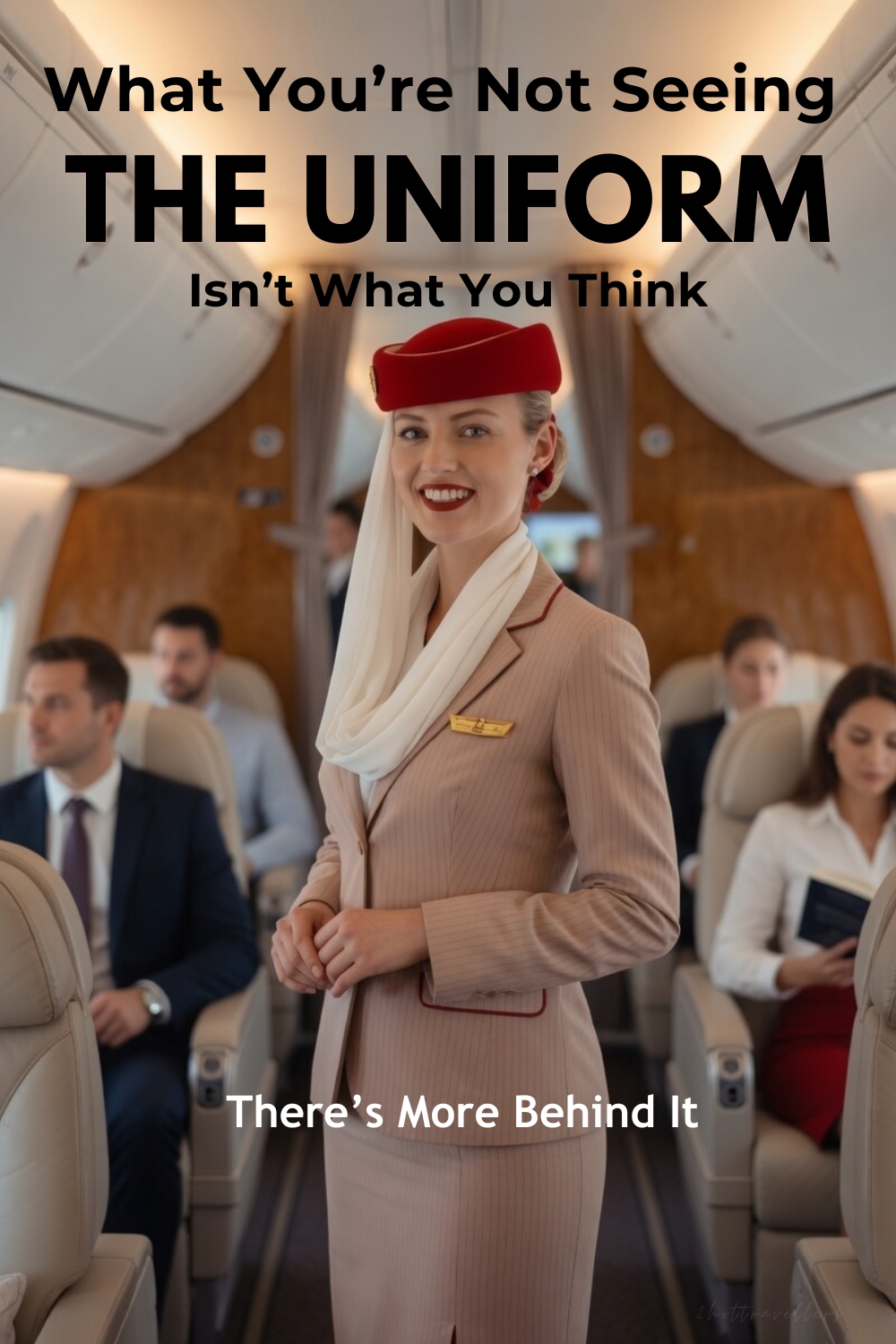
A flight attendant uniform continues to speak a quiet language about culture, control, and expectation. It reveals how different aviation cultures have chosen to package service, beauty, authority, and emotional labour inside one of the most visible professional environments in the world. Most passengers will keep seeing only the polished surface.
Anyone willing to look past it will start noticing the negotiations sitting underneath, and once you have noticed that pattern in one industry, it becomes difficult not to see it in every other uniform built to hide effort behind consistency.
For anyone actually considering the job, Flight Attendant Psychology: The Hidden System Behind Cabin Behavior goes further into what sustaining that performance costs over a career, and the system behind the “sexy air hostess” framing and the coping language crew developed for it round out the rest of the picture.
Final Reflection
Flight attendant uniforms continue to speak a quiet but powerful language about culture, control, performance, and expectation. They reveal how different societies have chosen to present service, beauty, authority, and emotional labour within one of the most visible professional environments in the modern world. Most passengers will continue to see only the polished surface image.
Those who choose to look more carefully will begin to notice the deeper patterns and quiet negotiations at work. That small shift in perception marks the beginning of a more nuanced understanding of what happens inside the cabin and why it matters. If you’ve noticed this pattern once, you’ll start seeing it in other service environments too.



2 Responses
Desidero indossare il costume da hostess
It really is a classic and elegant look! Are you thinking of it for a career in aviation, or do you just love the timeless style of the uniform?