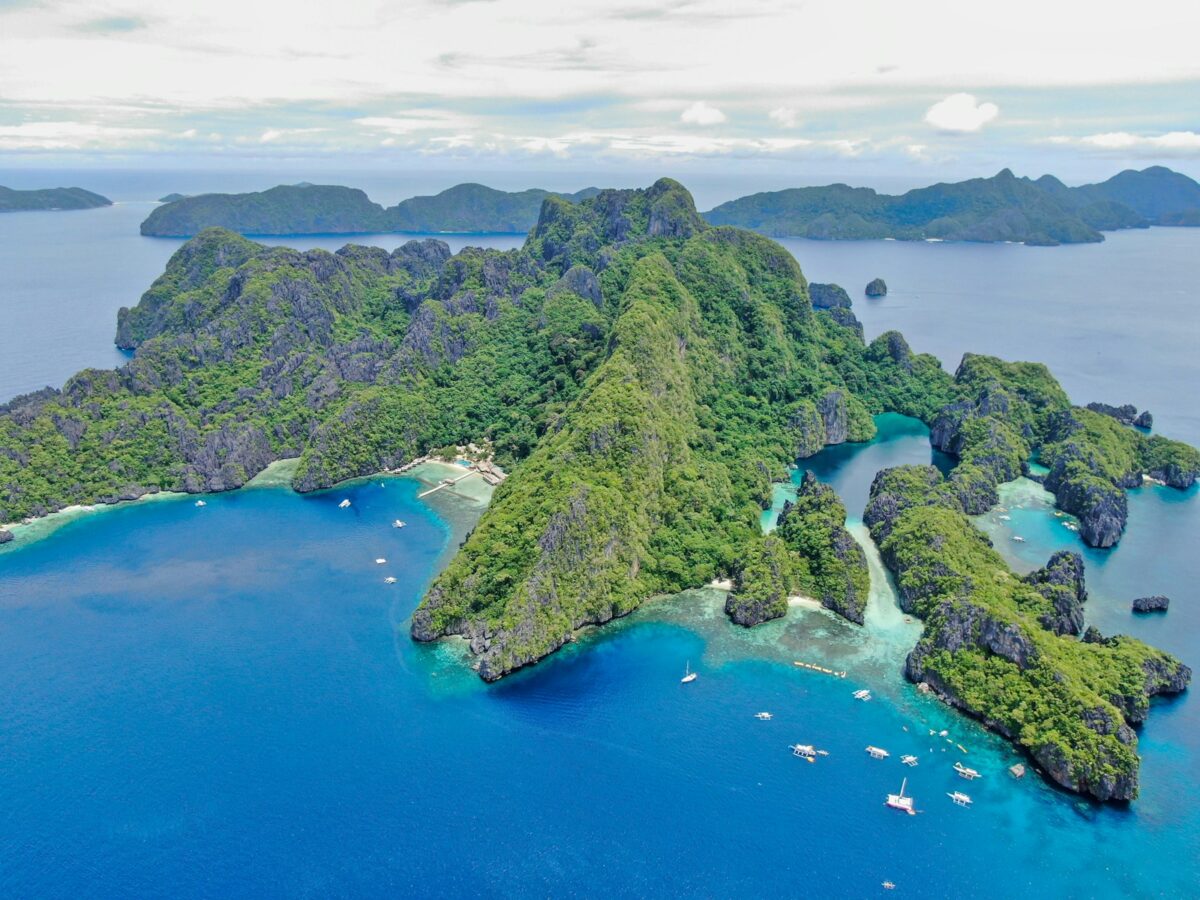
Palawan is not one destination. It is three separate bases that do not connect the way most itineraries assume, and confusing them is the single most common way a trip loses its best days to transit instead of exploring.
Palawan logged just over 2.1 million tourist arrivals in 2025, up close to 8 percent on the year before, and the province’s own tourism data shows why treating it as one place breaks down immediately. Puerto Princesa took the largest share at 821,504 arrivals, El Nido followed at 642,385, and Coron came in at 336,304, three destinations inside one province with entirely different visitor profiles, entirely different infrastructure, and no direct link connecting all three. Roughly half of all arrivals were international, and January to May and November to December are consistently the peak windows, which is also when prices and crowd density run highest across all three bases.
This Palawan travel guide covers what each base actually offers, how to choose one, what a realistic trip costs, and how to route the days between them without losing time to transit. It will not hand you a finished, hour-by-hour itinerary or a booking checklist. That level of execution belongs to a dedicated planning product, not a free guide, and folding it in here would make the article longer without making it more useful for the decision you’re actually trying to make right now.
NOTE: Entrance fees, ferry schedules, and flight routes in this Palawan travel guide reflect verified conditions as of this revision. Transport and park fee rules in the Philippines change without much notice, so confirm current schedules with the ferry operator or tourism office directly before booking.
Palawan is one destination inside the wider Philippines Tourist Spots guide , which covers how it compares to Cebu, Manila, Tagaytay, and the rest of the country’s main regions. For timing a trip against the Philippines’ broader weather patterns, see Best Time to Visit the Philippines .
Table of Contents
Why "Visiting Palawan" Is the Wrong Way to Plan
Search “Palawan” and the results blur into a single wall of lagoon photos with no sense of where any of them are. Kayangan Lake and El Nido’s Big Lagoon look similar in a photo. They are nowhere near each other. Kayangan Lake sits in Coron, on Busuanga Island. The Big Lagoon sits in El Nido, on the Bacuit Bay side of mainland Palawan. Getting from one to the other takes most of a day, sometimes longer depending on the season and the connection chosen.
This confusion isn’t accidental. Tourism marketing groups everything under one province name because “Palawan” searches better than “Busuanga” or “Bacuit Bay.” But the province itself doesn’t work that way, and pretending otherwise is what turns a well-planned week into three exhausting travel days and four rushed ones.
Palawan is the largest province in the Philippines by land area, stretching roughly four hundred kilometres from its northern tip to its southern end. Its main tourist zones sit at opposite ends of that stretch, and they are not linked by short, easy transport the way destinations within a single city or island usually are. Every zone-to-zone move costs real time. The number of zones in an itinerary directly decides how much of the trip goes to exploring versus how much goes to getting somewhere.
The practical rule: on a first trip, pick one zone as a base. With more than seven days, two zones become workable, provided they’re the two that actually connect by road or a short ferry. Three zones inside two weeks or less usually means island-hopping tours get rushed or dropped entirely to make ferry and flight connections.
The Geography That Actually Decides Your Trip
Coron sits on Busuanga Island, part of the Calamian group, physically separated from the rest of Palawan by open water. It is not reachable by road from anywhere else in the province. El Nido and Puerto Princesa, by contrast, both sit on the Palawan mainland and are connected to each other by a single highway, even though that highway takes most of a day to drive end to end.
This single fact explains almost every transport decision in this guide. Coron connects to the rest of Palawan by air or by a once-daily ferry, never by road. El Nido and Puerto Princesa connect by road, never by a direct ferry, despite that ferry route being one of the most searched Palawan transport questions online. Understanding this before booking anything prevents the single most common routing mistake: assuming a boat or a short drive links all three zones, when in reality only one pair of them connects that way.
How Palawan’s Three Major Bases Connect
Coron is physically separate. El Nido and Puerto Princesa share the same mainland road.
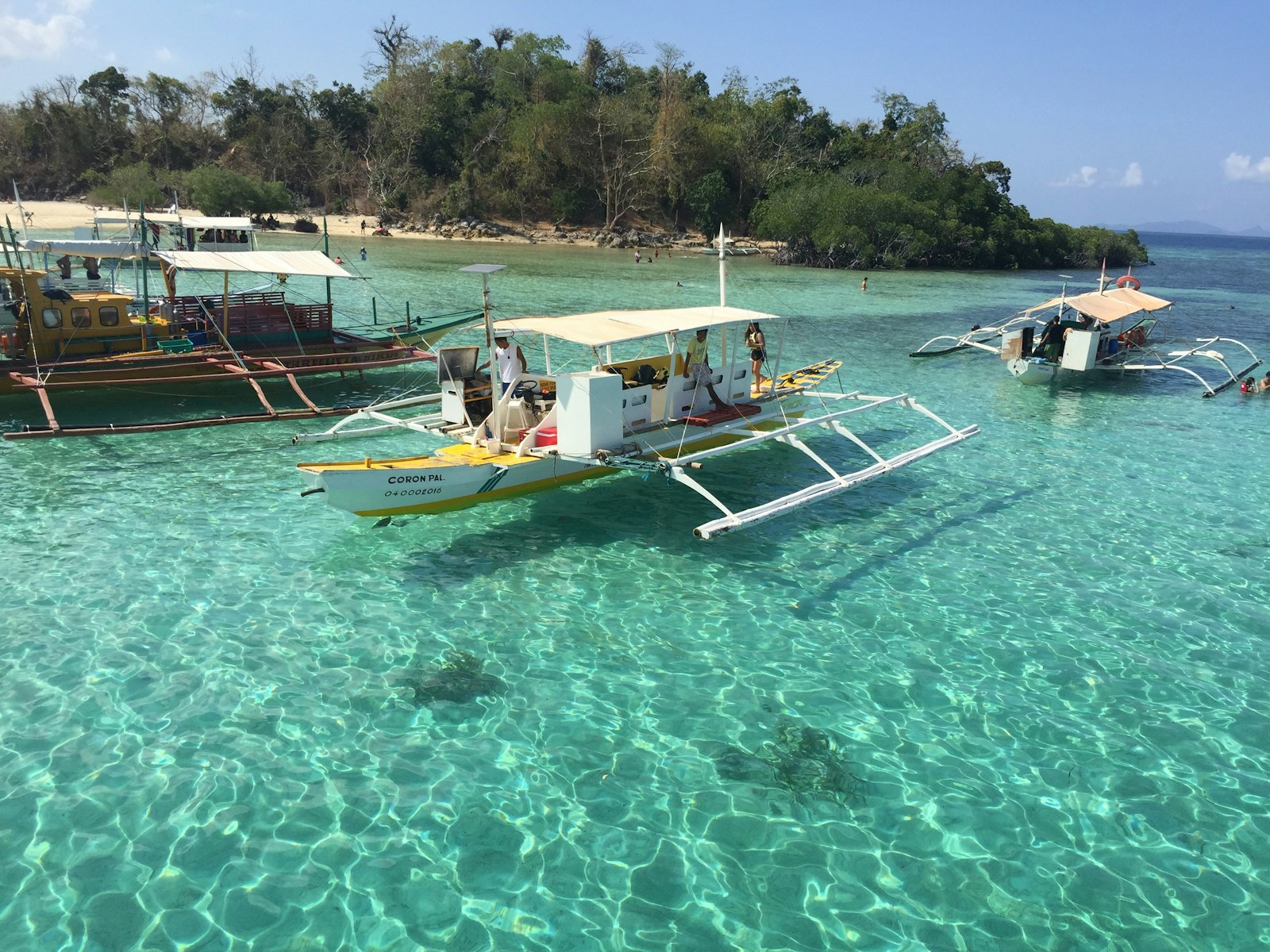
Palawan Travel Guide at a Glance: Three Major Bases Compared
Coron is built around crater lakes, limestone cliffs, and wreck diving. El Nido is the most developed and most photographed of the three, centred on enclosed lagoons inside Bacuit Bay. Puerto Princesa is the provincial capital, the main airport hub for the whole province, and home to the Subterranean River along with the calmer island hopping of Honda Bay.
Dramatic and diver-driven
- Location: Busuanga Island, separate from the Palawan mainland
- Signature: Crater lakes, limestone cliffs, WWII wreck diving
- Pace: Boat-tour based, physically active, staircases and climbs
- Best for: Divers, dramatic scenery, shorter first-time trips
- Watch for: Per-attraction fees stack up fast
Postcard lagoons, most developed
- Location: Northern tip of mainland Palawan, Bacuit Bay
- Signature: Enclosed lagoons, Tours A through D, beach clubs
- Pace: Most tourist infrastructure, most crowded standard tours
- Best for: First-time Palawan trip, classic lagoon scenery
- Watch for: Highest cost of the three bases, rising each season
Slower, wallet-friendlier, underrated
- Location: Palawan mainland, the provincial capital
- Signature: Subterranean River, calmer Honda Bay island hopping
- Pace: Easiest physically, main airport hub for the province
- Best for: Slower travel, wildlife and eco-tourism, tighter budgets
- Watch for: River permits need advance booking in peak months
How to Choose Your Base
How Much Time Do You Have?
Under five days, choose one base. El Nido and Puerto Princesa can work together within five to seven days, while covering all three bases realistically requires ten to fourteen days.
Dramatic or Gentle Scenery?
Coron feels dramatic and vertical, El Nido is defined by enclosed lagoons, and Puerto Princesa offers calmer, less physically demanding island hopping. Choose according to your energy, not only which photographs look best.
Do You Dive?
Coron is the strongest choice for wreck diving. Non-divers can still enjoy its lakes and lagoons, but El Nido or Puerto Princesa may suit travellers seeking beaches and slower exploration.
What Is Your Budget?
Puerto Princesa generally stretches a tighter budget further. Coron sits in the middle as attraction fees accumulate, while El Nido usually carries the highest costs.
Choose Your Palawan Base at a Glance
- Under 5 days: Stay in one base.
- 5–7 days: El Nido and Puerto Princesa are the easiest pair.
- 10–14 days: All three bases become realistic.
- Coron: Dramatic cliffs, lakes and vertical scenery.
- El Nido: Enclosed lagoons and classic Palawan views.
- Puerto Princesa: Calmer island hopping and gentler landscapes.
- Wreck diving: Choose Coron.
- Lagoon hopping: Choose El Nido.
- Slower eco-tourism: Choose Puerto Princesa.
- Lower budget: Puerto Princesa generally stretches money further.
- Middle range: Coron, although attraction fees accumulate.
- Higher budget: El Nido is generally the most expensive base.
Coron: What Is There and How to See It
Coron’s island-hopping circuit is built around a cluster of lakes and lagoons that get marketed as one experience but are actually separate paid attractions, most of them sitting within the ancestral domain of the Tagbanua people, the indigenous community that has managed this part of Coron Island for generations. Kayangan Lake is the most photographed, a crater lake reached by a steep staircase and often marketed as the cleanest lake in the Philippines. The Tagbanua opened it to tourism in the early 2000s after receiving formal ancestral domain recognition from the government, and the entrance fee still goes directly to the community rather than a government agency, which is part of why the fee structure here feels different from a standard national park charge. Twin Lagoon sits nearby and involves swimming or kayaking through a narrow limestone gap connecting two lagoons, also within Tagbanua-managed waters.
Beyond the lakes, a standard Coron tour covers stops such as Malcapuya Island, a longer-distance sandbar stop, plus Banana Island, CYC Beach, Atwayan Beach, and Bulog Dos Island, each a distinct stop with its own character rather than an interchangeable beach photo. Tour operators usually bundle four to five of these into a single full-day boat trip, priced per boat rather than per person, which is why travelling in a small group makes Coron noticeably cheaper per head than travelling solo.
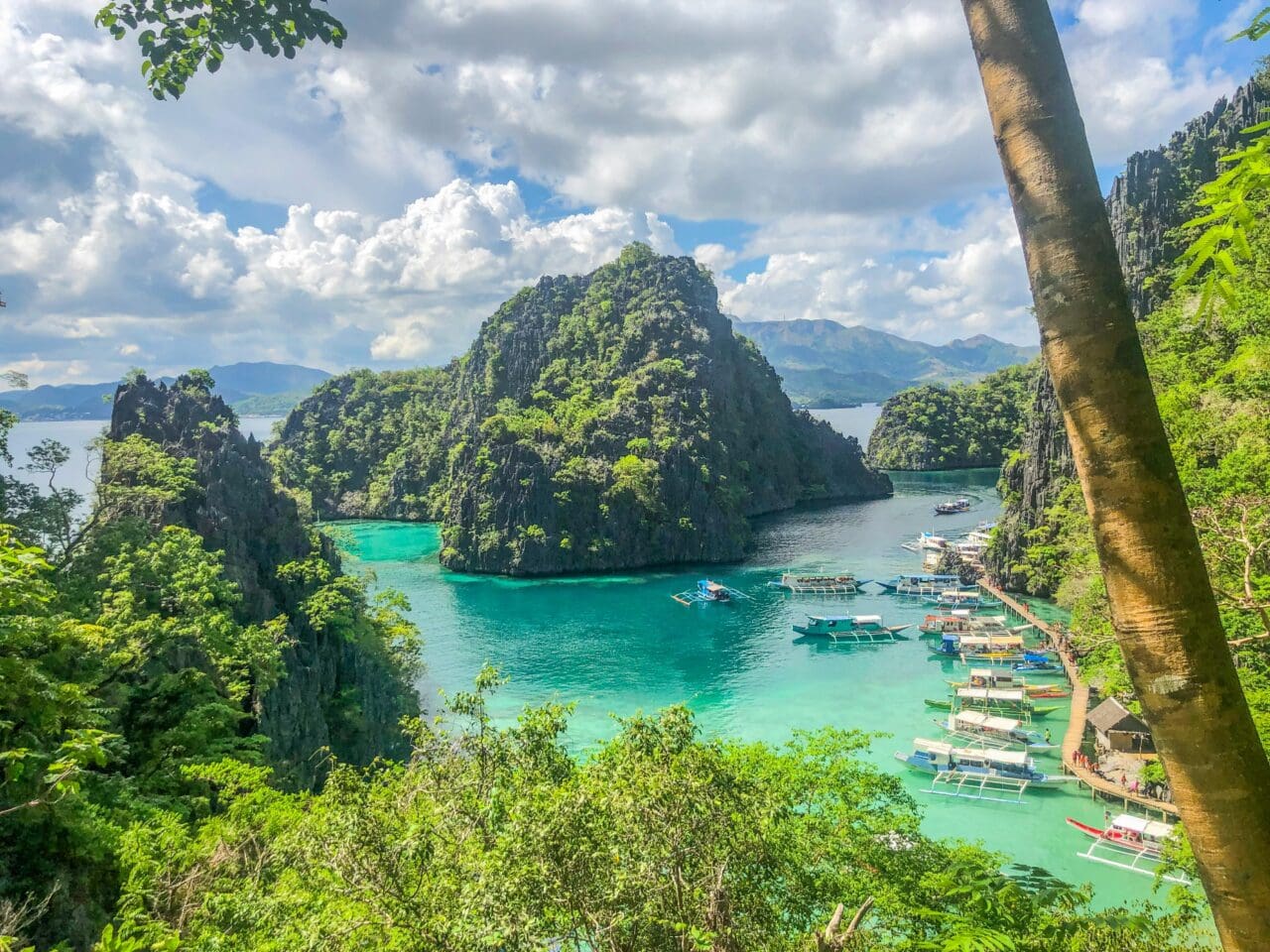
For a full breakdown of what a Coron day actually involves, including pacing and what tours tend to skip, see the Coron island hopping tour review and the wider roundup of things to do in Coron.
Coron town itself has limited standalone appeal. It exists to service the boat tours, built around a compact strip of dive shops, tour offices, and simple restaurants rather than the kind of beachfront promenade El Nido has cultivated. Travellers expecting a resort town on El Nido’s level are often disappointed by how functional Coron feels once they’re off the water, and that disappointment usually traces back to expectations set by photos of the lakes rather than photos of the town. Evenings here revolve around simple seafood grills and a handful of local carinderias rather than the beach-club scene further north, which suits travellers who came for the diving and the lakes rather than nightlife, and feels thin to anyone expecting otherwise.
El Nido: What Is There and How to See It
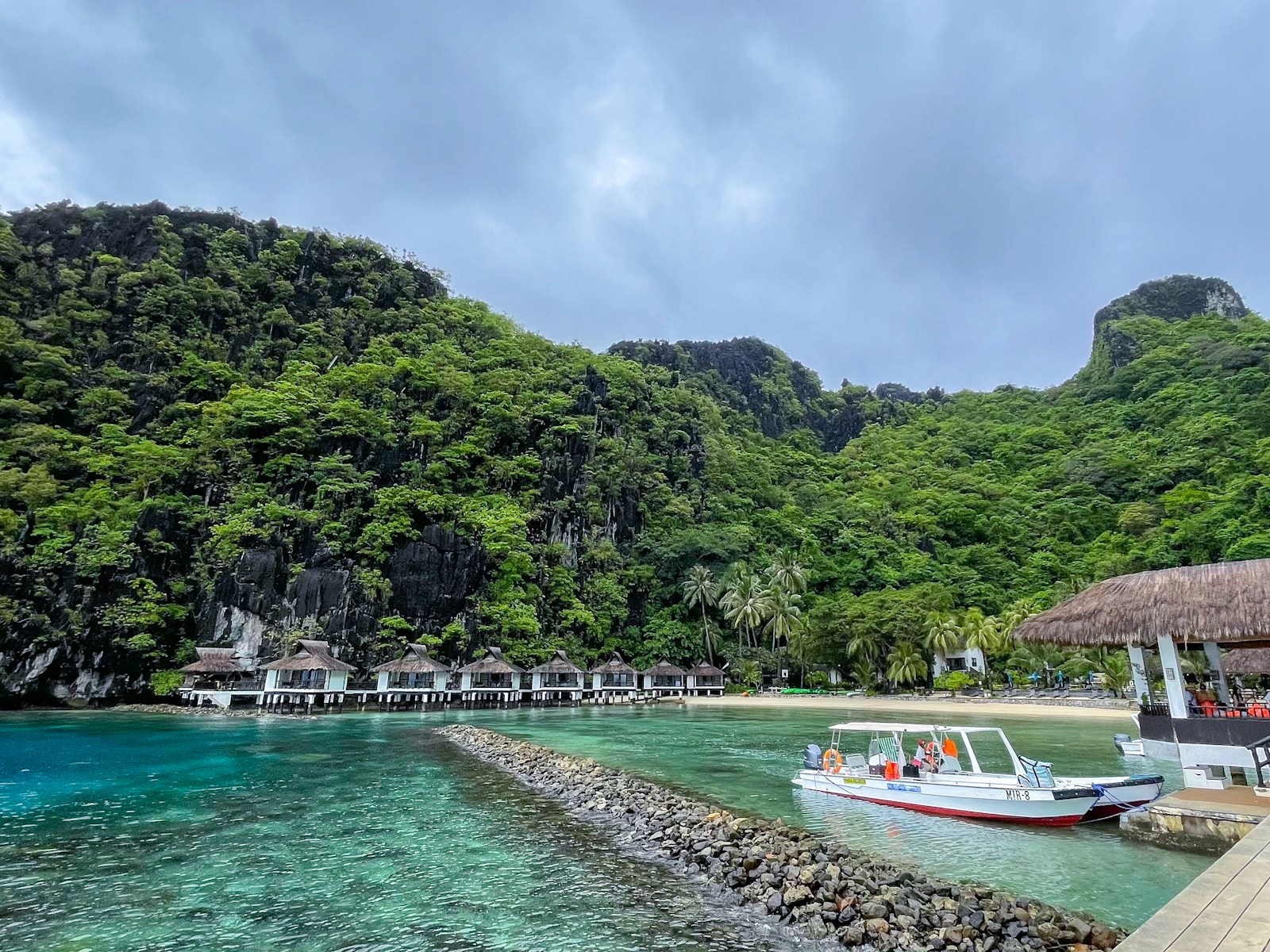
El Nido revolves around Bacuit Bay’s four standard boat routes, Tours A to D, each covering different lagoons and beaches. Tour A usually includes Big Lagoon, Secret Lagoon, Shimizu Island and Seven Commandos Beach. It is the usual first choice for new visitors, which also makes it the busiest.
El Nido town offers the easiest access to the pier, restaurants and tour operators, but its compact centre can become noisy and crowded. Corong Corong is quieter and often better value, while Nacpan Beach trades convenience for distance from the tourist centre.
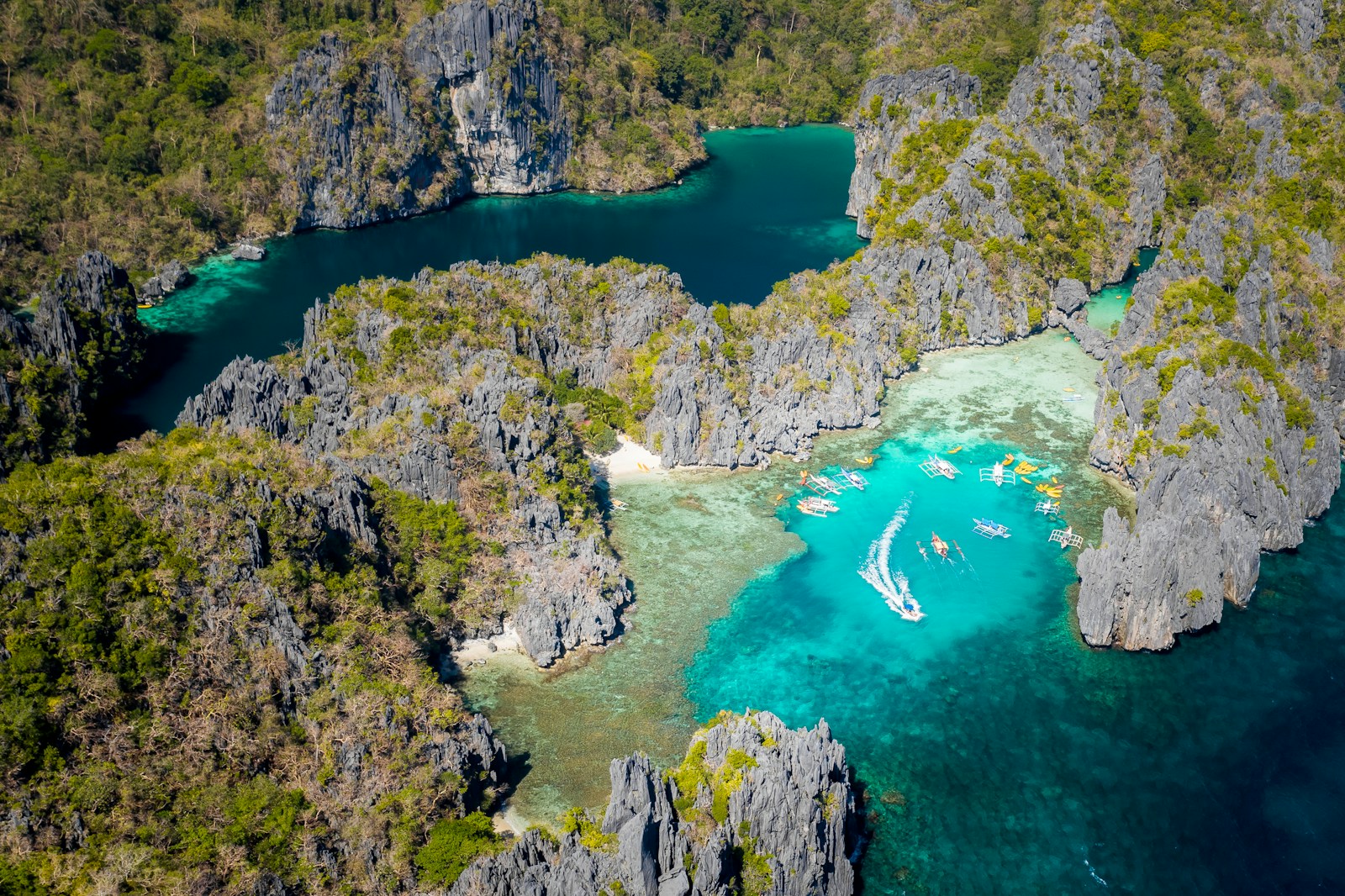
Prices and fee rules can change. Confirm the final amount with the operator before booking.
Visitors pay a ₱400 environmental fee, generally valid for ten days. Lagoon entrance fees, kayak hire and other charges may sit outside the advertised tour price. El Nido’s postcard image is easy to sell; the real cost only becomes visible once the extras are added.
El Nido also has Palawan’s most developed food and nightlife scene. Beachfront restaurants, cocktail bars and Western-style cafés add comfort, but also raise daily spending. Local eateries remain cheaper, making location and dining habits as important to the budget as the boat tours themselves.
Puerto Princesa: The Underrated Base
Puerto Princesa is usually treated as a layover between the airport and El Nido or Coron, which undersells what is actually here. The Puerto Princesa Underground River is the zone’s signature attraction, a navigable subterranean river system and UNESCO World Heritage Site recognised as one of the New7Wonders of Nature, reached by permit-controlled boat tours that need booking ahead during peak months because daily visitor numbers are capped to protect the cave system. Standard tours commonly cost around ₱1,500 to ₱2,000 per person, including transport, boat access and a guide.
Honda Bay is Puerto Princesa’s answer to island hopping, calmer and more accessible than Coron’s or El Nido’s circuits and better suited to travellers who want the experience without the physically demanding parts. Within Honda Bay, Starfish Island, Luli Island, and Cowrie Island are the three most commonly bundled stops, a short boat ride apart and each worth understanding individually rather than assuming they’re interchangeable. Luli Island in particular disappears almost entirely at high tide, which surprises travellers who arrive expecting a full beach and find a narrow sandbar instead.
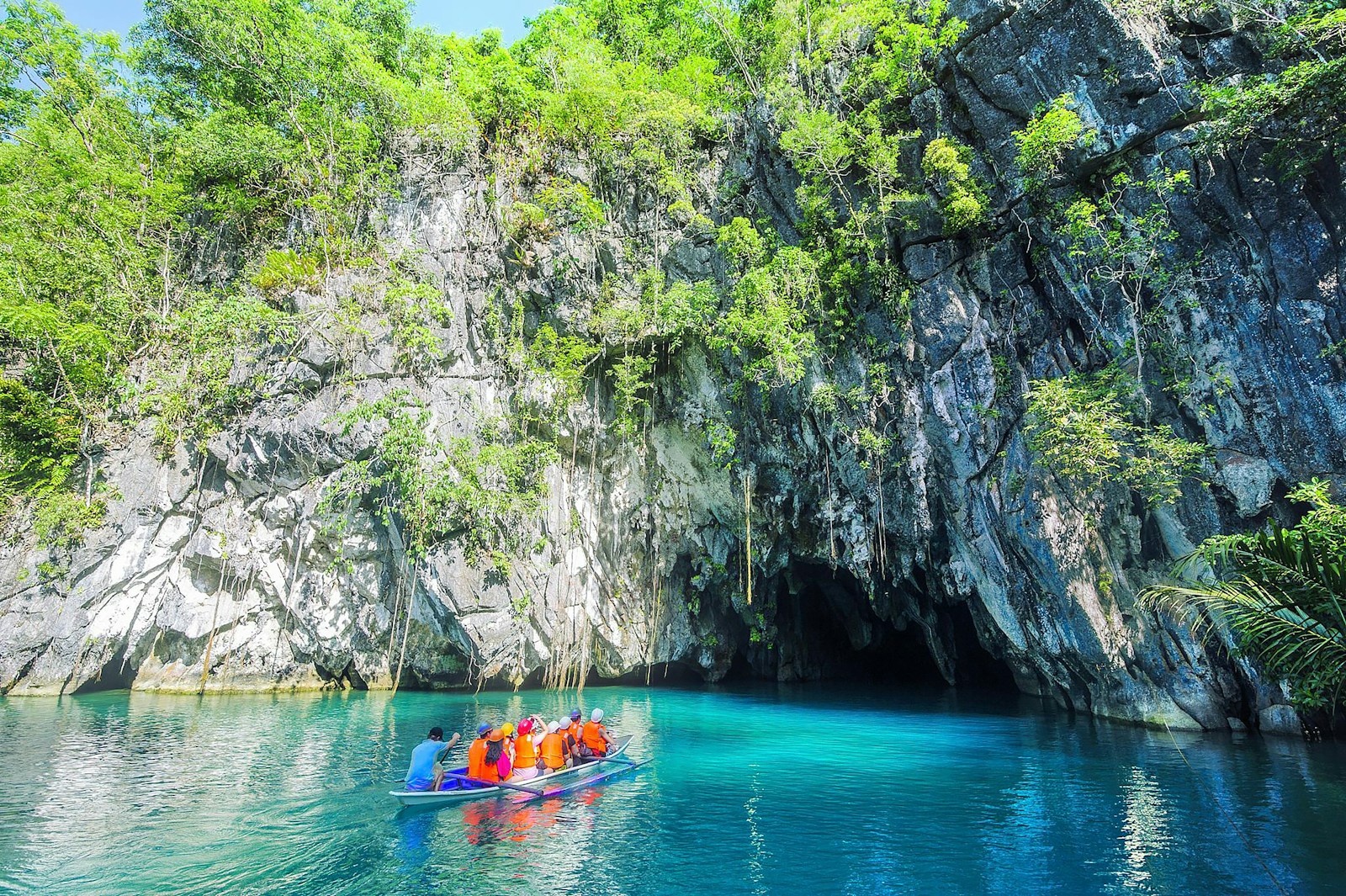
Ugong Rock also belongs to the Puerto Princesa area, despite often being grouped with Coron content online. Located along the route to Sabang, it combines a guided limestone cave walk with an optional zipline. It works best as part of an Underground River day rather than a separate journey.
Puerto Princesa is the practical gateway to mainland and central Palawan, not the entire province. Its airport, road connections, markets and wider range of everyday services make it an efficient base. It lacks the concentrated drama of Coron or El Nido, but that is also its advantage: lower costs, gentler activities and a pace that feels less engineered around tourism.
Weather and Seasonal Timing
Palawan’s most reliable travel period is December to April, when skies are generally clearer and boat schedules more dependable. The trade-off is higher demand and prices, particularly around Christmas, New Year and Easter.
May and November are transitional months. Conditions are less predictable, but travellers may find lower prices and fewer crowds without facing the full disruption risk of the rainy season.
Rain becomes more frequent from June to October, with rough seas capable of cancelling tours in Coron, El Nido and the Underground River area. Tropical cyclone activity across the Philippines also peaks from July to October, according to PAGASA. A storm does not need to reach Palawan directly to disrupt boat travel, so the forecast matters more than the calendar alone.
Seasonal patterns are a guide, not a guarantee. Check local forecasts and boat schedules before travelling.
Getting Between Zones
Palawan’s three main bases do not form one convenient transport loop. Coron sits on Busuanga Island, while El Nido and Puerto Princesa are on the Palawan mainland. Every change of base consumes a meaningful part of the trip.
Coron and El Nido connect by ferry, while El Nido and Puerto Princesa connect by road. Coron and Puerto Princesa have no direct road connection, so travellers depend on limited flights or an indirect route. Schedules change, making each transfer a travel block rather than a casual side trip.
Planning rule: Do not place an important flight or tour immediately after an inter-zone transfer.
What Palawan Actually Costs
Costs vary widely by zone, and the gap matters more here than in most Philippine destinations because the three zones aren’t interchangeable once a budget is fixed. Puerto Princesa consistently runs cheapest, with budget travellers managing on roughly fifteen hundred to twenty-five hundred pesos a day covering simple accommodation, local meals, and tricycle transport, rising to thirty-five hundred or more on island-hopping days. Coron sits in the middle, pushed up by the way its lake and lagoon fees stack on top of the base tour price. El Nido runs highest, driven by its more developed accommodation market and the accumulation of environmental and entrance fees on top of every tour.
The detail that catches first-time visitors off guard in all three zones is that quoted tour prices rarely include environmental fees, park permits, or entrance charges, which get collected separately and add up faster than the headline tour price suggests. Treating Palawan as a single flat daily budget across all three zones will consistently underestimate the real cost of a multi-zone trip, since El Nido alone can run noticeably higher per day than the same style of travel in Puerto Princesa.
Need exact numbers? Our upcoming Palawan planner will include day-by-day budgets and an editable cost calculator for each base and tour combination. This guide covers the ranges needed to choose your route.
How Long You Actually Need: Route Frameworks
The right length of trip depends on how many zones are in it, not just how many days are available. These four frameworks reflect what’s realistic once transit time is accounted for, not the compressed version travel forums tend to suggest. Each is a shape for the trip, the zones involved and roughly how the days split between them, rather than a fixed daily schedule.
Single zone, no rushing
One base, full commitment
- Fly into either Coron or El Nido directly
- Two to three full island-hopping days
- One buffer day for weather or fatigue
- Skip the second zone rather than rush it
Two connected zones
El Nido and Puerto Princesa, linked by road
- Three to four days based in El Nido
- One travel day by van to Puerto Princesa
- Two to three days for the Underground River and Honda Bay
- Coron is better left for a separate trip at this length
All three zones
Coron, El Nido, and Puerto Princesa
- Three days in Coron, flying in directly
- Ferry or short flight to El Nido, three to four days
- Road transfer to Puerto Princesa, two to three days
- Fly out from Puerto Princesa to close the loop
All three zones, unhurried
Same loop, real rest days included
- Four to five days in Coron, including a rest day
- Five days in El Nido, mixing tours with slow days
- Three to four days in Puerto Princesa and Honda Bay
- Enough buffer to absorb a weather cancellation without losing the trip
Common Planning Mistakes
Treating Palawan as one continuous loop. Coron, El Nido and Puerto Princesa are separated by long transfers. Adding too many bases turns a short holiday into a transport schedule.
Budgeting only for the advertised tour price. Lakes, lagoons, islands and environmental permits may carry separate fees, particularly around Coron and El Nido.
Booking accommodation in the wrong base. El Nido is not a realistic day trip from Puerto Princesa, and Coron–El Nido ferries usually leave within a limited morning window. Missing the connection can cost an entire day.
What Surprises First-Time Visitors
Palawan is more physical than it looks. Steep stairs, cave walks, wet landings and repeated boat transfers can make Coron and El Nido more tiring than the photographs suggest.
The famous lagoons are rarely empty. Serene images are usually captured before the main tour boats arrive. By mid-morning, popular stops can feel crowded and tightly scheduled.
Cash and connectivity remain inconsistent. Cards are not accepted everywhere, mobile signal varies, and smaller operators may require cash. Arrive with a reasonable cash buffer instead of relying entirely on ATMs.
Who Palawan Suits and Who It Does Not
Divers, travellers comfortable with steep staircases, and anyone drawn to dramatic, vertical scenery are well served by Coron and El Nido. Travellers who want a slower pace, more accessible island hopping, and a genuine natural wonder without the crowd density of the northern zones are better matched to Puerto Princesa. Anyone expecting resort-town polish everywhere they land in Palawan will be disappointed by Coron specifically, which prioritises function over presentation. Budget-conscious travellers who’ve built their expectations around El Nido’s social media presence should know Puerto Princesa or a Coron-heavy itinerary will stretch the same money considerably further.
And anyone trying to compress all three zones into under a week should recalibrate expectations before booking, since the transit time between zones, particularly the one-ferry-a-day constraint out of Coron, is the part most itineraries underestimate until they’re already there.
The travellers who come away from Palawan disappointed are rarely disappointed by the scenery itself. It’s almost always a mismatch between the trip they planned and the geography they were actually planning around, three separate zones treated as one, a budget calculated for the cheapest of the three applied across all of them, or a schedule that assumed transport would be faster and more frequent than it is. Palawan rewards travellers who plan around its actual shape rather than its marketing image, and punishes, with lost days and blown budgets, the ones who don’t.