A foreign license gets you ninety days of driving in the Philippines. It does not get you ninety days of clarity about what happens after.
To convert a foreign driver’s license in the Philippines comes down to one core step: exchanging it for a Philippine driver’s license issued by the Land Transportation Office (LTO), which becomes mandatory the moment you pass the 90-day mark of driving in the country on your original license. Tourists on a short holiday rarely need to think about this. Anyone staying longer, working, retiring, or settling in, runs into it fast, usually right around the point they’ve stopped counting the days since they landed.
This isn’t a step everyone gets right the first time. LTO requirements have shifted more than once in the past few years, moving parts of the process online through the LTMS portal, adding a drug test to first-time applications, and tightening what counts as an acceptable medical certificate. What follows is what’s actually current, not what was current when most of the guides still circulating were written.
NOTE: This article has been fully revised from its original version. The information below has been checked against current LTO, Department of Health, and consular sources.
Table of Contents
The 90-Day Rule, and What It Actually Resets On
A valid foreign driver’s license lets you legally drive in the Philippines for 90 days, counted from your date of arrival, not your date of purchase, rental, or first drive. This comes from the Land Transportation and Traffic Code, and it applies uniformly regardless of nationality or which country issued your license.
The date that matters is the stamp in your passport, not a calendar reminder you set yourself. If you leave the Philippines and re-enter, immigration typically resets the clock on a fresh 90-day count, though this depends on your visa type and how immigration classifies your visit, so it isn’t a loophole to lean on if you’re actually living here rather than visiting. Once you cross 90 days while still driving, your foreign license stops being a valid substitute, and you’re expected to be driving on a Philippine license from that point.
Do You Actually Need to Convert?
If you’re visiting for a few weeks, the answer is almost certainly no. Your foreign license, in English or accompanied by an official translation, covers you for the full 90 days without any LTO involvement at all.
If you’re staying longer, working under a visa, retiring, or building a life here, conversion stops being optional. It’s not just about avoiding a fine either. A Philippine driver’s license also functions as a widely accepted photo ID for banking, government transactions, and everyday verification, something a foreign license doesn’t reliably do here.
There’s a practical dimension too that catches people off guard: motor insurance. If you’re driving on an expired foreign license, past the 90-day window, some insurers can treat that as driving without a valid license entirely, which affects how a claim gets handled after an accident, not before one. Rental car companies are generally stricter about this than the LTO itself, and will often decline to hand over the keys to anyone clearly past their 90 days on a foreign license alone.
- License needed: Your foreign license, no conversion required
- Translation: Only if not already in English
- LTO involvement: None
- Best for: Tourists, short business trips, layovers
- License needed: Converted Philippine NPDL
- Translation: Not applicable once converted
- LTO involvement: Full conversion process
- Best for: Visa holders, retirees, long-term residents
What You Actually End Up With
The LTO issues several categories of license, and older guides tend to list all of them without saying which one applies to you. For a conversion, it’s almost always a Non-Professional Driver’s License (NPDL), the standard license for private, non-commercial driving. That covers cars, motorcycles, and light vehicles for personal use.
A Professional Driver’s License is a separate category entirely, required only if you intend to drive for compensation, ride-hailing, delivery, transport work. It comes with its own additional requirements (a Theoretical Driving Course certificate, among others) that don’t apply to a standard conversion. The Student Permit is the entry point for people applying for a Philippine license from scratch, with no existing license to convert, so it’s not relevant here either. If you already hold a valid foreign license, you skip the student permit stage entirely.
Your NPDL will also carry a restriction code tied to the vehicle type used during your practical exam, if you had to take one. Foreigners converting a valid license from a left-hand-drive country are generally restricted to codes 1 or 2, covering standard cars and light vehicles.
Who Qualifies for Conversion
You qualify to convert if you’re physically and mentally fit to drive, able to read and write in English, Filipino, or a major local dialect, and holding a foreign driver’s license that’s still valid, requirements set out in the governing LTO memorandum circular on foreign license conversion. Applicants with unsettled traffic violations on record won’t clear the process until those are resolved.
Two groups face an extra step. If your foreign license has already expired, you’ll need to pass both the written and practical driving exams before conversion is approved, the same as any first-time applicant. And if your license was issued by a country that drives on the left, the UK, Australia, Japan, and others, you’re required to sit the practical exam regardless of whether your license is still valid, since the LTO wants confirmation you can actually handle a right-hand traffic pattern before handing you a local license.
Documents You'll Need
- Your valid foreign driver’s license, original and a photocopy. If it isn’t in English, an official translation from your country’s embassy in the Philippines is required alongside it.
- Your passport, original and photocopies of the bio page, visa page, and the page showing your most recent arrival stamp. If you’re a temporary resident, your Alien Certificate of Registration (ACR) from the Bureau of Immigration works in place of the visa page.
- A medical certificate from an LTO-accredited clinic. This has to be a fresh, electronically transmitted certificate from a clinic operating inside the Philippines. A medical certificate from your home country, however official it looks, won’t be accepted.
- A negative drug test result from a DOH-accredited testing center, valid for six months. This is required for first-time conversions, though it’s been dropped from renewal applications since 2020, following a court ruling that struck down the original mandate.
- A completed Application for Driver’s License (ADL) form, available at the LTO office or downloadable in advance.
- If you’re employed in the Philippines, having your Tax Identification Number (TIN) on hand tends to smooth the process, per the compliance requirements under Executive Order 98.
There’s genuine ambiguity around exactly how much visa validity you need remaining at the time of application, a small but recurring snag in the wider visa and migration maze foreigners navigate in the Philippines. Some current guides cite a minimum of 120 days remaining on your visa; the underlying LTO circular is less specific and simply requires a valid visa or ACR. Given the inconsistency, the safe move is confirming directly with the specific LTO office you’re applying at rather than assuming a fixed number applies everywhere.
How to Convert a Foreign Driver's License in the Philippines
Book ahead and prepare documents
Register on the LTMS portal to book an appointment, or confirm your chosen branch accepts walk-ins for conversions. Gather your foreign license, passport, and ACR or visa documentation before you go.
Get your checklist and submit for evaluation
At the customer service counter, fill out the ADL form and receive a document checklist. Present everything at the evaluator counter for an authenticity and completeness check.
Medical exam, drug test, and biometrics
Complete the medical exam at an LTO-accredited clinic and the drug test at a DOH-accredited center, if not already done beforehand. Your photo and signature are captured here too.
Pay and sit any required exam
Pay the licensing and conversion fees at the cashier. If your license is expired or from a right-hand-drive country, this is where the written and/or practical exam happens.
Claim your Philippine license
Once approved, claim your license with your official receipt in hand. Some offices issue it the same day; others require a return visit or courier delivery.
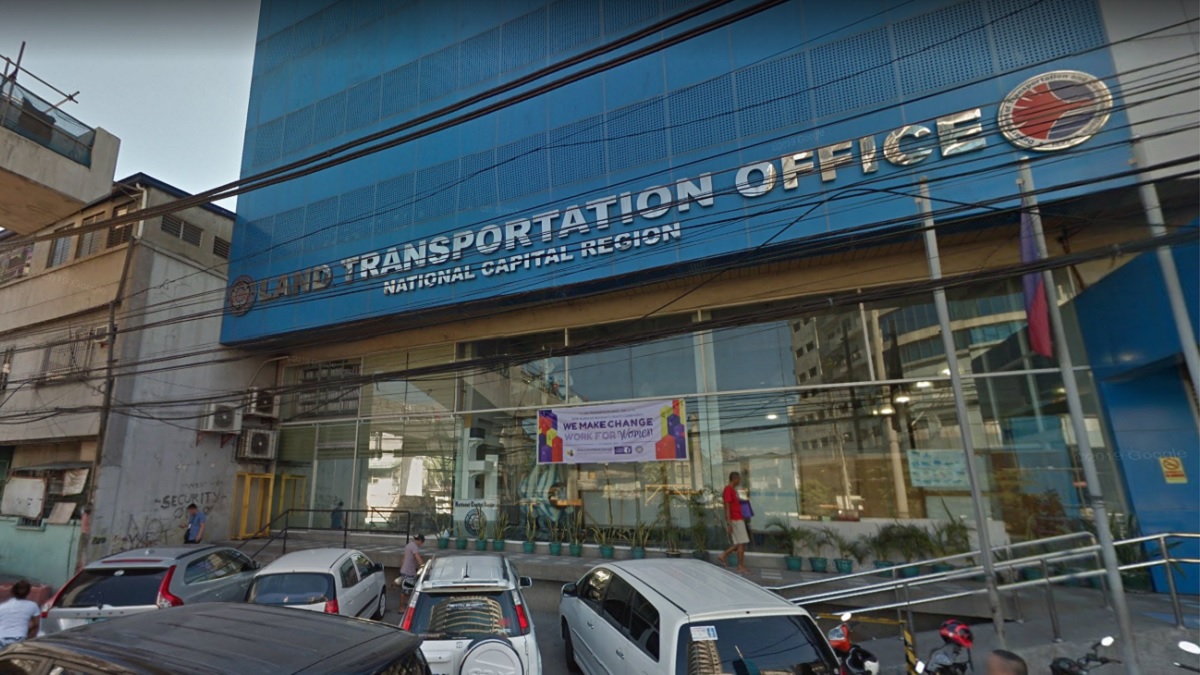
Not every LTO branch handles conversions, so it’s worth confirming beforehand rather than showing up and finding out the hard way. In Metro Manila, the East Avenue branch in Quezon City is the one most consistently equipped for this. You can register and book an appointment through the LTMS portal before you go, which cuts down on the queueing, though walk-ins are still processed at most conversion-capable offices.
If your foreign license is valid and you’re not from a right-hand-drive country, you typically skip the written and practical exams entirely and move straight through evaluation, medical and biometric checks, and payment. That’s the version most long-term residents actually experience.
What It Costs
Budget for more than just the headline license fee. As of the most recent published LTO rates, a straightforward conversion runs roughly:
All told, a conversion with no exams required typically lands somewhere around ₱1,700 to ₱2,000 once the medical and drug test are factored in, more if you’re required to sit the practical exam. This is meaningfully higher than the figures still floating around in older guides, most of which were quoting fees from before the drug test requirement existed.
A first-issuance Non-Professional Driver’s License is valid for 5 years. Renewals extend to 10 years, provided your record stays clean during that first 5-year stretch. Renewal itself is a separate, generally simpler process once you’re already in the LTO system as a license holder rather than a conversion applicant, and it hasn’t required a fresh drug test since 2020, only the medical certificate. Worth knowing now, even though your first renewal is years off: it saves you from assuming the entire process repeats itself from scratch.
The International Driving Permit Isn't a Workaround
This is worth being blunt about, because it’s one of the most common and costly misunderstandings in this whole process: an International Driving Permit (IDP) does not extend your 90 days, and it cannot substitute for a Philippine license once that window closes.
The confusion is understandable. An IDP sounds like exactly the kind of document that should smooth over a foreign-license situation. In practice, the Automobile Association Philippines (AAP), the only body authorised to issue a Philippine IDP, requires you to already hold a valid Philippine driver’s license before they’ll issue one. It’s built for Philippine license holders who want to drive abroad, not for foreigners trying to extend their driving rights inside the country. If you’re past 90 days and still relying on a foreign
What People Get Wrong About This Process
- “Any LTO branch can handle a conversion.” Not true. Conversions require equipment and staff training that not every district office has. Confirm the specific branch handles foreign conversions before you go, or you’ve wasted a trip.
- “A valid IDP means I don’t need to convert.” Covered above, but it bears repeating because it’s the single most expensive assumption to get wrong: an IDP requires a Philippine license to exist in the first place.
- “My foreign medical certificate will save me a step.” It won’t. The LTO only accepts certificates from its own accredited clinics inside the Philippines, issued fresh for this application.
- “Leaving the country resets everything cleanly.” Re-entering does typically reset your 90-day count, but immigration classification and visa type both affect this, and it’s not a clean workaround if you’re actually resident here rather than genuinely re-entering as a visitor.
Avoid Fixers
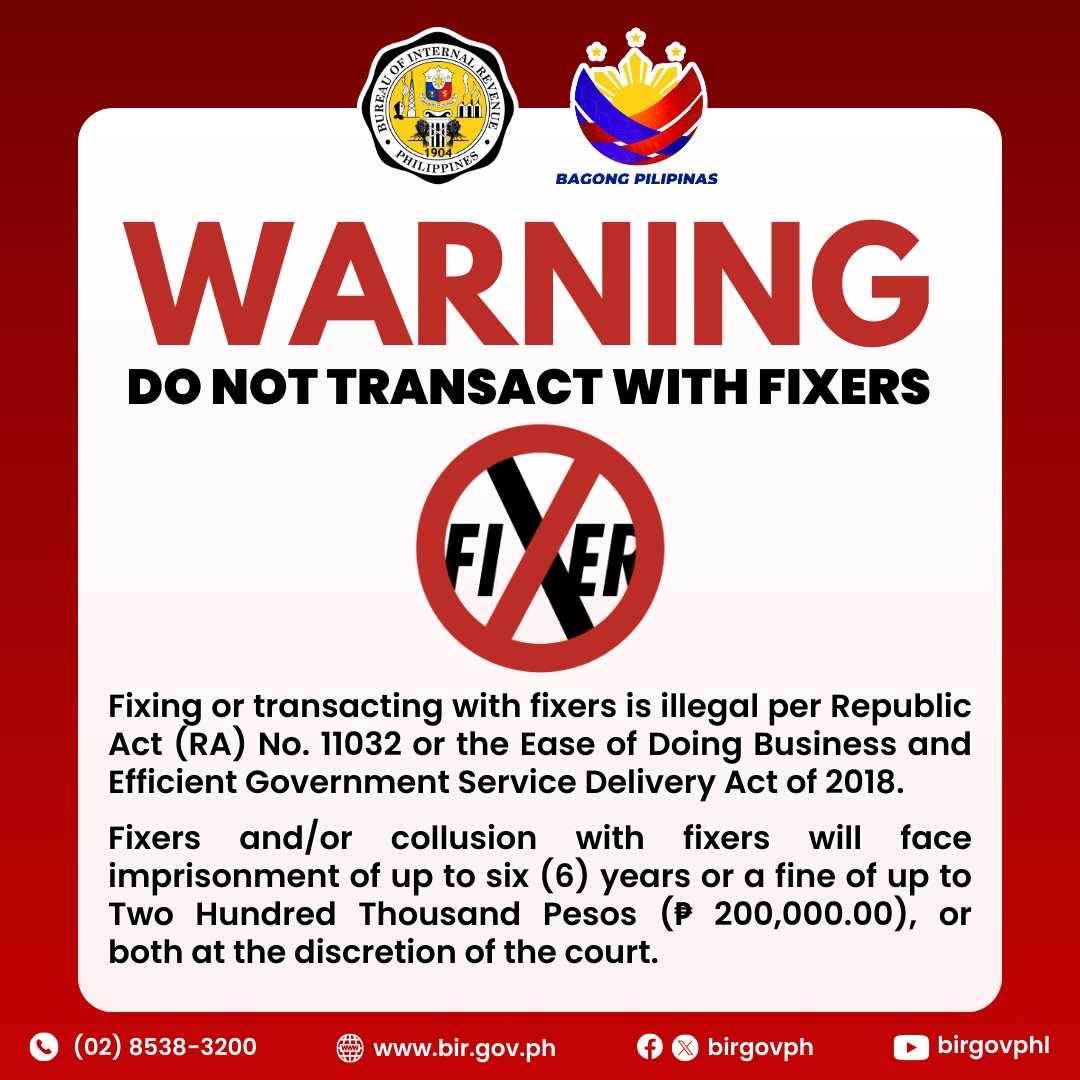
Using a fixer to speed up or bypass any part of this process is illegal, and the risk isn’t hypothetical. Documents processed through fixers carry a real chance of coming back fraudulent, which puts your ability to drive, and potentially your legal standing, at risk in a way that’s far more expensive to unwind than the time you’d have saved. The LTO has run periodic crackdowns on fixer networks at high-traffic offices, so treat their continued presence as opportunism rather than a sign the practice is tolerated.
Frequently Asked Questions
Do tourists need to convert their driver's license in the Philippines?
Can I drive in the Philippines on an International Driving Permit alone?
What happens if I drive past 90 days without converting?
Do I need to take a driving test to convert my license?
How long does the conversion process actually take?
Which LTO office should I go to for conversion?
The Honest Timeline
If your documents are complete and your license doesn’t require exams, conversion can realistically happen in a single visit, medical check, evaluation, payment, and biometrics all in one day at a well-run office. Add exams, incomplete paperwork, or a branch that’s not used to processing foreign conversions, and it stretches into multiple visits. The single biggest lever you have over how smooth this goes is showing up with every document already sorted, since most delays trace back to missing paperwork rather than anything genuinely complicated about the process itself.
None of this is legal advice, and LTO procedures shift with enough regularity that specifics are worth reconfirming directly with the office you’re applying at before you go. For broader context on navigating Philippine bureaucracy as a long-term resident, including why the system feels the way it does, or what else comes with settling in for good, our guides on the Alien Employment Permit and retiring in the Philippines cover the adjacent paperwork this one tends to travel alongside.