
A stereotype about Filipinos is rarely a lie invented from nothing. Almost every one of them started as something true, somewhere, for a while, and then got frozen there. The person holding the belief stopped updating it. The culture kept moving. What’s left behind is a kind of fossil: accurate for a moment in history, mistaken for a permanent fact ever since.
Most articles about Filipino culture stereotypes do one thing: they say “false, don’t believe it,” and move on. That’s useful as far as it goes, but it skips the more interesting question. A stereotype doesn’t survive for decades because it’s random. It survives because it was once anchored to something real, an economic condition, a labour pattern, a cultural value seen from the outside without the context that explains it. Understanding where a stereotype actually came from does more for a reader than simply being told it’s wrong.
This piece looks at twelve stereotypes about Filipino culture and traces each one back to its origin: colonial history, decades of labour migration, cultural values that get misread by outsiders, and, in a few cases, compliments that flatten a person just as effectively as an insult would. Every stereotype gets the same treatment: where it came from, what’s actually true underneath it, and what it reveals, both about Filipino society and about the person still repeating it.
One boundary worth stating upfront: this is not a guide to Filipino food, festivals, or things to do in the Philippines. Those belong in their own articles elsewhere on this site. This one stays on the people, and on the assumptions still made about them.
NOTE: This article has been fully revised from its original version. Everything below reflects current understanding, verified sources, and a more careful treatment of the topic than the earlier version offered.
Every stereotype in this piece traces back to one of four sources. Colonial history, which turned economic judgment into character judgment. Decades of labour migration, which mistook one visible occupation for an entire identity. Cultural values, misread by outsiders who never saw the logic underneath them. And compliments that flatten just as effectively as insults, praise that replaces a person with an expectation. Each section below takes one of these four, then works through the specific stereotypes that grew out of it.
Table of Contents
Where History Still Shapes Filipino Culture Stereotypes
For more than three hundred years, the Philippines was governed first by Spain, then by the United States. During that entire stretch, the country wasn’t seen on its own terms. It was measured against the standards of whoever was in charge of it. Political independence arrived in 1946, but the habit of measuring Filipino people against an outside benchmark didn’t end with a signature on a treaty. Some of the stereotypes still repeated today are a direct continuation of that habit, just wearing more modern language.
The Backwardness Assumption
The idea that Filipinos are somehow behind, less developed, less capable, comes from a specific place. The term “third world” was coined in 1952 to describe countries that stayed politically non-aligned during the Cold War, nothing to do with development level at the time it was invented, according to Britannica’s history of the term. Over the following decades, the phrase drifted from a political label into a shorthand for poverty and backwardness, and the Philippines, like most former colonies, got filed under it.
That drift still shapes first impressions today. People meet a Filipino professional, engineer, doctor, or business owner and register visible surprise, as if competence needed explaining. The surprise itself is the tell. Nobody expresses that same reaction meeting a capable person from a country that was never colonised.
There’s a kernel of truth underneath the exaggeration. Real poverty exists in parts of the Philippines, and regional infrastructure gaps are real too. The error isn’t pretending those conditions don’t exist. The error is generalising a regional economic condition into a judgment about an entire population’s character or intelligence, which is a different claim entirely, and one the facts don’t support.
Poverty Incidence by Region, Philippines
Family poverty incidence varies by more than 20 percentage points across regions, the same country produces the country's lowest and highest rates at once.
Source: Philippine Statistics Authority, 2023 Family Income and Expenditure Survey (full-year poverty incidence among families). A national average or a single region's figure tells you nothing about the other seventeen.
Filipinos get filed as behind. What’s actually being repeated is a sixty-year-old political label that quietly turned into a character judgment, used by people who have no idea they’re still doing Cold War arithmetic on a stranger.
The English Doubt
Few things generate an odd reaction faster than a Filipino person speaking fluent English with an accent that isn’t American or British. Something in the listener expects hesitation, and when it doesn’t arrive, the accent itself becomes the thing they focus on instead.
This one has a clean, checkable answer. English has been an official language of instruction in the Philippines since the early twentieth century, a direct legacy of the American colonial period, and it remains embedded in schools, government, and business today. The EF English Proficiency Index consistently ranks the Philippines among the most English-proficient countries in Asia, not as an exception, but as a structural outcome of how the education system was built.
EF English Proficiency Index, Asia, 2025
The Philippines sits in "high proficiency" territory, well above the global average, and second only to Malaysia across all of Asia.
Source: EF English Proficiency Index 2025 (Education First), scores out of 800, based on 2.2 million test takers across 123 countries and territories. The Philippines has held a "high proficiency" rating in every edition of the index since it began.
What actually gets tested when someone mocks a Filipino accent isn’t fluency. It’s familiarity. An accent that doesn’t match what the listener is used to gets read as a deficiency, when it’s simply a different accent, produced by a different first language, applied to the same fluent grasp of English grammar and vocabulary.
Filipino English gets treated as somehow lesser. It never was. The thing actually being judged is the accent, not the fluency sitting underneath it.
The Borrowed Culture Assumption
Filipinos enjoy a lot of American pop culture. Fast food, Hollywood movies, English-language music, all genuinely popular. Outsiders sometimes read this as imitation, as if Filipino culture were somehow secondary or derivative because it absorbed influence from elsewhere.
The history explains the pattern without excusing the framing. Decades of American colonial administration embedded American media, education, and consumer brands directly into Filipino daily life. What happened next is the part that gets missed. Filipino fast food chains took the American format and rebuilt the menu entirely: rice as a standard side, spaghetti sauce sweetened for local taste, combinations that would look unfamiliar on the American version of the same restaurant chain. That’s not copying. That’s taking a structure and remaking its content entirely.
Every culture absorbs influence from somewhere. What separates genuine imitation from adaptation is whether anything gets changed in the process. In this case, plenty gets changed. It’s just less visible to someone only looking at the surface-level brand names.
Filipino culture gets called derivative for enjoying American media. Adaptation and imitation look identical from a distance. The difference only shows up once you check what actually got kept, and what got quietly rebuilt from the inside out.
The Assumption of One Religion
Spain’s three centuries of rule installed Catholicism as the dominant, visible institution across the archipelago, and that visibility became a kind of shorthand that outsiders still use today: Philippines equals Catholic country, full stop.
The CIA World Factbook’s country profile tells a more layered story. Roughly four in five Filipinos identify as Roman Catholic, which is a real majority, but the remaining population includes a substantial Muslim community concentrated in Mindanao, members of the Iglesia ni Cristo, a growing Evangelical and Protestant presence, and smaller communities of other faiths and no faith at all.
None of that diversity is new. Islam reached parts of the southern Philippines before Spanish colonisation began, and it never disappeared, regardless of how thoroughly Catholic imagery came to dominate the country’s international image. What the “one religion” assumption actually reveals is how completely a colonial institution can overwrite outside perception of everything that existed alongside it, and continued to exist long after the colonizers left.
The Philippines gets treated as one religious block. In reality, one faith simply became the loudest export, while several others kept operating quietly underneath it the entire time.
Religious Affiliation in the Philippines
One faith accounts for roughly four in five people, but the remaining fifth is not a rounding error, it's several distinct, established communities.
Concentration matters as much as the national number: Islam makes up roughly 91% of the household population in BARMM specifically, a regional majority hiding inside a national minority figure.
Source: Philippine Statistics Authority, 2020 Census of Population and Housing, religious affiliation. Iglesia ni Cristo is a homegrown Filipino church founded in 1914; it is not a Catholic offshoot or a foreign import.
Where Labour Migration Shaped the World's View of Filipinos
For more than half a century, the most common point of contact many people around the world have had with an actual Filipino person hasn’t been through the Philippines itself. It’s been through overseas Filipino workers: domestic helpers, nurses, seafarers, caregivers, construction workers, sent abroad in large, consistent numbers for generations. That’s a real and significant part of the Filipino experience. It’s also a narrow slice of a much larger population, and outsiders who only ever encounter Filipinos in these roles tend to mistake the slice for the whole.
Overseas Filipino Workers Deployed, 1990 to 2024
From a 1974 law that launched the programme to a record 2.1 million people leaving in a single year, overseas work went from an emergency measure to a permanent fixture of the economy.
2020 is missing from this chart on purpose: deployment collapsed by roughly three-quarters that year under pandemic travel restrictions, then rebounded within two years. A single bad year didn't end the pattern, which says something about how deeply overseas work is embedded in household income planning, not a program people walk away from easily.
Source: Philippine Overseas Employment Administration / Department of Migrant Workers deployment records, via CEIC Data and Statista. 1990 is the lowest deployment year on record; 2016 remains the highest single-year figure to date.
The Domestic Helper Identity
Millions of Filipinos work as domestic helpers abroad, and they do it with real skill under conditions that are often genuinely difficult. That part of the stereotype isn’t the problem. The problem is what happens next: the assumption that this is simply what Filipino people do, as though it were an identity rather than one occupation among many.
The Department of Migrant Workers, the Philippine government agency responsible for overseas workers, exists precisely because labour migration operates at a genuinely large scale, and has for decades, a pattern the Migration Policy Institute traces back through generations of Philippine government policy that actively encouraged emigration as an economic strategy. Filipino professionals also work as engineers, doctors, executives, scientists, and academics all over the world. The domestic helper stereotype persists not because it’s the only truth, but because it’s the most visible one, in the households and public spaces where outsiders are most likely to interact with a Filipino worker directly.
Underneath the labour statistics sits something closer to home: Utang na Loob, the sense of obligation many Filipinos feel toward family, is a real driver behind why so many choose overseas work in the first place, often at real personal cost, to support parents, siblings, or children back home.
Filipinos get cast as domestic workers by nature. What’s really being described is a labour pattern shaped by economics and family duty, mistaken for a personality because it’s the version of Filipino life most visible from the outside.
The Laziness Assumption
Where there’s visible underemployment, and outsiders don’t see the structural reasons behind it, individual character becomes the easiest explanation available. It’s simpler to conclude “these people don’t want to work” than to examine why the jobs available don’t match the population that needs them.
The Quiet Conditioning Inside Philippines Bureaucracy covers a closely related pattern: how Filipino institutions themselves teach people to wait, adapt, and work around systems that move slowly by design, not by individual failing. The same logic applies to employment. Millions of Filipinos work multiple jobs, take on physically demanding labour, or leave their families for years at a time specifically because local opportunities don’t provide enough. That’s not laziness. That’s a rational response to scarcity.
Every population on earth includes people who work harder than others. That’s simply true of humans generally, and it says nothing specific about any one nationality. What the laziness stereotype actually measures, most of the time, is an outsider mistaking a shortage of opportunity for a shortage of effort.
Some Filipinos get called lazy. Most of the time, what’s actually being measured is a shortage of well-paying work, misread as a shortage of effort.
Where Real Values Get Misread as Something Else
Some stereotypes aren’t really about a flaw at all. They’re about a foreign observer correctly noticing a real behaviour pattern, then attaching the wrong explanation to it, because the actual value underneath, Hiya (a sense of social propriety and dignity), Pakikisama (the drive to preserve group harmony), isn’t visible from outside the culture that produces it. This is where most cross-cultural friction actually lives: not in genuine bad behaviour, but in a real pattern being read through the wrong lens entirely.
Filipino Time
Foreigners consistently name this as the most frustrating thing about doing business or making plans in the Philippines: events start late, appointments slip, schedules bend. Why the Philippines Feels Chaotic to Foreigners covers this pattern in depth, and the short version is worth repeating here. Time in much of Filipino social life runs on a relational logic rather than a mechanical one. A genuine conversation in progress often outweighs the next scheduled appointment. Helping someone who needs it right now can take priority over protecting an arbitrary deadline.
That doesn’t mean time is treated as unimportant. In professional and business settings, particularly with international clients, Filipino punctuality is frequently excellent, which is the detail that undercuts the idea that this is a fixed character trait rather than a context-dependent norm.
Filipinos are always late, or so the stereotype goes. Many simply prioritise the person in front of them over the clock, though how strongly that shows up depends on the person, the profession, and the setting.
Deference Mistaken for Weakness
A pattern shows up often enough to earn its own stereotype: Filipina women, in particular, get read by outsiders as quiet, deferential, easily overruled, especially in early interactions with foreign partners, employers, or colleagues. Tall Poppy Syndrome: Australia’s Hidden Behaviour System documents a closely related cross-cultural mismatch: visible deference in a Filipino context and visible assertiveness in an Australian one both get misread when they cross into the other culture’s expectations.
Public modesty in Filipino social life is frequently a function of Hiya and Pakikisama, not an absence of authority. What looks like passivity in a group setting is often strategic restraint: preserving harmony in public while exercising real influence in private, at home, in family decisions, in business, in ways that simply aren’t performed loudly for an audience.
Quiet gets read as weak. It rarely is. A culture that rewards restraint in public isn’t short on authority, it just spends it somewhere the audience can’t see.
Stoicism Mistaken for Suppression
Filipinos are often described as remarkably resilient, able to endure genuine hardship without visible collapse. Occasionally that gets flipped into a criticism: the idea that Filipino culture avoids dealing with mental health honestly, papering over real pain with forced positivity.
Some of what looks like avoidance is actually a different display rule, not an absent one. Hiya discourages visibly burdening others with personal distress, particularly in public or in front of extended family, which shapes how difficulty gets expressed, not whether it’s felt. Mental health conversations in the Philippines have grown substantially in recent years, in schools, in media, in younger generations especially, but the outward form that conversation takes doesn’t always resemble the open, individual-disclosure model that’s normal in Western cultures, and it doesn’t need to in order to be genuine.
Filipinos get accused of avoiding mental health honestly. What’s actually different is the display rule, not the depth of feeling underneath it, and confusing the two says more about the observer’s own culture than it does about the one being judged.
Where a Compliment Still Flattens Someone
Not every stereotype on this list is an insult. Some of the most persistent ones are compliments: Filipinos are warm, resilient, beautiful. Worth sitting with an uncomfortable idea here: a positive stereotype does almost exactly the same job as a negative one. It replaces a specific, individual person with a fixed expectation, decided in advance, by someone who’s never met them.
The Hospitality Expectation
Filipino Hospitality is a genuine, well-documented cultural value, and there’s real substance behind the reputation. The Quiet Cost of Australian Space and Filipino Closeness explores the deeper social logic behind it: warmth expressed through physical closeness, shared food, and immediate inclusion, in a way that reads as genuinely different from more reserved cultures.
The trouble starts when a cultural value quietly turns into an individual obligation. Visitors sometimes arrive expecting effusive welcome as a kind of service default, owed to them simply for showing up, and grow confused or even irritated when an individual Filipino person, on an ordinary day, doesn’t perform it. Hospitality is a value a culture holds collectively. It was never a contract any one person signed to be endlessly warm on demand.
A warm welcome shouldn’t be a service default owed to strangers on arrival. The stereotype turns a genuine cultural value into an unpaid performance, and quietly punishes the one Filipino person who happens to be having an ordinary day.
The Endless Resilience Expectation
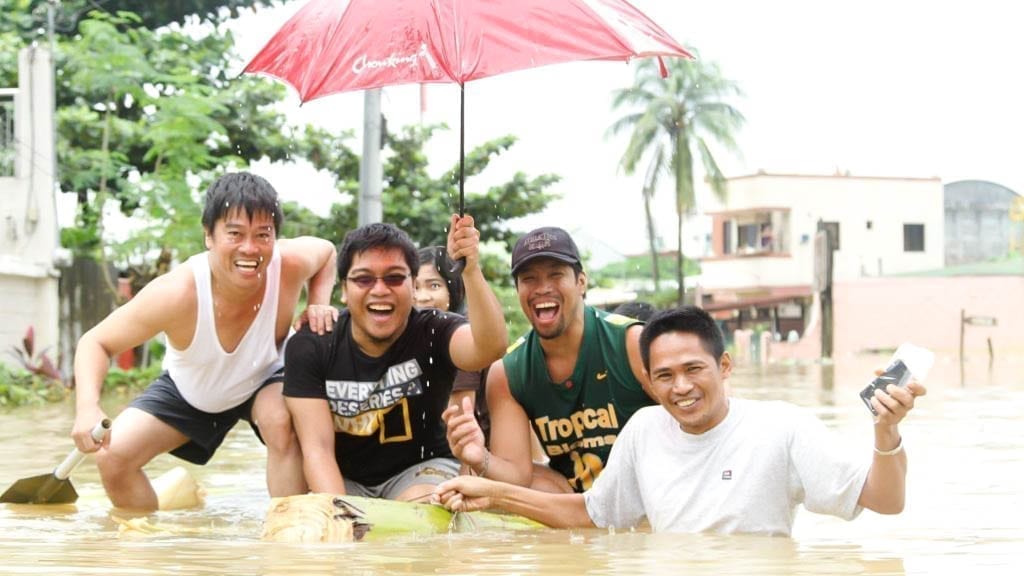
Filipinos get described, often admiringly, as always smiling, always finding a way through, regardless of what’s happening underneath. There’s truth in it. Bayanihan, the value of communities pulling together during genuine hardship, shows up repeatedly during floods, typhoons, and crises, in ways that are well documented and genuinely moving.
But resilience isn’t actually constant, and treating it as though it were misses something important. The same culture that produces sustained, coordinated endurance during a real crisis also has a name for the opposite pattern in ordinary daily life: Ningas Cogon, the tendency for enthusiasm on a smaller, everyday project to burn out quickly once the initial motivation fades. Both patterns are real, and they’re not contradictions of each other so much as evidence that resilience gets selectively deployed, strongest when something serious is genuinely at stake, weaker when it isn’t.
There’s a related shadow side worth naming honestly. The same tight community bonds that produce bayanihan during a crisis can, under different conditions, produce Crab Mentality, the pattern of pulling down someone whose individual success feels like it’s breaking from the shared struggle. Neither pattern cancels the other out. Both come from the same underlying instinct toward group cohesion, expressed differently depending on what feels threatened.
Endless resilience sounds like a compliment. It becomes armor the moment someone else decides, on your behalf, that you’re required to be wearing it.
The Beauty Standard
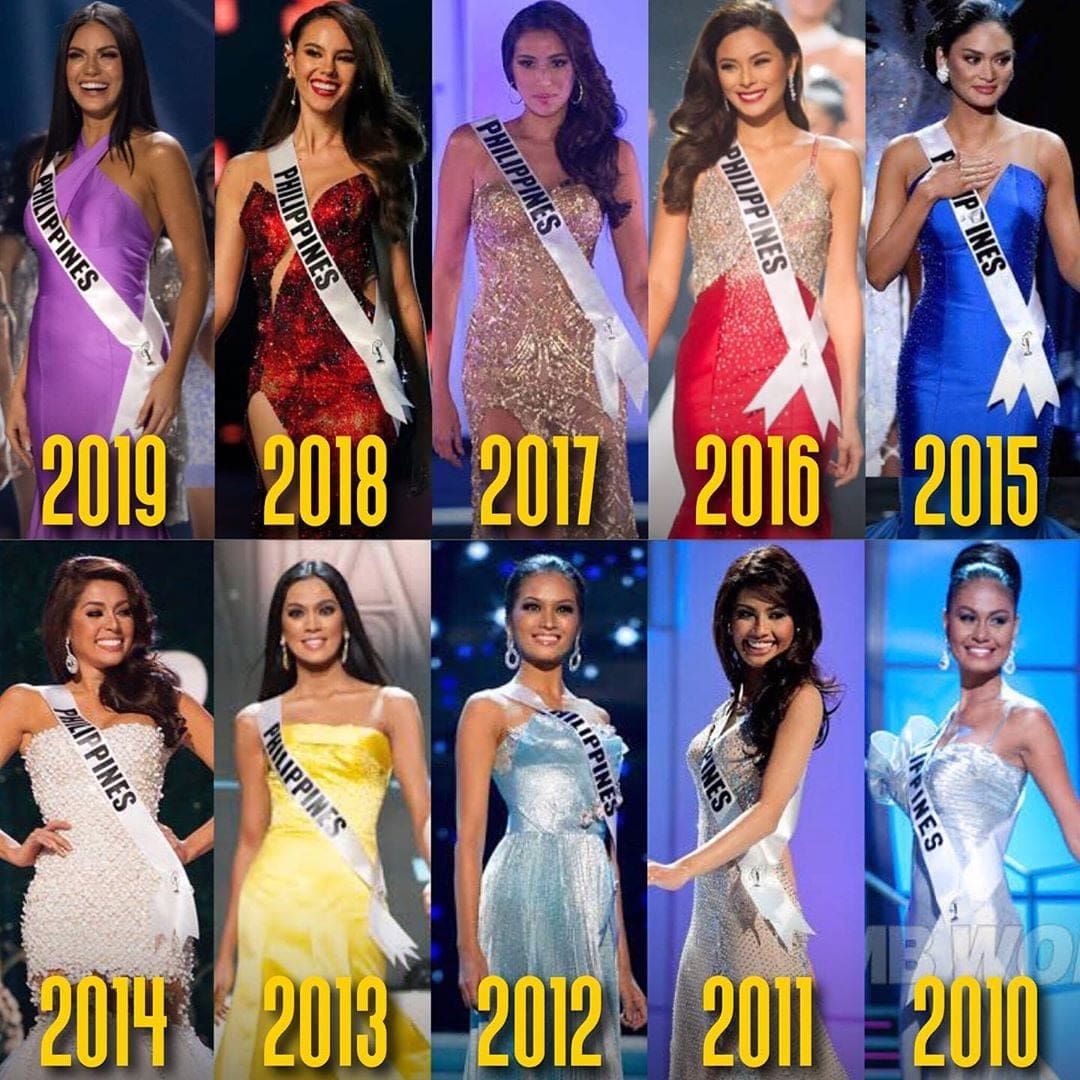
The Philippines regularly places at the top of major international pageants, and that success is real and well documented. Somewhere along the way, that specific achievement generalised into a much broader claim: that Filipina women, as a category, are simply beautiful, as though it were a national trait rather than an observation about a handful of competition winners.
Part of the pageant tradition’s popularity traces back to beauty standards shaped during the Spanish colonial period, when Spanish-mestiza features were held up as the ideal, a preference that still echoes in some corners of Philippine media and advertising today. Filipino Family Culture often treats pageant participation as a genuine source of community pride, which is worth understanding rather than dismissing.
None of that changes the basic problem with the stereotype itself. Reducing an entire population of women to “the beautiful ones” erases the actual range of appearance that exists, and quietly implies that worth is tied to how someone looks. This is the clearest example on this entire list of how even a compliment can be a cage. Nobody gets fully seen once they’ve already been cast as a type, however flattering that type sounds.
Filipina women get reduced to a single word: beautiful. A small number of pageant winners became a stand-in for millions of individuals who never asked to be measured against a crown.
The Pattern Underneath Every Filipino Culture Stereotype
Twelve stereotypes, four different origins, and one thing in common. Every single one of them, whether it insults or flatters, does the same basic job: it replaces a specific person with an idea formed somewhere else, at some other point in time, by someone who never had to update it.
Knowing where a stereotype came from doesn’t automatically make it true or false. What it does is change the question a person asks the next time they catch themselves believing one. Not “is this accurate,” but “whose experience, and which decade, is this actually describing.” That’s a more honest question, and it’s a harder one to answer lazily.
This article stays deliberately narrow, focused on the stereotypes themselves rather than the full weight of Filipino values, traditions, and daily life underneath them. Hiya, Pakikisama, Utang na Loob, Bayanihan, and the rest each deserve their own space to be explained properly, not folded into a footnote here. Consider this the starting point, not the whole picture.

One Response
WOW just what I was looking for. This is a massive misconception. The country is an incredibly diverse archipelago with over 170 distinct languages and heavily varied indigenous cultures. Grouping everyone together and assuming they all share the exact same traditions erases the rich regional history of the country.