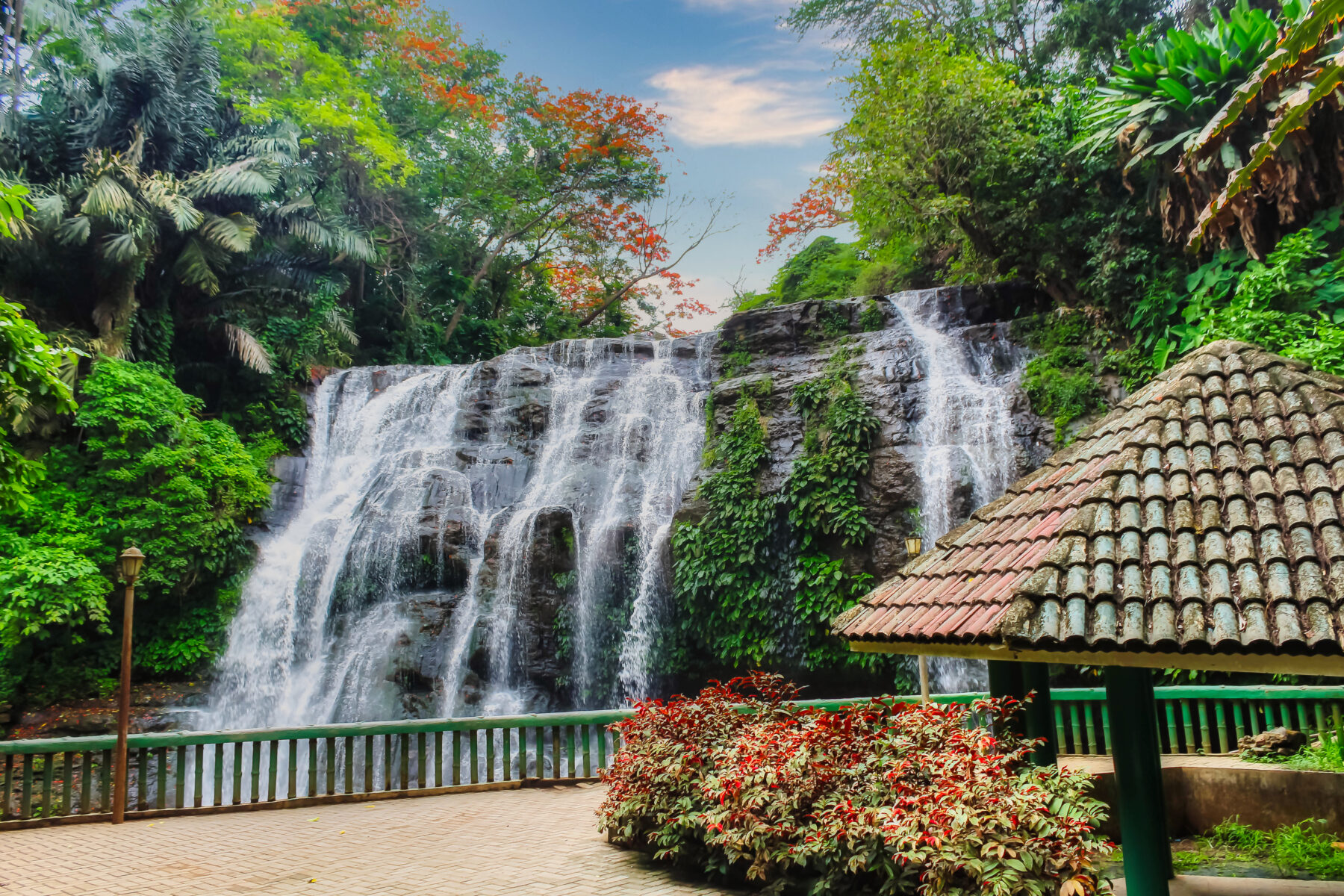
Hinulugang Taktak Falls is not the waterfall most visitors expect. Located in Antipolo City, Rizal, about an hour from Metro Manila, it sits at the intersection of natural attraction, public park, and environmental cautionary tale. Families once swam here, treating it as a weekend escape. Today, visitors can only observe from behind railings as the river slowly recovers from decades of pollution.
You cannot swim in the falls. Entrance is now free for everyone, yet people continue to come. Part history, part nostalgia, part something harder to define, the site measures the distance between what it once was, what it became, and what it might still be. If you arrive expecting untouched nature, you may leave disappointed. Arrive curious, and the experience becomes far more revealing.
NOTE: This article was originally published years ago and comprehensively updated in 2026. Places change. Public memory changes slower. Old reputations often outlive the realities that created them. The information below is current, verified, and based on first‑hand observation. Historical context is retained because a place is defined not just by what it is today, but by what it once was and how people continue to remember it.
Table of Contents
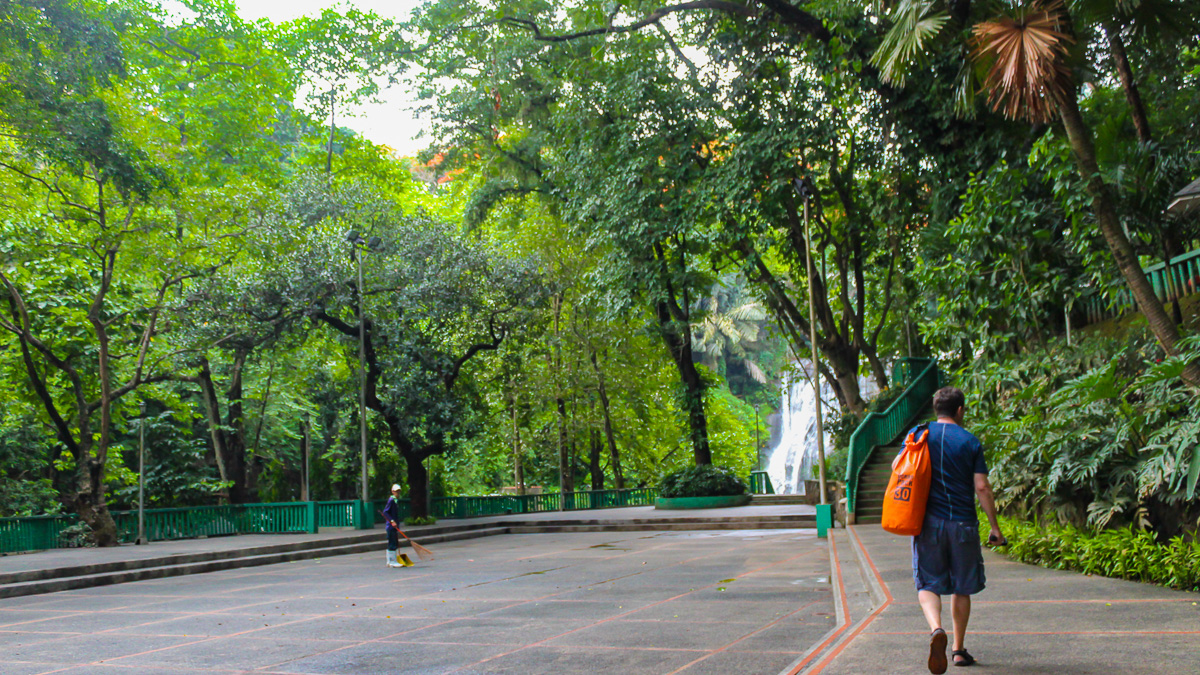
We walked toward Hinulugang Taktak Falls as a cleaner swept the path. A quiet reminder that every visit depends on both the landscape and the people keeping it alive.
Quick Facts
📢 As of 2026: Park under rehabilitation. Entrance fee & swimming pool fee are temporarily WAIVED (free). Standard fees shown below for reference after restoration.
Quick Facts · Hinulugang Taktak | 2HotTravellers
🏞️ Name
Hinulugang Taktak Protected Landscape / National Park
📍 Location
Brgy. Dela Paz, Antipolo City, Rizal Province, Philippines
Free (first‑come, first‑served; claimed by 8:30 AM on weekends)
📅 Best Time to Visit
Weekday mornings, dry season (December–May)
🚱 Swimming in Natural Basin
PERMANENTLY BANNED (pollution / safety)
The Tragic Illusion of a Restored Paradise
When I first visited Hinulugang Taktak Falls in 2018, the contradiction was impossible to ignore. The waterfall roared through the canyon, yet a faint chemical-sweet smell lingered in the humid air, a subtle reminder that this river had spent decades functioning as an open drain. From a distance, it resembled the postcard-perfect version promoted in tourism campaigns. Up close, reality was messier and more instructive.
Since that visit, a major ₱2.2-billion Hinulugang Taktak Sewage Treatment Plant project by Manila Water and the Antipolo LGU has reshaped the site. The water appears cleaner from the viewing deck, and the thick soap suds that once blanketed the basin are gone. Yet the natural plunge pool remains permanently off-limits, a reminder that environmental recovery and public confidence rarely move at the same pace.
The government has wrapped a municipal adventure playground around a polluted river and dared the public to enjoy it. Entrance is free, the swimming pool is free, and the rappelling course is free too.
Against all logic, it works. Not because the river has fully recovered, but because people adapted their expectations. The waterfall may be the landmark, but space, community, and affordability are what keep visitors coming back.
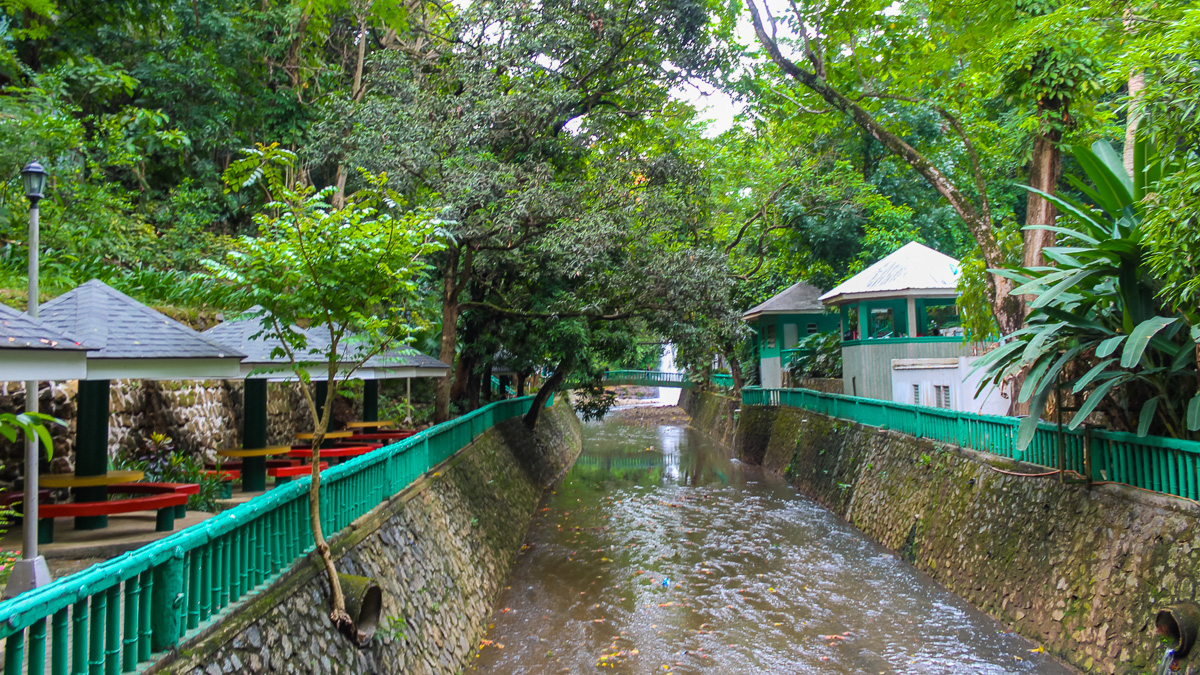
The cottages reveal what Hinulugang Taktak has become. For many families, the picnic tables matter just as much as the waterfall itself.
Can You Swim in Hinulugang Taktak Falls?
No. Swimming in the waterfall’s natural basin is permanently prohibited.
For decades, wastewater, sewage, and household runoff flowed into the tributaries feeding Hinulugang Taktak. By the early 2000s, the lagoon beneath the falls had become heavily contaminated. Although rehabilitation efforts have significantly improved conditions, the natural basin remains closed due to water quality and safety concerns.
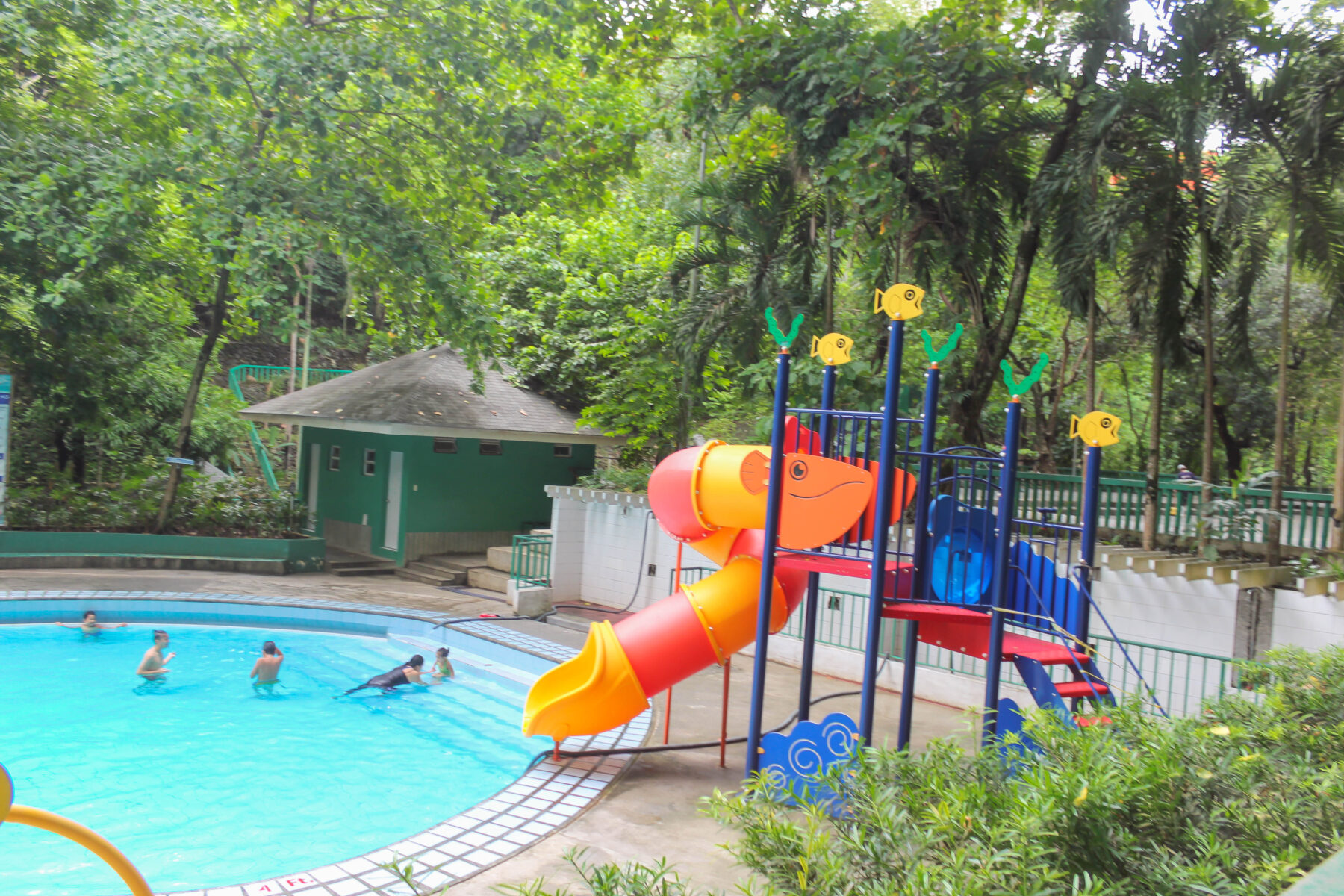
Visitors who want to swim can use the separate public swimming pool inside the park, which uses treated water and is maintained for recreational use. There is something quietly symbolic about Hinulugang Taktak Falls today. The waterfall remains the attraction, yet the experience is built around observing it rather than entering it.
What once functioned as a natural swimming spot now serves as a reminder that environmental damage can be reduced, but not always fully reversed.
The attraction remains the waterfall, yet the experience has been redesigned around keeping people out of the water.
The First-Hand Chronicle: What It Actually Feels Like
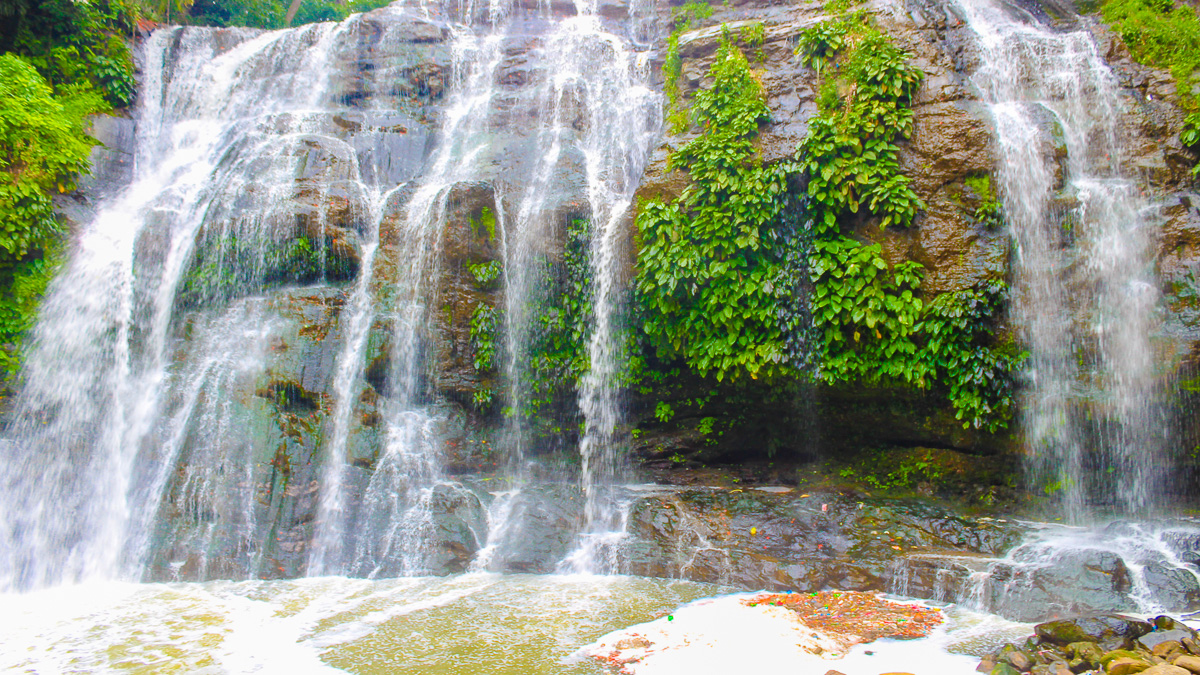
Visiting Hinulugang Taktak Falls is less about the waterfall itself and more about the people around it. The long concrete stairs from the entrance draw you toward the sound of falling water, revealing a moss-covered cliff, a muted olive-brown river, and occasional patches of foam. From a distance, it still resembles the postcard image many Filipinos remember. Up close, the reality is more complicated.
By mid-morning, the park settles into a familiar rhythm. Picnic tables fill. Food containers appear. Children drift toward the swimming pool and adventure facilities while older relatives claim shaded benches. The terraces, stairways, and viewing areas become a small map of family life unfolding in real time.
We made our way toward the waterfall, noticing the balance between green space and paved areas. The park guides visitors, framing the waterfall while shaping how the experience unfolds.
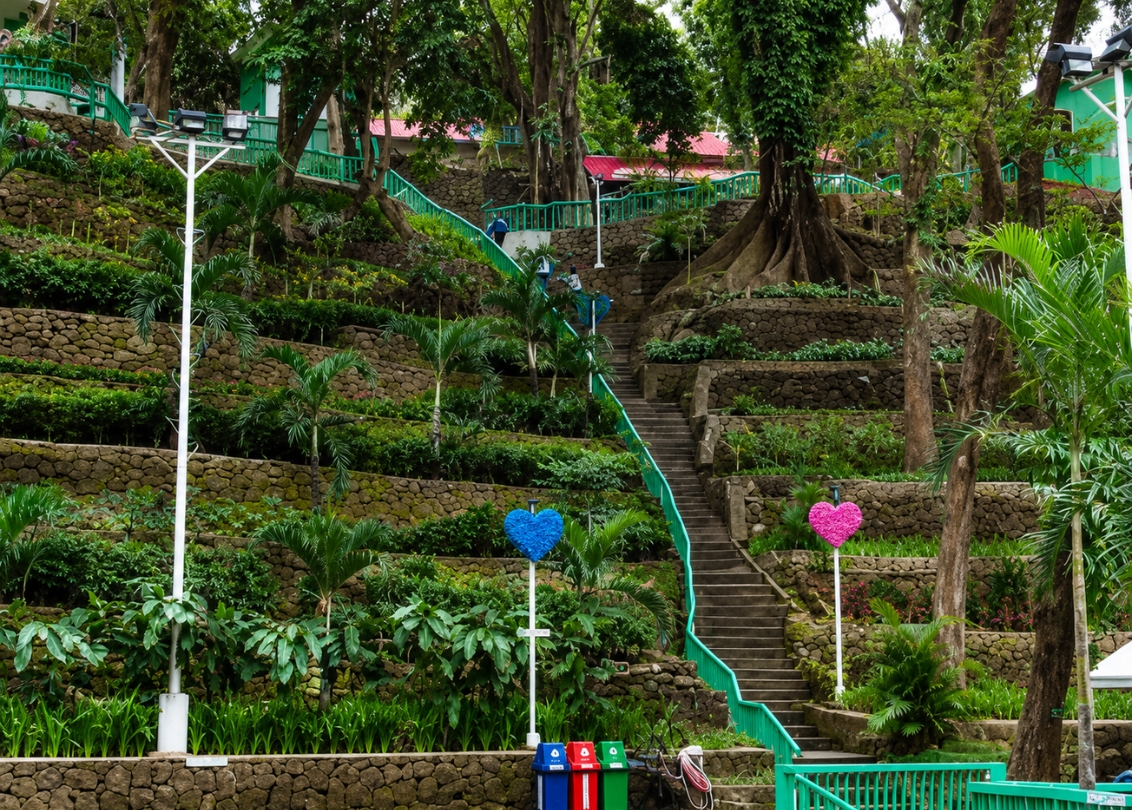
The terraced gardens and stairways reveal the park’s layered design, guiding visitors through its height and greenery. Each step is a reminder of how human effort structures a natural space for leisure and reflection.
The appeal is not pristine nature. Visitors know the river is still recovering and that swimming in the waterfall remains prohibited. Yet they continue to come because the park offers something increasingly rare in a crowded metropolis: space. Space to gather, eat together, celebrate small occasions, and spend time without spending much money.
What makes Hinulugang Taktak interesting is not the waterfall itself but what it reveals about adaptation. The park has evolved from a swimming destination into a communal one. Families have adjusted. Expectations have adjusted. The waterfall remains the landmark, but the experience now revolves around everything built around it.
For many visitors, the park functions less like a tourist attraction and more like a shared public living room. That shift tells a far more interesting story than the waterfall alone.
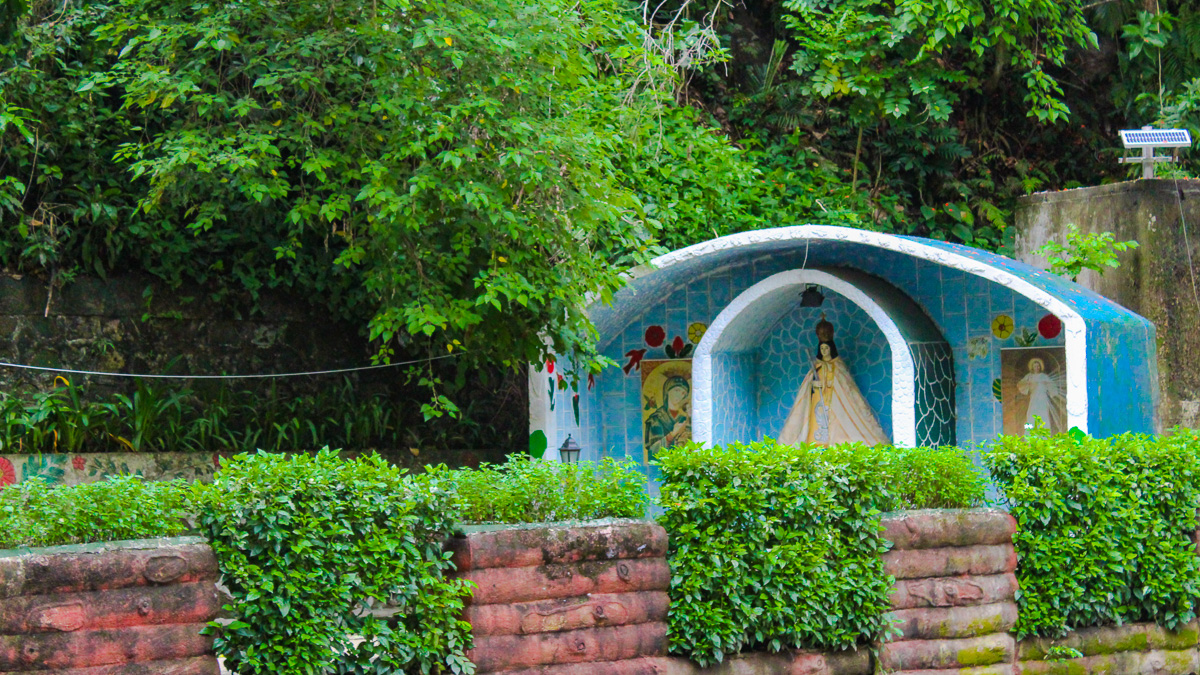
A quiet shrine tucked into the greenery reminds visitors of the spiritual and historical layers of the park.
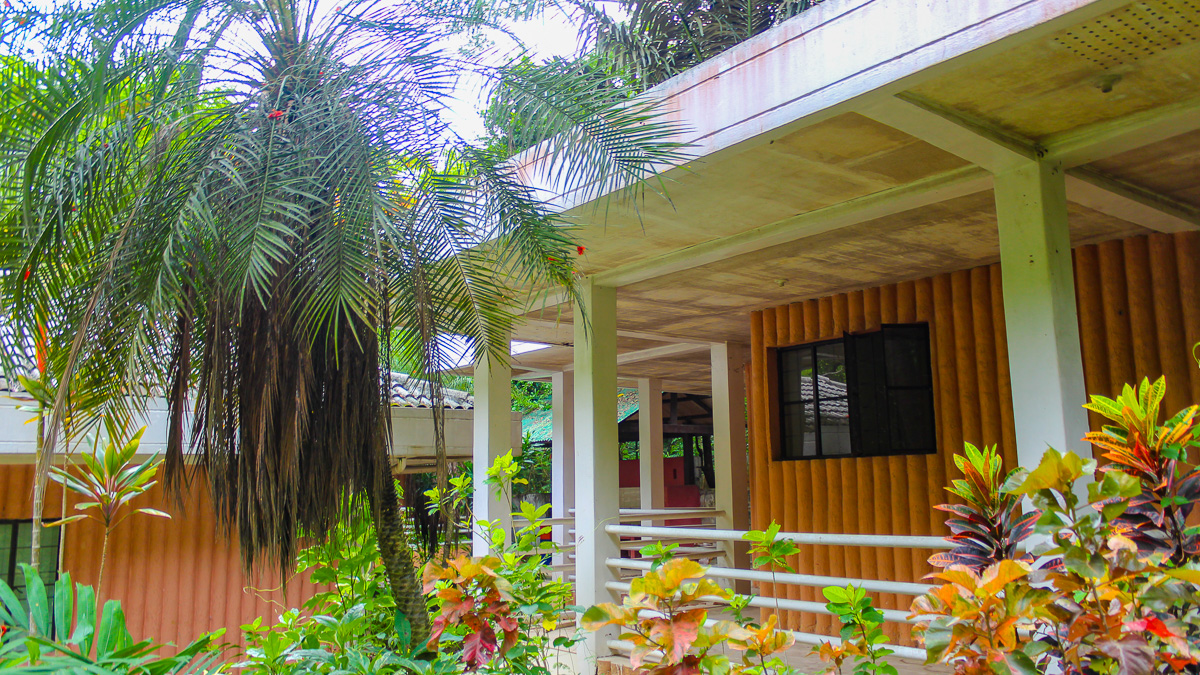
The guest house blends with the tropical surroundings, offering a place to rest and reflect while exploring the park.
Accessibility: The Hidden Exclusion
Hinulugang Taktak Falls exposes a reality often hidden behind the word “accessible.” While the entrance area and upper pathways accommodate most visitors, the waterfall itself remains largely controlled by stairs. The closer you move toward the main attraction, the more mobility becomes a deciding factor rather than a convenience.
This creates an invisible divide in the visitor experience. Younger family members descend toward the bridge, adventure facilities, and lower viewing areas, while older relatives, wheelchair users, and parents with heavy strollers often remain near the upper gardens. Everyone visits the same park, but not everyone experiences the same destination.
The result becomes most visible in multi-generational Filipino family outings. Grandparents watch from above. Children disappear toward the lower sections. Parents move between both worlds. The waterfall remains visible to everyone, but access to the experience itself becomes uneven.
If you are visiting with someone who has mobility limitations, it is worth adjusting expectations before arrival. The upper sections remain pleasant and usable, but the closest views of the waterfall still require navigating a considerable number of steep concrete stairs.
Activities · Hinulugang Taktak | 2HotTravellers
🧗 What You Can Actually Do (Free Activities, With Rules)
Because you cannot touch the waterfall, the administration has turned the grounds into a high‑energy adventure park. All of these are free on a first‑come, first‑served basis:
1
🕸️ The Spider Web Course
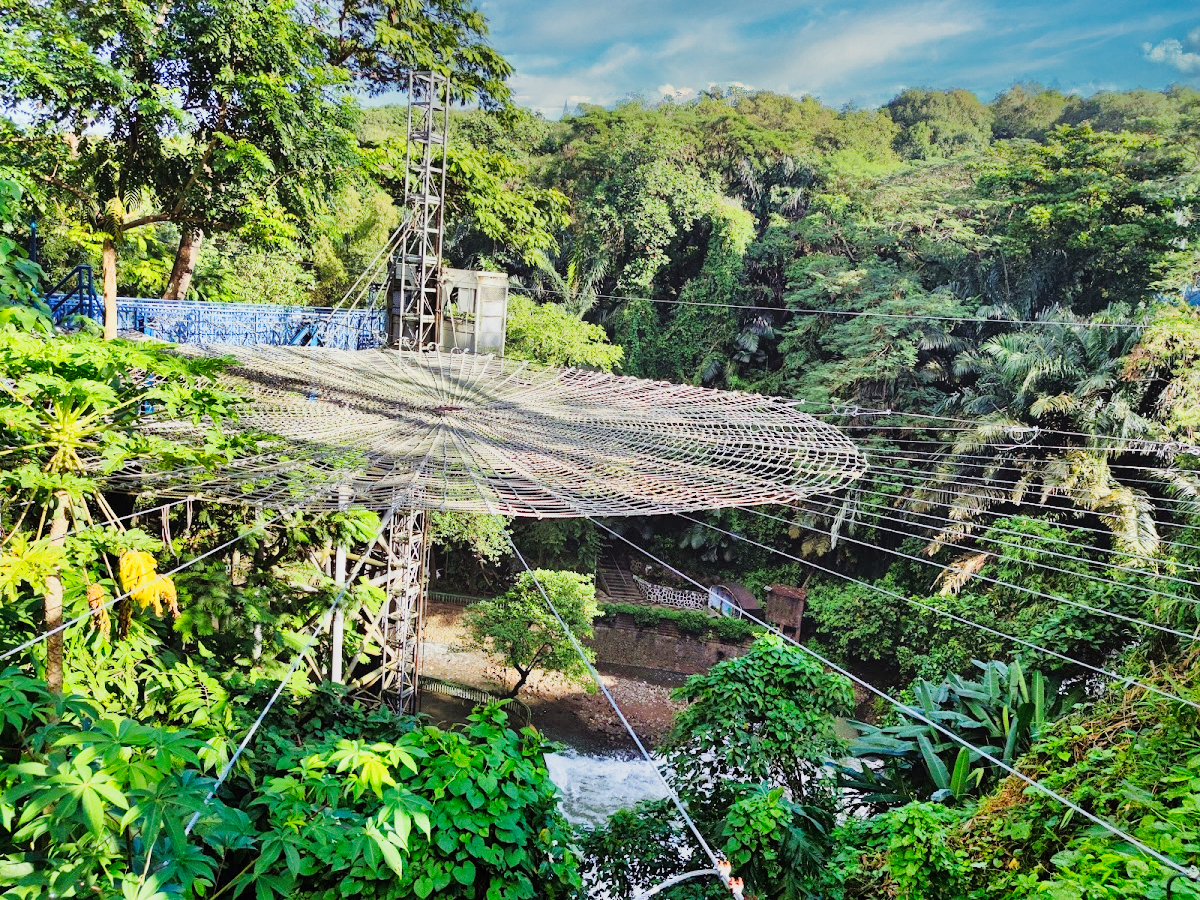
A massive steel frame suspended over the rocky gorge, covered in thick cargo netting. You walk out onto the net, looking straight down at the canyon floor. It is the park’s most Instagrammable spot — equal parts thrilling and vertigo‑inducing. The net sways slightly. First‑timers often freeze halfway. The marshals will call out, “Tuloy lang, tuloy lang” (Just keep going).
2
🧗 Rappelling Wall
Descend a vertical concrete and natural stone face under trained LGU marshals. All equipment (harnesses, helmets, belay devices) is provided free. Operating hours: 8:00 AM – 3:00 PM. Expect a queue on weekends. The wall is about 10 meters high — short enough for beginners, tall enough to feel your stomach drop.
3
🏊 Public Swimming Pool
Located on the upper tier, completely separate from the river. Filled with clean municipal tap water. This is where families actually swim. The pool is large, modern, and surprisingly well‑maintained. Depth ranges from 3 to 5 feet. Lifeguards are present. No swim cap required, but proper swimwear is expected.
4
🌉 Canopy Walk & Wall Climbing
Note: Temporarily unavailable as of early 2026 due to structural maintenance. Check on arrival. These may reopen later in the year.
⚠️ Strict Safety Rules (No Exceptions)
Minimum age: 14 for Spider Web and rappelling. This is strictly enforced — ID may be requested.
Footwear: Closed‑toe, flat‑soled athletic sneakers only. No sandals, slides, Crocs, or flip‑flops. No dress shoes. No hiking boots with metal cleats. The marshals will turn you away at the queue entrance.
Clothing: Athletic shorts, t‑shirts, or leggings. No skirts, dresses, or loose cargo pants that could snag on harnesses. No jewelry that could catch on ropes.
Weight limit: Not officially published, but very large individuals may be discreetly redirected to other activities.
The marshals enforce these rules aggressively. There are no shops nearby to buy replacement shoes. Come prepared or do not bother queuing.
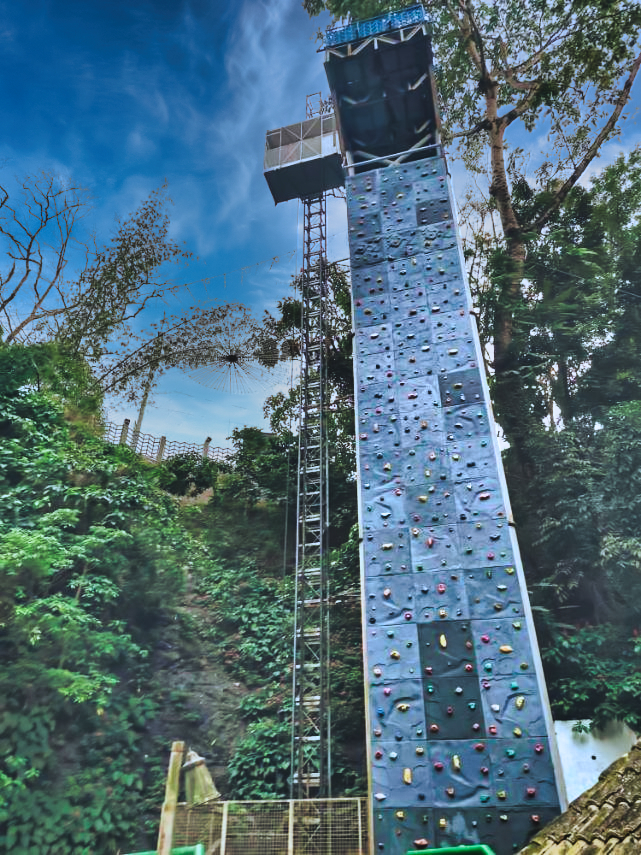
The climbing wall is a reminder of how much Hinulugang Taktak has changed. As access to the waterfall became more restricted, the park gradually built new reasons for visitors to stay.
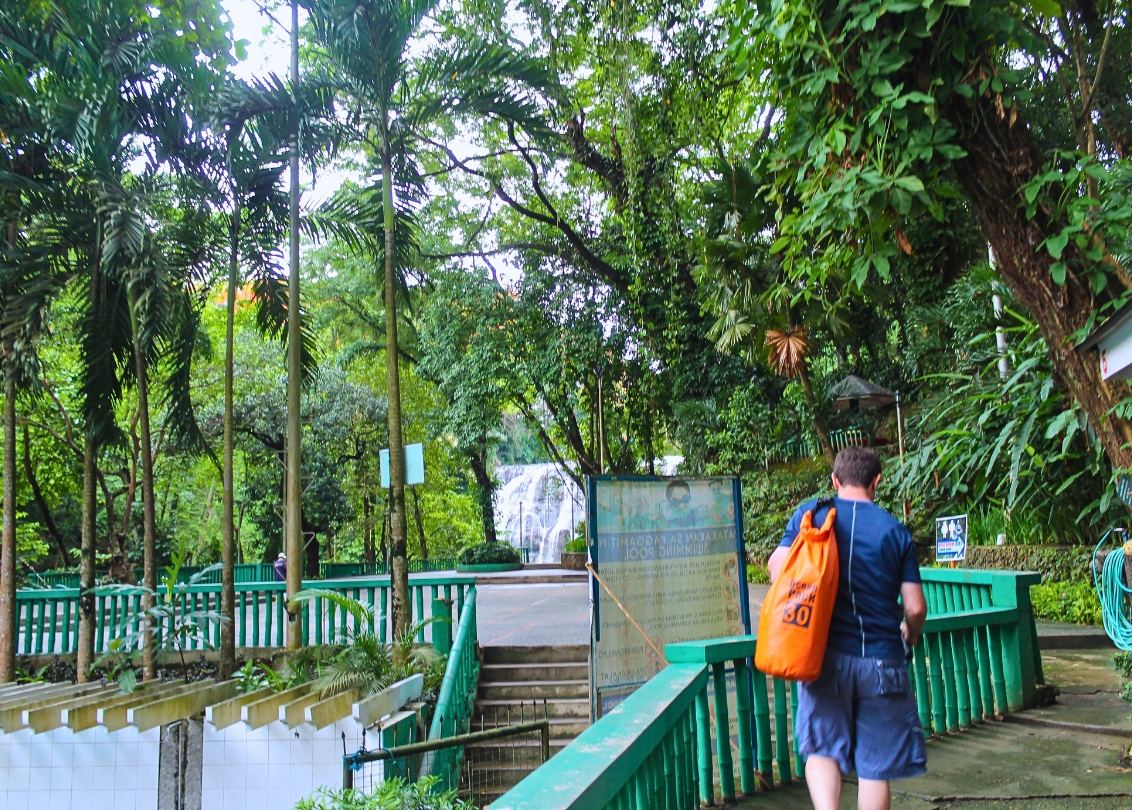
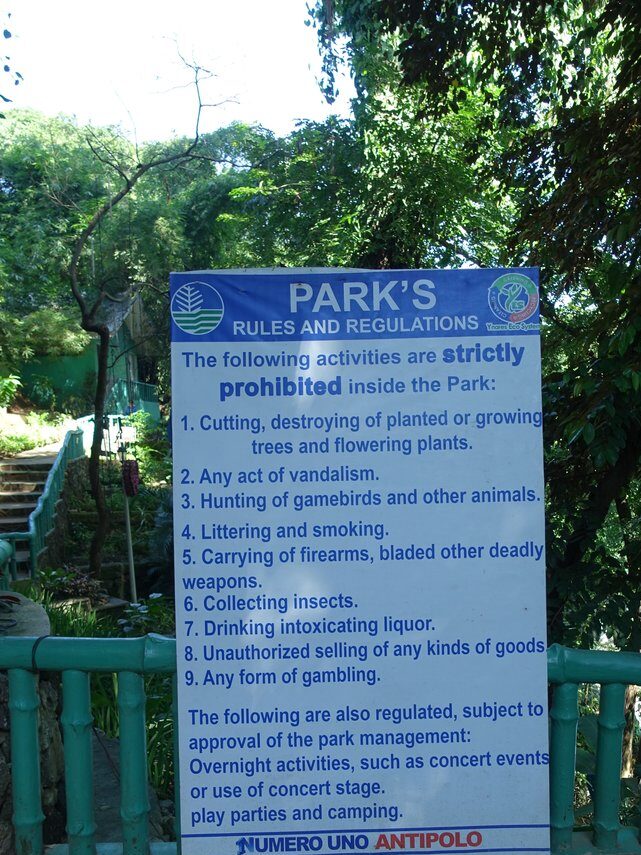
The park clearly posts regulations to protect visitors and preserve the restored area, keeping everyone aware of prohibited activities.
Cash Economy · Hinulugang Taktak | 2HotTravellers
💰 The Cash Economy and Hidden Costs
The park advertises free admission, and that is true. But human friction adds minor costs:
Item
Cost
Notes
Official motorcycle parking
₱20
At the gate, flat rate
Official car parking
₱45
Flat rate, very limited spaces (approx 30 slots total)
Unregulated street parking
₱20–₱50
Paid to local “parking boys” (common practice, they will “watch” your car)
Tricycle from Antipolo proper
₱50–₱100 one‑way
Negotiate before sitting in the sidecar
Food/drinks
Varies
No on‑site restaurants< Bring your own foods or buy from ambulant vendors
Cottage “donation”
₱0–₱20
Some attendants may ask for a small tip for “cleaning” (optional)
Locker rental
None
No lockers. Keep valuables with you or in your car.
📢 Critical: There are no ATMs, credit card terminals, or GCash/PayMaya QR codes at the entrance or inside. The nearest ATM is back in Antipolo proper. About a 10‑minute tricycle ride away. Because the park itself is free, many tourists mistakenly assume they can get by without cash, only to get stuck paying for tricycles or parking outside. Because the park itself is free, many tourists mistakenly assume they can get by without cash, only to get stuck paying for tricycles or parking outside. Bring physical cash for parking and tricycles.
🎒 What to bring in your bag:
Cash (small bills: ₱20, ₱50, ₱100)
Closed‑toe athletic shoes
Change of clothes and towel
Swimsuit (for the pool)
Sunscreen and insect repellent
Reusable water bottle (no drinking fountains, but you can refill at restrooms)
Packed lunch and snacks
Trash bag (there are almost no public bins — you carry everything out)
Power bank (no outlets)
Suspended above the canyon, the Spider Web course has become one of the park's most recognizable modern attractions, offering a very different experience from the waterfall below.
Getting There: Route and Timing
By private car or motorcycle
From Manila, take Ortigas Avenue Extension or Marcos Highway (Marilaque) toward Antipolo.
Navigate to “Hinulugang Taktak National Park” on Waze/Google Maps. The entrance is on Daang Bakal Road, Barangay Dela Paz.
Follow the narrow residential street to the gate.
Arrive before 8:30 AM on weekends or you will circle for parking. The official lot fills by 9:00 AM.
If the official lot is full, local residents will wave you into their front yards for a fee (₱20–₱50). This is normal.
By public transportation
LRT‑2 to Antipolo Station (Masinag).
Take a jeepney to “Antipolo Simbahan” (₱13–₱20). The ride takes 20–30 minutes up the hill.
From the cathedral area, hire a tricycle directly to the park. Negotiate: ₱50–₱100 one‑way. Do not pay more than ₱100.
Return tricycles can be flagged outside the gate. Expect to wait 5–10 minutes.
The bottleneck reality: The single manual logbook at the entrance slows everything down. On a Saturday at 10 AM, you might wait 15 minutes just to sign in. There is no online pre‑registration. Bring patience. The registration asks for your name, address, and time of entry. Nothing complicated, but the pen may be missing.
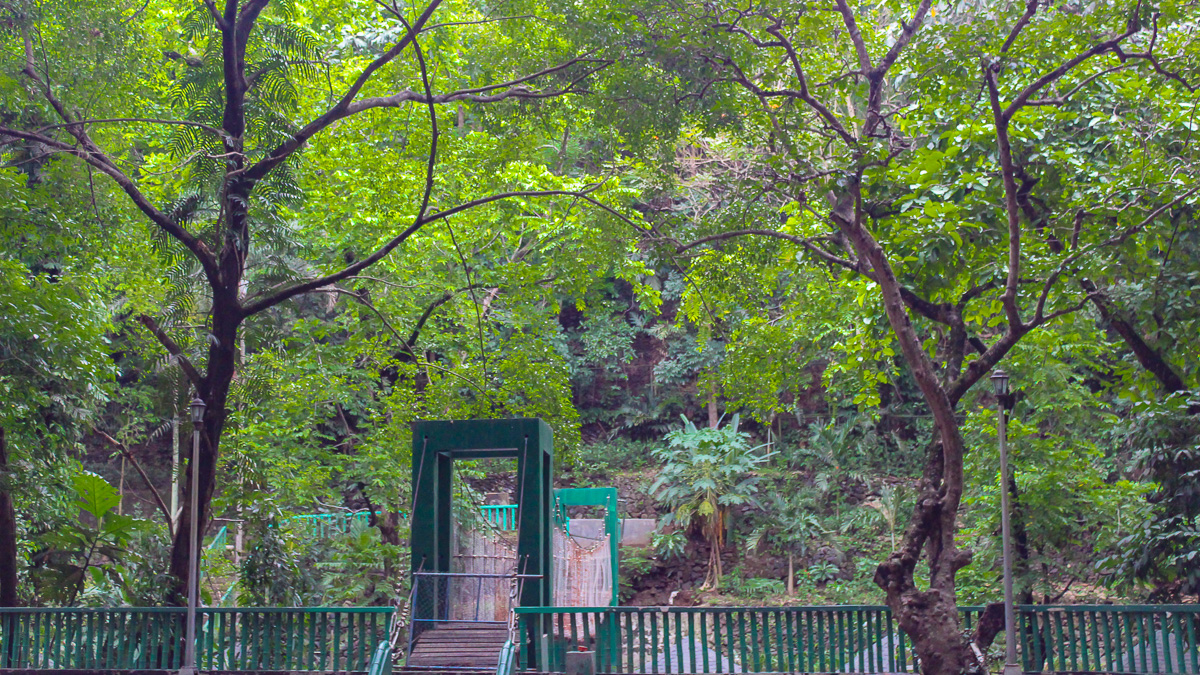
The hanging bridge shifts attention away from the waterfall itself, encouraging visitors to experience the landscape from within rather than simply viewing it from a distance.
During the rainy season, the waterfall briefly resembles the version many older visitors remember. The water is stronger, the sound is louder, and the illusion of recovery feels more convincing.
Nearby Attractions: Building a Full Antipolo Day
Antipolo Cathedral (Our Lady of Peace and Good Voyage) The most famous shrine in Rizal. Pilgrims come from across the country. Free entry. Combine with a stop for suman and kasoy (rice cake and cashews) from the vendors outside the cathedral gates. A small bundle costs ₱50–₱100.
Pinto Art Museum (10–15 minutes away) A collection of contemporary Philippine art housed in Mediterranean-style pavilions with open-air courtyards and gardens. The atmosphere is calm and reflective, offering a sharp contrast to the energy of the falls. Allow 2–3 hours to explore the galleries and outdoor spaces. The on-site café is pleasant but carries premium prices.
Mystical Cave (10–15 minutes away) A small cave system with unusual rock formations and locally significant features. Visitors often explore it for faith, curiosity, or photography. Paths are short but uneven, requiring careful footing. The experience is intimate and markedly different from the waterfall itself.
Jardin de Miramar (15–20 minutes away) A landscaped garden with themed areas, sculptures, and shaded walking paths. It is quieter than most Antipolo attractions, ideal for reflection, casual photography, or a slower-paced visit after the falls. Entry is free and open daily.
Luljetta’s Hanging Gardens Spa (15–20 minutes away) Infinity pools, massage pavilions, and curated walking paths. Quiet and structured, it contrasts with the public chaos at the falls. Perfect for visitors seeking relaxation and reflection. Entry requires prior booking and is higher-priced.
The Marilaque Café Strip (15–25 minutes away) A collection of open-air cafés along the highway. Hot coffee, cold drinks, and mountain views. Popular for sunset, casual conversations, and quick stops. Offers a social space rather than a contemplative one.
Who This Park Is For (and Who Should Skip)
Hinulugang Taktak Falls rewards the right expectations. It is best suited to visitors who understand that the experience is not really about the water. Families come for the space. Groups come for the freedom to spend an afternoon outdoors without spending much money. Curious travelers come to observe how public places are actually used when locals are not performing for tourists. The waterfall provides the setting, but the real story is found in the conversations, shared meals, children running through the park, and the small routines that bring people back week after week. Those willing to explore on foot, cross the suspended cargo net, and see the park as a social space rather than a natural wonder are likely to enjoy it most.
Visitors looking for pristine wilderness, crystal-clear swimming water, or a quiet romantic escape may leave disappointed. Hinulugang Taktak is not a hidden paradise preserved from modern life. It is a public park shaped by the realities of a growing city and the people who continue to use it. Crowds are common, noise is part of the atmosphere, and the experience can feel more communal than scenic. In many ways, the park reveals something more interesting than a waterfall. It reveals how people adapt when a place can no longer offer what originally made it famous.
The waterfall may be the landmark, but the park was built for people to stay. Viewing decks, pathways, and cottages transform a natural attraction into a shared public space.
Is Hinulugang Taktak Falls Worth Visiting?
Yes, but not for the waterfall alone. Hinulugang Taktak falls is a reminder that places do not disappear when their original purpose does. Swimming is permanently banned, yet families continue to gather here every weekend. What keeps people coming back is not the water itself, but the need for open space, shared routines, and small escapes from urban life. The falls draw your attention. The people explain why the place still matters.
7.8 | Worth Visiting
Value for Money
9.5
Family Friendly
9.0
Activities
8.5
Location
9.0
Water Quality
4.0
☕ If this article saved you a few hours of research, helped answer a lingering question, or made sense of something that wasn't entirely clear before, consider buying me a coffee. It helps keep the guides coming, the curiosity well caffeinated, and the occasional rabbit hole worth exploring.




One Response
Everything has a second side (У всего есть вторая сторона)