Most people think they understand what happens on a flight. Most discussions about flight attendant psychology stop at what is visible. They don’t. What looks like routine service; smiles, greetings and small talk isn’t casual. It’s controlled. Every interaction is measured against timing, safety, compliance, and emotional demand. What passengers experience as friendliness is often performance shaped by pressure, not personality.
Flight attendants are not just moving through a cabin. They are navigating a compressed environment where roles must be maintained, emotions regulated, and behavior constantly assessed. The margin for error is thin, and the cost of misreading a situation can escalate quickly.
What makes this invisible is not secrecy, but precision. The system is designed to feel effortless from the outside. But beneath it is a structure built on discipline, repetition, and control where perception matters as much as action, and where every gesture carries more meaning than it appears to.
The Core Framework: Four Invisible Layers
Flight attendant psychology operates through four interlocking layers that passengers rarely notice. These are not abstract theories but repeatable patterns shaped by constraint.
Emotional Labor
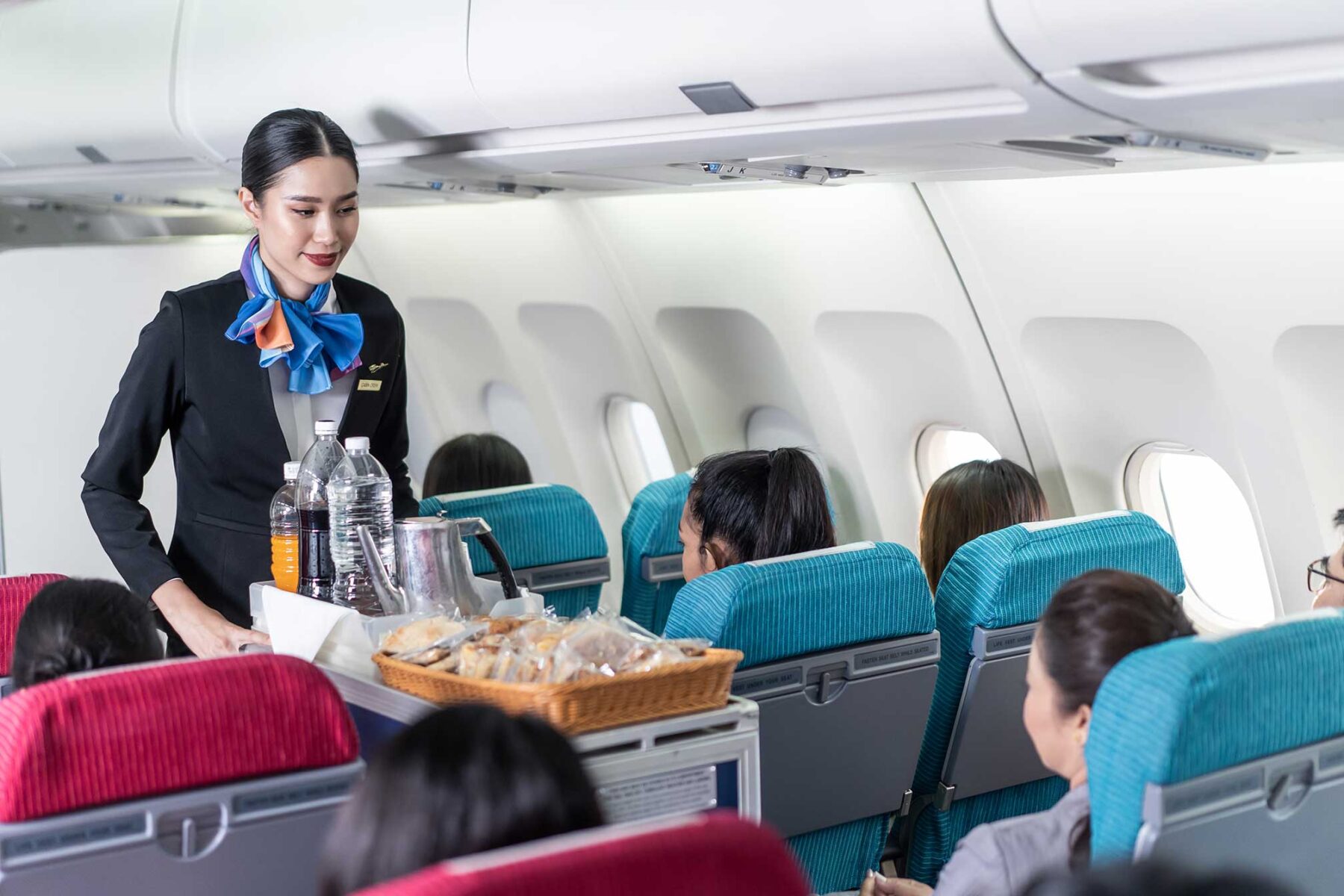
A flight attendant does not simply smile; she manufactures warmth while suppressing irritation, fear, or exhaustion. This is the job’s central mechanism, purchased by the airline and enforced through training, observation, and consequence. The goal is not authenticity. The goal is stability.
Behavioral Filtering
Crew read micro-signals, posture, tone, eye contact, drink patterns, and adjust in real time while suppressing their own fatigue. It’s closer to air traffic control than conversation: multiple variables tracked at once, only the most relevant acted on. With repetition, it becomes automatic.
Performance vs. Reality
The polished exterior is real in the moment it’s delivered, but often runs opposite to what’s felt internally. Retail workers can step away. Therapists control session boundaries. In the air, once the door closes, the performance is continuous and non-negotiable.
Perception Management
Passengers must feel safe and in control while crew manage variables that stay unseen. This is environmental control, not just service. Success is measured by absence: the fewer people notice the system, the more effectively it’s operating.
These layers do not stand alone. They function as a single system shaped over decades of commercial aviation. Each layer reinforces the others. What follows is a breakdown of how that system becomes visible in practice through five connected realities of flight attendant psychology.
Reality Layer: The Brutal Cost No One Talks About
The public image of flight attendant life is built on movement, glamour, and variety. The private reality is cumulative. It is shaped by repeated physiological strain and controlled psychological endurance. Schedules rotate without regard for circadian rhythm, and sleep often drops below six hours on duty days. The body absorbs dehydration, pressure shifts, and low-level radiation over time while continuing physical service under unstable conditions. Even routine tasks require force, balance, and consistency in an environment that does not reset. The cost is not visible. It accumulates over time. What this reveals → Flight Attendant Life: The Brutal Cost No One Talks About
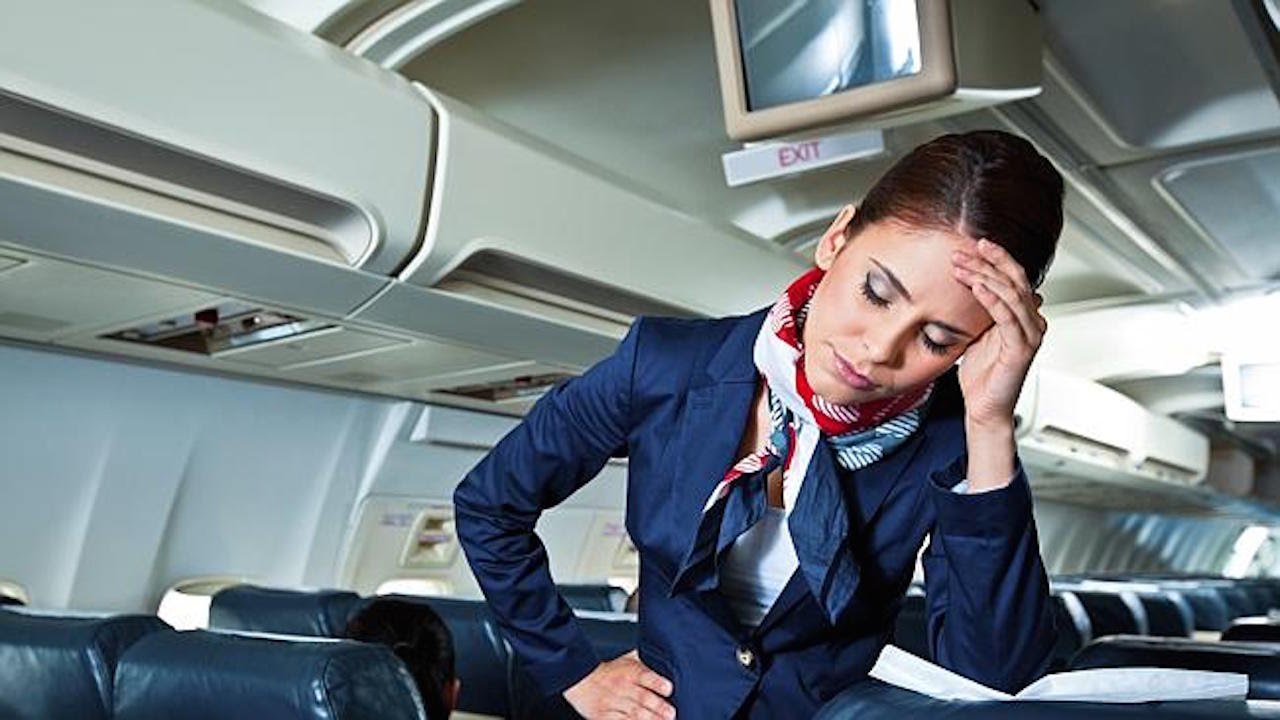
The greater cost is not physical. It is the requirement to remain emotionally available while internally regulated. A flight attendant may greet passengers with warmth immediately after managing conflict, medical stress, or personal absence from life outside the cabin. The outward signal remains consistent, regardless of internal state. This is surface acting. It produces the appearance of emotion without relying on it. Over time, a split forms. The professional self becomes automatic, while the private self becomes quieter and less accessible, even off duty. Passengers see composure. They do not see the internal regulation required to maintain it.
This is not a failure of character. It is adaptation to a system that does not allow visible vulnerability. Airlines optimize for consistency in service and safety, not recovery for the crew. Fatigue does not appear as collapse. It accumulates as reduced spontaneity, narrower empathy, and a lower tolerance for unfiltered interaction. What keeps this layer hidden is normalization. Early in the role, crew learn that acknowledging the toll risks being read as unprofessional, so endurance becomes part of the identity. Understanding this layer changes the meaning of every polished interaction. The smile is not effortless. It is maintained under conditions most passengers would not sustain.
- Emotional labor is not politeness. It is controlled internal regulation.
- The output is calm, but the process is managed.
- The cabin sells emotional stability, not just service.
Hidden Language Layer: How Passenger Behavior Is Interpreted
Beneath the public script runs a second language: codes, gestures and shorthand observations built for speed. They allow crew to communicate risk, intent and required action without alarming passengers. These are not casual labels. They are operational tools shaped by repeated exposure to confined, high-pressure environments.
An overly familiar passenger may trigger quiet monitoring. A change in tone, alcohol consumption, posture or eye contact may signal escalation. Entitlement can present as complaint; anxiety as irritation; genuine distress as confidence. Crew do not track intention. They track impact. Repetition turns these cues into pattern recognition, allowing them to respond before boredom becomes agitation.
What Crew Notice, Infer and Do
Where this becomes visible → 22 Flight Attendant Secret Codes That Expose What They Really Think About You
This language serves two functions: it stabilises the cabin and protects crew from absorbing every interaction. Coding someone as high-maintenance is not necessarily personal; it is resource allocation. Attention, patience and physical presence are limited, so responses follow observed patterns rather than stated needs. Similar shorthand exists in hospitals and high-end service, where professionals manage demand without internalising it.
Its power lies in invisibility. Crew continuously translate public warmth into private assessment, reading passengers as patterns moving through predictable arcs. This is adaptation, not cynicism. Empathy without structure becomes burnout. The hidden language allows engagement without absorption.
Perception Layer: Why the “Sexy Air Hostess” Stereotype Survives
The stereotype of attractive, deferential and emotionally available cabin crew persists because it reduces complexity. Inside an unfamiliar and controlled environment, passengers must judge safety and competence quickly. Appearance becomes a shortcut: attractive becomes competent; competent becomes safe. The image simplifies judgment and stabilises perception.
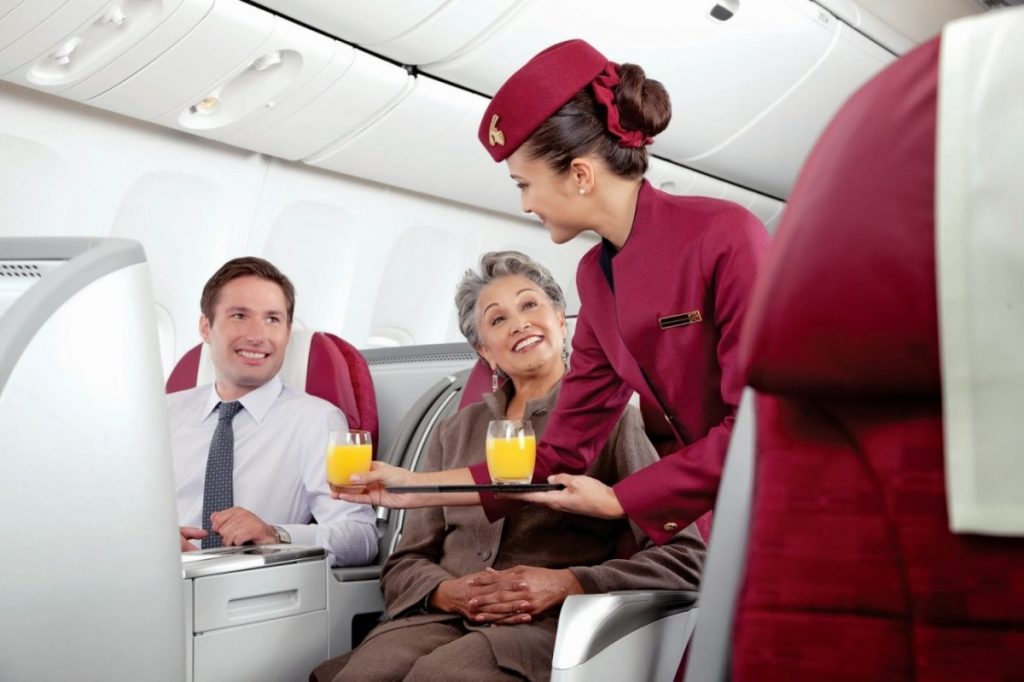
Airlines reinforce this through uniforms, grooming standards and controlled presentation. Although the image changes across cultures, its function remains the same: deliver composure, predictability and authority. Control is presented as care. The stereotype does not describe the work. It makes the system easier to trust. Look Closer → 7 Reasons Why the “Sexy Air Hostess” Stereotype Refuses to Die
How Appearance Becomes Authority
The stereotype compresses a complex profession into signals passengers understand immediately.
For crew, this creates a double bind. The image raises expectations of warmth and emotional availability while concealing the labour required to produce them. Any deviation from the visual script creates friction, even when performance remains operationally sound. Recruitment, training, grooming and daily self-monitoring keep the image intact. The system and the audience reinforce each other.
Nothing is neutral. Posture, expression and tone become part of the product, requiring constant self-regulation. The stereotype survives because it works: it reduces passenger uncertainty while giving the airline tighter control over perception inside a constrained environment.
System Design Layer: The Engineered Image of Flight Attendants
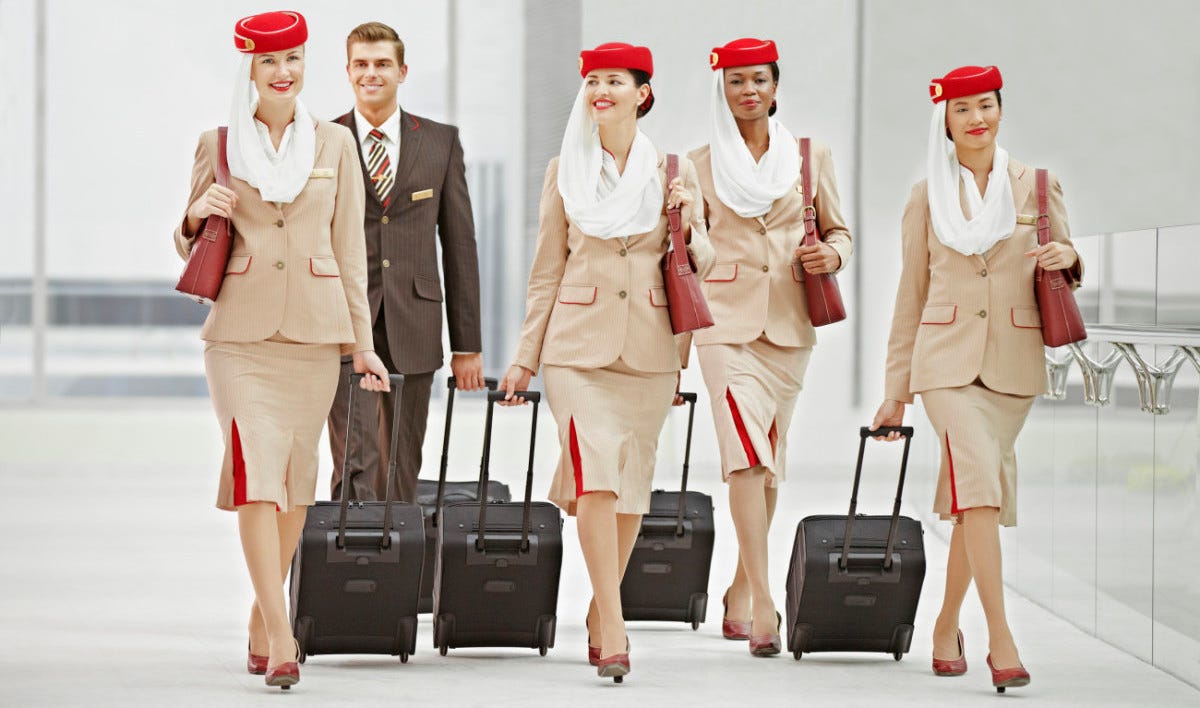
The appearance of cabin crew is not accidental. It is produced by a system that begins at recruitment and continues through training, uniform design, and operational discipline. Airlines shape presentation because it serves clear functions. It signals safety through composure, care through consistency, and brand identity through uniformity.
Different carriers adjust this image based on market positioning. Some emphasize precision and cultural discipline. Others present approachability with controlled authority. The variation is aesthetic, not structural. In every case, the body becomes part of the system. Height, posture, grooming, and facial structure are evaluated as signals, not personal traits. Training aligns movement, speech, and emotional tone with these signals until the presentation becomes automatic. What this reveals → Hot Air Hostess Top 10: The System Behind “Sexy Flight Attendants”
This explains the consistency across flights. Professionalism is not simply encouraged. It is embedded. Deviation requires effort and carries risk. Alignment is easier, so it becomes default. Over time, the distinction between personal identity and corporate presentation narrows.
The deeper pattern is commodified emotional labor. Airlines do not sell transport alone. They sell controlled calm within an unstable environment. The image of the flight attendant is one component of that system. It works because humans respond quickly to visible signals of competence and care.
Identity & Control Layer: What Uniforms Quietly Reveal
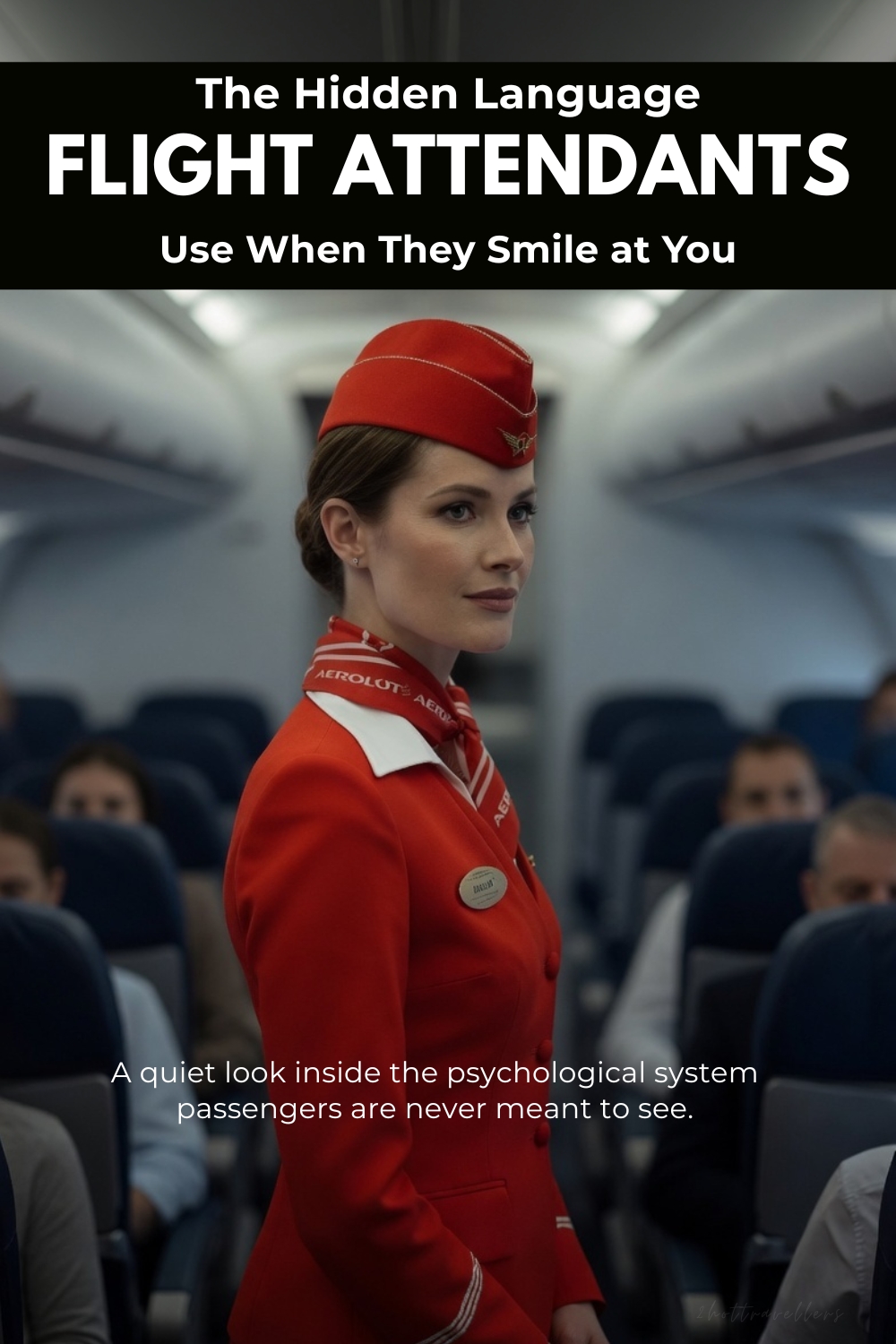
Uniforms are the most visible and least questioned part of the control system. They identify the airline and role, but also encode expectations, restrict movement, enforce posture and signal that deviation will be noticed. The uniform does not merely represent the role. It disciplines the body performing it.
The aesthetic language varies by carrier. Some Asian airlines favour limited palettes and collective precision, reducing visible individuality to create consistency. Western carriers may allow more personal expression, but emotional control remains fixed. The visual code changes. The demand for predictability does not.
Pattern in motion → What Flight Attendant Uniforms Quietly Reveal About Control, Identity and Cultural Pressure
Different Aesthetic, Same Function
Some Asian Carriers
- Collective precision
- Limited visual variation
- Consistency through uniformity
Many Western Carriers
- More visible individuality
- Broader aesthetic range
- Consistency through conduct
The surface changes. The control function remains.
Psychologically, the uniform becomes an external framework for self-regulation. Fatigue must be concealed. A crease, loose hair or altered posture can be read as deviation. Crew are never fully off-stage while wearing it.
Uniforms also expose deeper cultural expectations around gender, authority and service. Care is presented through discipline; professionalism through controlled appearance. Passengers read these signals automatically, while crew internalise them through repetition. Over time, identity and role begin to overlap. The uniform does not simply present the role. It stabilises it.
Patterns That Extend Beyond the Cabin
These five layers, reality, hidden language, perception, system design, and identity control, do not operate only at 35,000 feet. They reflect broader human patterns found in any environment that requires sustained emotional performance under pressure. Healthcare, hospitality, and high-demand service roles rely on the same structure. The difference in aviation is not the presence of these patterns, but their intensity and visibility.
The cabin compresses time, space, and consequence. It forces the system into focus. What passengers do not see is not hidden for secrecy. It is structural. It allows ordinary individuals to deliver consistent performance under conditions that do not allow pause or withdrawal. Similar dynamics appear in high-pressure environments where composure must be maintained regardless of internal state. This is widely studied under the concept of emotional labor, which explains how regulated expression becomes part of the role itself. For a broader psychological framework, see the definition of emotional labor in Emotional Labor.
Recognizing these patterns does not change the service you receive. It changes how you interpret it. The performance stops feeling personal. It becomes structural. What appears effortless is revealed as controlled. What feels natural is often trained and maintained. Much of what is labeled as good service is sustained emotional regulation carried out at personal cost by individuals operating within tightly defined systems.
This pattern is not limited to aviation. It appears wherever stability must be projected under pressure. Teachers maintain authority while managing disruption. Nurses deliver reassurance under uncertainty. Executives project control during instability. In each case, behavior is filtered, emotion is regulated, and perception is managed. The cabin makes these mechanisms easier to observe because the environment is contained and the performance is continuous.
These patterns do not exist only in the sky. They exist wherever roles override expression and where composure becomes a requirement. Understanding flight attendant psychology offers a clear entry point because the system is visible when examined closely. Once recognized, the same structure appears across workplaces, relationships, and environments where the performance must hold regardless of what is happening beneath it.
The systems are already there. Most people just never learn how to see them.
Pause and Consider
- When someone appears calm under pressure, what part of that response is natural and what part is managed?
- In your own environment, where does performance replace authenticity without being acknowledged?
- What patterns have you accepted as normal that may actually be structured and enforced?