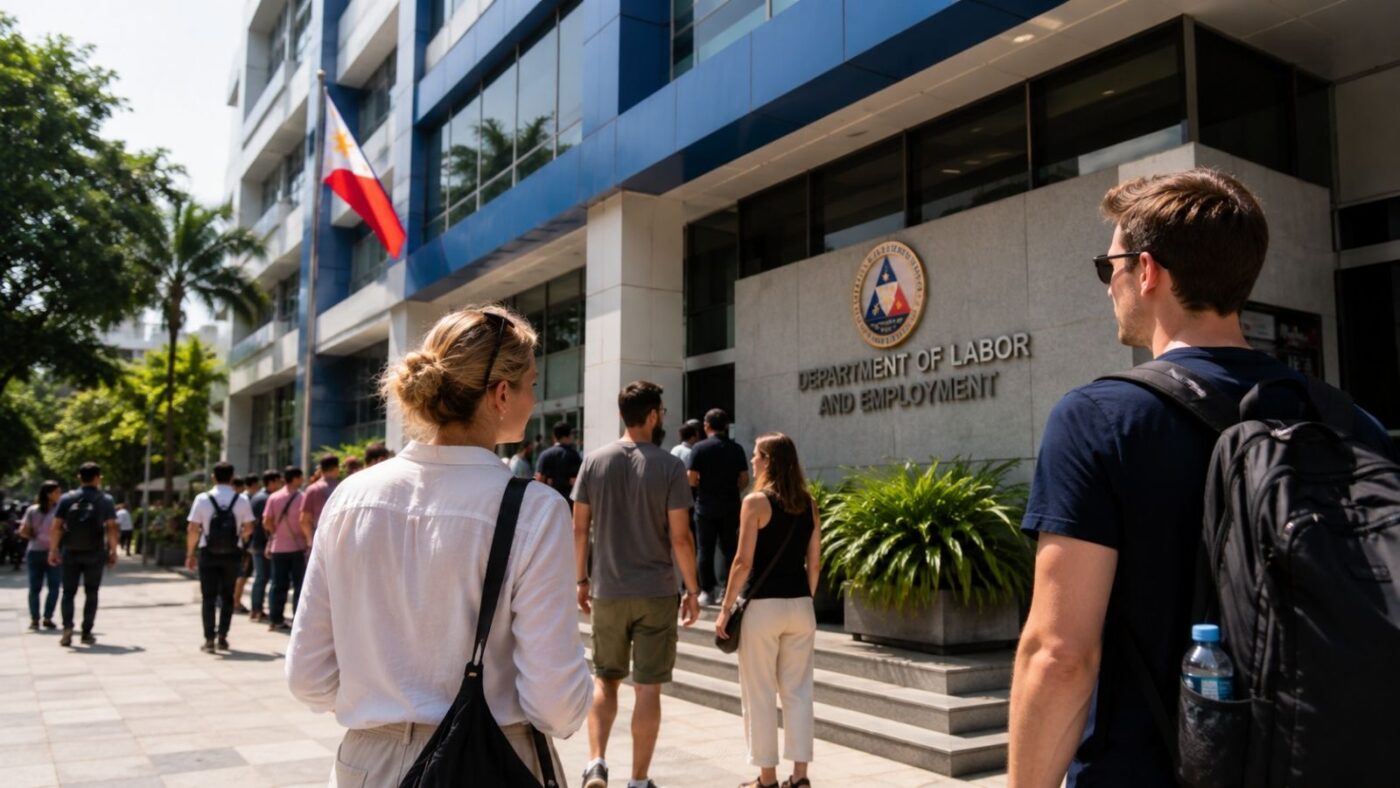
Moving to Australia activates a particular kind of imagination. The mind goes to wide skies, functional cities, a pay cheque that finally respects the hours you put in, a public system that more or less works. That imagination is not wrong. Australia is genuinely high-functioning by the standards of most of the world. But the version of Australia that migrants picture before they leave is always a cleaner, easier, more socially welcoming version than the one they find when they land. Not worse, necessarily. Just different in ways that the brochure version is not equipped to explain.
The migrants who do best here are not the ones with the most credentials or the highest points score, though those things matter. They are the ones who arrived with an accurate picture of what moving to Australia actually requires, not just logistically, but psychologically, financially, and socially. They understood that the country would not automatically recognise who they had been at home. They understood that the visa was a door, not an arrival. And they came prepared for the gap between.
This guide is not an advertisement for Australia, and it is not a warning against it. It is a structural account of what the process looks like right now, what it costs, what the system reveals about itself, and what the experience of adaptation tends to do to people regardless of where they come from. Because that last part, the human part, is what almost nobody writes about with any precision, and it is the part that matters most once you are through the door.
NOTE: This article was just updated in 2026 from its original version. All information below reflects current conditions, verified facts, and updated practical details as of this revision.
Table of Contents
What Australia Is Actually Selling, and What It Delivers
Australia’s migration program is the most deliberate piece of national branding that most receiving countries ever attempt. The country has been actively selecting its population for decades. It is honest about this in a way that most nations are not. The points system is not a bureaucratic formality. It is an institutional statement of values: Australia wants people who are already successful somewhere else, who are young enough to contribute for decades, who speak English at a functional or better level, and who have skills that map onto documented gaps in its workforce. The dream Australia markets to the world is real, but it is priced at entry in ways that the dream-version does not include in the fine print.
What that means in practice is that moving to Australia is not a rescue operation. It is a trade. The country offers stability, opportunity, and quality of life. In exchange, it asks for qualifications, patience, documentation, money upfront, and a willingness to restart a significant portion of your professional and social identity. That trade is worth it for millions of people. But migrants who arrive expecting to be received tend to struggle longer than those who arrive expecting to negotiate.
Australia’s population has surpassed 27 million, with over 30% of residents born overseas. More than 300 languages are spoken across its major cities daily. This is not diversity as a policy slogan. It is diversity as a structural fact of daily life, built over generations of migration from the United Kingdom, Italy, Greece, Vietnam, China, India, Lebanon, the Philippines, and dozens of other countries. The migrant experience is woven into the fabric of Australian society so deeply that the social infrastructure for new arrivals, community networks, settlement services, professional associations, cultural organisations, is more developed here than almost anywhere else in the world. That matters. It does not make the first year easy, but it means you are not building from nothing.
Australia delivers high wages, enforceable worker protections, universal healthcare through Medicare, and one of the most genuinely multicultural urban societies on earth. What it does not deliver is ease of arrival. The visa process is competitive, the housing market punishes new entrants, and the social culture has an operating logic that takes time to read correctly. Both things are true simultaneously.
Australia's Visa System: A Meritocracy That Defines Merit Precisely
The thing worth understanding about Australia’s points system is what it selects for and what it does not. It rewards age in a narrow window, typically 25 to 32, English proficiency, tertiary qualifications, and years of skilled work experience. It adds points for state nomination, partner skills, and regional location. It is designed to capture people in the peak window of productive life, before family obligations accumulate and after professional competence has been demonstrated. This is not accidental. It is deliberate policy, and it shapes the migrant pool in ways that have downstream consequences for the people who make it through.
The SkillSelect Points System
The permanent migration program is capped at 185,000 places annually, with approximately 70 to 71% allocated to the skilled stream. All skilled visa applications feed into SkillSelect, a points-based Expression of Interest system. The minimum points threshold to submit an EOI is 65 points, but competitive invitation scores in popular occupations are often significantly higher. Points are calculated on age, English proficiency, education level, work experience, state nomination, and partner skills.
Skills in Demand and the Occupation List
The Skills in Demand visa has replaced older employer-sponsored streams, and the Core Skills Occupation List (CSOL), which contains 456 in-demand roles, now functions as the primary filter between those with a clear pathway and those who need to rebuild their strategy entirely. Healthcare, engineering, construction, information technology, and education carry the most traction. If your occupation is not on the CSOL, you are not disqualified, but your path is considerably longer and requires more deliberate planning.
No employer or state nomination required. Must meet 65+ points, pass a skills assessment, and hold IELTS 6.0 or above.
State nomination adds 5 points to your score and requires you to live in the nominating state. Competitive for those just below 189 thresholds.
Live and work in a designated regional area for 3 years. Faster invitation timelines and additional points make this underused by most applicants.
Requires an employer sponsor and occupation on the CSOL or equivalent. Salary thresholds apply. Replaces older 482 and TSS streams.
English Requirements and Documentation
English proficiency requirements have tightened across multiple visa categories. A minimum IELTS score of 6.0 is required for most permanent skilled visas. Scores of 7.0 or above add points and strengthen your application’s overall profile. The documentation burden has also increased in recent years, partly because the volume of post-pandemic applications was so high that the Department of Home Affairs raised evidence standards to manage throughput. The difference between a grant and a refusal, for otherwise qualified applicants, frequently comes down to documentation precision rather than the underlying merit of the person applying. A MARA-registered migration agent is not optional for most people. The cost of professional advice is consistently lower than the cost of a rejected application.
The primary pathways for moving to Australia permanently are Subclass 189 (Skilled Independent), Subclass 190 (State Nominated), and Subclass 491 (Regional Provisional leading to permanent residency). All feed into SkillSelect with a minimum of 65 points, though competitive invitation scores are significantly higher in popular occupations.
The Real Cost of Moving to Australia: What the Numbers Do Not Tell You
The Bond: Your First Financial Test
The first thing that hits most migrants in Australia is not culture shock. It is the bond. Under Australian tenancy law, landlords can require a security deposit of up to four weeks’ rent, plus the first month’s rent as advance payment, before you receive a single key. In Sydney, where average weekly rents sit at AUD $780 for houses and $750 for units, this means having between AUD $6,000 and $8,000 in cleared, accessible funds before you have found work, opened a bank account properly, or unpacked a single box. For migrants arriving from countries where rental security deposits are nominal or non-existent, this is the system’s first blunt introduction to itself. It does not care that you are still jet-lagged.
The Rental Market Reality
The broader housing situation is a structural condition, not a temporary spike. National median rent hit approximately AUD $665 to $685 per week, reflecting a 31% increase since 2021. That increase was driven by a convergence of factors: record net overseas migration peaking at 518,000 arrivals in 2023, a housing construction pipeline that was already insufficient before that surge, and vacancy rates that fell to historic lows and have not meaningfully recovered. A country whose economy depends on migration to function has a housing market that consistently punishes new arrivals first. That contradiction is not lost on the migrants experiencing it. For a full breakdown of every expense category a migrant actually faces, read Cost of Living in Australia for Migrants: The Brutal Truth Most Guides Won’t Tell You.
Average Weekly House Rent by City
Source: Domain Rental Report. Figures reflect median weekly house rent and are updated at each freshness revision.
Monthly Living Costs at a Glance
The equation is tight. A single skilled migrant earning AUD $90,000 in Sydney will find that housing alone absorbs 30 to 45% of take-home income. Financial planners cite AUD $70,000 to $90,000 as the comfort threshold for a single person in a major city. Families with children typically need a combined household income above AUD $120,000 to cover rent, childcare at AUD $120 to $180 per day, and living costs without sustained financial pressure.
The upfront cost of moving to Australia includes relocation expenses, a rental bond of four weeks’ rent plus the first month’s rent before you have earned a dollar of local income, and a financial runway of at least three to four months of living expenses to cover the establishment period. Ongoing monthly costs range from AUD $3,500 to $4,500 for a single person to AUD $6,500 to $8,000 for a family, depending on city and lifestyle.
The First Six Months: The Arrival Sequence Nobody Maps Out For You
Australia has one of the most sophisticated migration intake systems in the world. It selects with precision, processes with rigour, and documents at every stage. What it does not do particularly well is support the transition between visa grant and functional establishment. Once you land, the bureaucratic infrastructure largely assumes you know what to do next. Most migrants do not, and the cost of not knowing, paid in time, money, and accumulated stress, is considerable.
Week One: Non-Negotiable Priorities
The first thing you need is a Tax File Number (TFN). Without one, any employer who pays you is legally required to withhold tax at the highest marginal rate, currently 47 cents per dollar. The TFN is applied for online through the Australian Taxation Office and typically takes one to four weeks to arrive by post. Apply before you start any employment. The second thing you need is a Medicare card, which requires an in-person visit to a Medicare service centre with your visa documentation. If your country has a reciprocal health agreement with Australia, you may be eligible as a temporary visa holder. If not, do not delay private health insurance while you work this out.
The bank account catches more migrants off guard than it should. Opening an account is straightforward with your passport and visa documentation. What is not straightforward is what follows. Your Australian credit history begins at zero on the day you arrive, regardless of what your financial record looks like in your home country. Decades of responsible financial behaviour, a paid-off mortgage, an excellent credit rating, none of it migrates with you. Australian lenders cannot verify it and will not extend credit based on it. For the first one to two years, your borrowing capacity in Australia will be limited, and your ability to secure certain financial products depends on the local history you are still building.
The system processes you as a file before it receives you as a person. Your professional reputation, your financial record, your social standing at home: none of it exists here until the Australian institutional infrastructure has a mechanism to verify it. This is not hostility. It is how documentation-dependent systems function. But the experience of being a well-credentialled adult who cannot rent an apartment because they lack a local rental history is one of the more precise calibrations that migration delivers.
The Rental Reference Problem
Australian landlords and property managers expect applicants to provide rental references from previous Australian landlords. You cannot have Australian rental references if you have never rented in Australia. The practical workarounds are employer reference letters, bank statements showing sufficient funds, a larger bond offer, or a migration relocation service that can bridge the credibility gap. Serviced apartments and short-term furnished rentals are a rational first-month option precisely because they buy you time to build the local paper trail that permanent rental applications require.
The broader observation worth making is this: the gap between landing in Australia and feeling functionally established is almost always longer than migrants expect, and almost always shorter than it feels during the experience. The bureaucratic sequence above takes weeks, not months. What takes months is the accumulation of local credibility, the rental history, the employer references, the professional network, the credit record, that converts the documented identity you are building into the social and financial traction that makes daily life feel less effortful. Knowing that this phase has a structure and a sequence, rather than feeling like an undifferentiated wall of uncertainty, is itself a form of preparation.
The first six months after moving to Australia require you to rebuild your entire documented identity from scratch: a Tax File Number, a Medicare card, an Australian bank account, a local rental history, local professional references, and a superannuation fund. None of this is difficult in isolation. The difficulty is that each step requires you to already have something you do not yet have, and the system offers almost no guidance on the sequence.
Superannuation and Your First Tax Return
When you start a job and do not nominate a superannuation fund, your employer chooses a default fund for you. There is nothing wrong with default funds, but if you change jobs multiple times in your first two years, which is common during the establishment phase, you can end up with multiple accounts across multiple funds, each charging administrative fees. Consolidating into a single fund is straightforward through the ATO’s online portal but requires knowing this task exists.
The financial year in Australia runs from 1 July to 30 June. Tax returns are submitted between July and October for the previous financial year. Most migrants who arrive mid-year and work for only part of that year are entitled to a refund, because their withholding tax was calculated on the assumption they would earn that salary for a full year when they did not. Use a registered tax agent in your first year. The fee is typically AUD $100 to $200 and is itself tax-deductible the following year.
- 1Apply for Tax File Number (TFN)Before your first day of workWithout it you pay 47% withholding tax on every dollar earned
- 2Register for Medicare CardWithin the first week — in personActivates your healthcare entitlements as a permanent resident
- 3Open an Australian Bank AccountBefore or immediately on arrivalRequired for salary, rental bonds, and everyday bill payments
- 4Nominate a Superannuation FundWhen starting any employmentPrevents multiple fragmented accounts accumulating unnecessary fees
- 5Take Out Private Health InsuranceOn or before arrival if ineligible for MedicareAvoids the Lifetime Health Cover loading penalty if you are over 31
- 6Lodge Your Tax ReturnJuly to October for the previous financial yearMost first-year migrants are entitled to a refund
- 7Build Local Rental and Professional ReferencesOngoing from month oneRequired for permanent rental applications and competitive job applications
The gap between landing in Australia and feeling functionally established is almost always longer than migrants expect, and almost always shorter than it feels during the experience. The bureaucratic sequence above takes weeks, not months. What takes months is the accumulation of local credibility that converts the documented identity you are building into the social and financial traction that makes daily life feel less effortful. Knowing that this phase has a structure and a sequence, rather than feeling like an undifferentiated wall of uncertainty, is itself a form of preparation.
The first six months after moving to Australia require you to rebuild your entire documented identity from scratch: a Tax File Number, a Medicare card, an Australian bank account, a local rental history, local professional references, and a superannuation fund. The difficulty is not any individual step. It is that each step requires you to already have something you do not yet have.
Choosing the Right City When Moving to Australia Is Not a Lifestyle Decision
Most migrants choose their Australian city the way people choose most things under uncertainty: they go where they have a connection. A cousin in Melbourne, a former colleague in Sydney, a community from their home country concentrated in Brisbane. This is not irrational. Social infrastructure in the first year has real survival value. But the city decision is also an employment decision, a financial decision, and in some cases a visa pathway decision. Collapsing all of those into one choice based on where relatives already live produces outcomes that range from fine to genuinely difficult, depending on the overlap between your occupation and your chosen city’s labour market.
Sydney is deep, expensive, and internationally connected. Average weekly house rents at AUD $780 mean that the financial runway a migrant needs to establish themselves here is longer than anywhere else in the country. The job market is the most liquid in Australia for finance, technology, professional services, and media. The outer suburbs, Blacktown, Parramatta, and Liverpool in the west, reduce rent by 20 to 30% while maintaining rail access to the CBD.
Melbourne is culturally the most layered Australian city. It has the strongest arts, food, and design industries and some of the most established migrant community infrastructure in the country. House rents average AUD $580 per week, meaningfully lower than Sydney. The employment market is broad across healthcare, education, finance, and technology. Melbourne consistently ranks among the world’s most liveable cities, and its diversity is structural rather than performative, meaning that newcomers from almost every background find some version of a support network here.
Brisbane has the clearest growth trajectory of any major Australian city at present. The 2032 Olympic Games is driving sustained infrastructure investment across southeast Queensland. Rents sit below both Sydney and Melbourne. Queensland’s heavily subsidised public transport fare cap, among the lowest of any Australian capital, materially reduces commuting costs in a way that migrants rarely factor into their city comparison but should. The economy is growing in healthcare, construction, and professional services, and the subtropical climate means lower energy costs for heating year-round.
Perth operates on a different economic logic to the eastern states. The mining and resources sector creates salary floors that rival Sydney for certain occupations, combined with housing costs that remain below the eastern capitals despite tightening since 2022. For engineers, tradespeople, and people in resource industries, Perth’s cost-to-income ratio is structurally favourable. Its geographic isolation from the rest of Australia is real. Interstate flights are two to four hours and expensive. But for the right occupation profile, this city delivers more financial headroom than its reputation suggests.
Adelaide is the most affordable major Australian city by monthly living cost, typically AUD $800 to $1,000 per month cheaper than Sydney for a comparable lifestyle. It is undersold in migration conversations, partly because it lacks the name recognition and partly because its economy is less diversified. Healthcare and defence are its dominant skilled sectors, and within those fields the competition for positions is lower than in other capitals. For migrants in those industries who are open to where they land, Adelaide often delivers faster stability than the more competitive eastern cities.
Regional Migration
The Subclass 491 regional pathway deserves more attention than it typically receives. Designated regional areas offer faster invitation timelines, additional points, and a direct route to permanent residency through Subclass 191 after three years. For people without fixed ties to a specific city, this is one of the most practical routes to PR available right now, and the lifestyle trade-off is smaller than most people assume.
Your city choice when moving to Australia determines your rent burden, job market depth, community access, and pathway timeline if you hold a regional visa. Sydney and Melbourne offer the broadest employment markets. Brisbane, Perth, and Adelaide offer lower housing costs, strong industry clusters, and in some cases faster visa processing through regional nomination programs.
Work, Wages, and the Architecture of Australian Employment
Superannuation: The Wealth You Are Building Without Noticing
Your employer is legally required to contribute 12% of your gross salary into a superannuation retirement fund in your name, separate from and in addition to your salary. On a gross income of AUD $90,000, that is AUD $10,800 per year accumulating in a fund that earns investment returns until preservation age, typically 60. It is inaccessible in the short term, but it is real wealth being built on your behalf regardless of whether you notice it. Most migrants arrive having compared their Australian offer to their home country income without this in the calculation. When you include it, the Australian package is considerably more valuable than the headline number suggests.
Income Tax and the Medicare Levy
The income tax structure is progressive. Earnings between AUD $18,201 and $45,000 are taxed at 15 cents per dollar. The 30% rate applies between $45,001 and $135,000. On top of this sits the Medicare Levy of 2% of taxable income, funding the public health system. For a $90,000 earner, the effective combined rate lands around 21 to 22% of gross income. Australia is not a low-tax environment for middle-income earners, but the public services the tax funds are of a standard that makes the comparison more complex than the rate alone suggests. Full current tax rates are published by the Australian Taxation Office and are updated annually.
The Professional Credibility Paradox
The migrant’s paradox in the Australian job market is a pattern worth naming because it is almost universal. You arrive with qualifications, experience, and a professional reputation built over years in your home country. None of it transfers automatically. Skills assessments may or may not recognise your credentials in their exact form. Employers who do not know your home country’s professional landscape may discount your experience on the assumption that it does not map directly to Australian conditions. And the social capital, the professional network, the reputation for reliability, the relationships that smooth hiring decisions, has to be rebuilt from zero. This is not discrimination in most cases. It is an information problem. The migrants who navigate this fastest are those who understand that Australian professional credibility is built here, not imported, and who invest in building local professional visibility immediately rather than waiting for their international record to be recognised.
Australian employment law mandates a minimum wage of AUD $24.95 per hour, four weeks paid annual leave, ten days paid personal leave, and employer-funded Superannuation contributions of 12% of gross salary paid into a retirement fund in your name. Understanding these entitlements before you accept an offer changes how you interpret any Australian salary figure.
Healthcare in Australia: What Medicare Covers and What It Quietly Does Not
What Medicare Actually Covers
Medicare covers treatment as a public patient in a public hospital at no direct cost, subsidised consultations with bulk-billing general practitioners where the doctor charges you nothing because Medicare pays them directly, and discounted prescription medicines through the Pharmaceutical Benefits Scheme (PBS). What it does not cover is dental, optical, physiotherapy, private hospital fees, or the gap payment when specialists charge above the Medicare Benefits Schedule fee. The public hospital system works, but it has a waiting time problem for non-emergency procedures that catches migrants off guard. Elective surgery referrals can take months to over a year in the public stream.
Private Health Insurance: Why and When
Private health insurance fills the Medicare gaps and carries a structural financial incentive worth understanding before you arrive. If you do not take out private hospital cover by 1 July of the year you turn 31, you pay a Lifetime Health Cover (LHC) loading of 2% on top of your premium for each year of delay, up to a maximum of 10 years. For migrants arriving near that age, the decision to take out private cover is not just about current health needs. It is about avoiding a long-term premium penalty. Basic hospital and extras cover runs approximately AUD $100 to $200 per month for singles.
Reciprocal Health Agreements
Some temporary visa holders from countries with bilateral reciprocal health agreements are also eligible for Medicare. The eleven countries covered are the United Kingdom, New Zealand, Italy, Ireland, Malta, the Netherlands, Belgium, Norway, Sweden, Finland, and Slovenia. If your country of origin is on that list and you hold a temporary visa, check your eligibility with Services Australia before paying for private health cover you may not need.
Medicare covers public hospital treatment at no cost, subsidised bulk-billing GP consultations, and discounted prescriptions through the PBS. It does not cover dental, optical, physiotherapy, private hospital fees, or specialist gaps. Permanent residents access Medicare from the date of their visa grant.
For a deeper look at how the Australian healthcare system actually works from a migrant’s lived experience, including the gap between what Medicare promises and what it delivers day to day, read Healthcare in Australia: A Filipina’s Brutally Honest Perspective on the System, Costs and Culture Shock.
The Social Operating System Nobody Briefs Migrants On
Every country has a social operating system. An unwritten grammar of how warmth is expressed, how status is communicated, how conflict is managed, and what kinds of behaviour are rewarded or quietly penalised. Migrants who pick up that grammar quickly tend to stabilise faster socially than those who arrive with their home country’s grammar intact and wonder why the interactions keep producing unexpected results. Australia’s social operating system is distinctive enough to warrant direct attention, and generic enough in its miscommunication patterns that migrants from almost any country experience a version of the same confusion. For a deeper sociological breakdown of how Australian society is actually structured, read The Architecture of Life in Australia: A Sociological Breakdown of the Social System.
The Workplace Operating System
Australians are warm, but their warmth operates through irreverence rather than deference. If they mock you lightly, they probably like you. If they treat you with formal respect and careful distance, the relationship has not yet started. This is the opposite of what most hierarchical cultures prepare their members to expect, and misreading it costs migrants months of unnecessary social confusion.
Australian professional culture is genuinely flat. Your manager goes by first name. Disagreement with senior colleagues is not just tolerated but frequently expected as evidence that you are engaged and thinking critically. Seniority does not command automatic deference in meetings. The assumption is that everyone in the room has been hired because they have something to contribute, and performing respect through silence is more likely to read as disengagement than as professionalism. For migrants from cultures where seniority signals authority visibly and hierarchy is navigated through careful deference, this flatness is initially confusing and then, for most people, quietly liberating. The language itself is part of the social code. Read Australian Slang: The Social Code Foreigners Get Wrong to understand the register before you misread it.
Tall Poppy Syndrome and Status Performance
There is a concept in Australian culture called tall poppy syndrome: the social tendency to cut down people who are seen to be elevating themselves above their peers through excessive self-promotion. It is real, particularly in workplace and community settings, and it operates as a regulatory mechanism against the kind of status performance that is rewarded in more hierarchical societies. The migrants who navigate this best are those who let their work make the argument rather than their credentials. The ones who struggle most are those who lead with their qualifications and professional history in contexts where Australians expect competence to be demonstrated rather than declared.

The Loneliness Window
The loneliness of the first year is the thing that most guides either skip or summarise in a single optimistic bullet point about joining community groups. It deserves more precision than that. The first year of moving to Australia, for most migrants regardless of origin, involves a compression of identity that is both necessary and painful. You arrive with a full self: professional reputation, social standing, relationship networks, cultural fluency, a sense of where you fit and how you are perceived. Almost none of that transfers automatically. You are suddenly a person without social proof in a new context, navigating a system you do not yet know instinctively, while performing competence in a language and cultural register that may not be your native one.
Most migrants describe a window of three to eighteen months where this load peaks before the new social infrastructure begins to form. The trigger for stabilisation is almost always the same: a genuine connection or two, a job where your contribution is visible and recognised, and the slow accumulation of local knowledge that converts the unfamiliar into the navigable. Knowing that this window exists and that it ends does not eliminate the difficulty. But it reframes it from a sign that the move was a mistake to a phase that most people who have done this describe, from the other side, as the most formative stretch of their adult lives.
Cultural Communities as Compression Chambers
The cultural communities that exist in Australian cities are not a consolation prize for failed integration. They are a legitimate and intelligent use of social resources during the period when local networks are still forming. The Filipino community in Sydney and Melbourne, the Indian and South Asian communities across all major cities, the Chinese, Vietnamese, Lebanese, Italian, and Greek communities that have built decades of institutional presence in Australian urban life, these are not enclosures. They are compression chambers that decompress the adjustment. Using them is not a failure to assimilate. It is an accurate reading of how human beings actually manage transition. For Filipinos specifically, the psychological cost of Australia’s social distance and individual space is something that deserves its own examination. Read The Quiet Cost of Australian Space and Filipino Closeness for that layer of the adjustment.
Who Actually Builds Something Real After Moving to Australia
The pattern across the migrant population is legible enough to read as a system. It is not about origin country, language level, or educational credential, though all of those factor in. It is more precisely about the relationship the migrant has with uncertainty and the accuracy of their expectations before they arrived.
Arrive With a Financial Runway
The migrants who land well almost universally arrived with a financial runway of three to four months of full living expenses held in reserve. The Australian establishment period, from arrival to stable employment, housing, and social grounding, rarely happens faster than that, and it frequently takes longer. Arriving without that buffer compresses every decision into urgency. You take the first job that offers, the first apartment that responds, the first social situation that feels safe. Urgency in a new environment consistently produces suboptimal choices that take months or years to correct.
Align Your Occupation With City Demand
They also arrived with an occupation that had documented demand in their chosen city. The visa system filters for this on the skills assessment side, but many migrants pass the skills assessment for a broad occupation category without confirming whether their specific specialty has a genuine market in Australia. An engineer with a visa is not automatically an engineer with employment prospects. The demand profiles vary by specialty, by city, and by current industry conditions. Doing this research before lodging a visa application, rather than after landing, changes the quality of every decision that follows.
Build Local Visibility From Day One
They invested in building local professional visibility immediately after arrival rather than waiting for their international record to be recognised. LinkedIn profiles tailored to Australian employer expectations, professional association memberships, industry meetups, and community networks that produce employment leads rather than just social comfort, these are not peripheral activities. For most skilled migrants, the fastest pathway from arrival to stable professional positioning runs through other people who already know how the local system works and are willing to share that knowledge.
The migrants who struggle longest are not those who lacked skills or ambition. They are those who arrived expecting Australia to recognise who they had already been, rather than preparing to demonstrate who they could be here. That gap between expectation and institutional reality is where most of the first-year difficulty lives.
And almost universally, the migrants who build something real here came with a tolerance for the intermediate state: competent but unrecognised, capable but unverified, clear about their long-term goal but willing to operate at a lower status level than they were accustomed to while the new credibility was being established. That tolerance is not resignation. It is strategic patience, and it is one of the most underrated assets any migrant can bring with them.
Frequently Asked Questions About Moving to Australia
Is moving to Australia worth it?
For skilled migrants whose occupations align with Australia's documented workforce shortages, the structural case is strong. High minimum wages, enforceable worker protections, universal healthcare, a stable political environment, and a genuinely multicultural society are not marketing copy. They are lived realities for the majority of migrants who arrive prepared. The friction is in the transition, not the destination. The people who find it worth it are overwhelmingly those who arrived with accurate expectations and financial preparation, not those who arrived expecting ease.
How long does it take to move to Australia permanently?
Processing timelines depend on your visa pathway, occupation, and the completeness of your documentation. Subclass 189 and 190 visas typically take six months to over a year from EOI submission to grant. Subclass 491 holders must then live and work in a designated regional area for three years before applying for the Subclass 191 permanent residency visa. Beginning your skills assessment before you lodge your EOI, rather than after, is one of the few actions that materially shortens the overall timeline. Delays in skills assessment are the most common bottleneck for otherwise qualified applicants.
What salary do you need to live comfortably in Australia?
For a single person in a major city, AUD $70,000 to $90,000 per year is a widely cited comfort threshold. Families with children typically need a combined household income above AUD $120,000 to cover rent, childcare, and living costs without sustained financial pressure. These figures are lower in Adelaide and regional cities, higher in Sydney. The trap is assuming that a six-figure salary automatically means financial ease. In Sydney or Melbourne, it often means a functional but stretched life that requires active budgeting rather than financial breathing room.
Which is the best city in Australia for migrants?
There is no universal answer because the right city is a function of your occupation, income level, family situation, and community needs. Brisbane offers the strongest combination of affordability, job market growth, and livability for most skilled migrants right now. Adelaide is the most affordable by monthly living cost with lower competition for skilled positions in healthcare and defence. Sydney and Melbourne offer the deepest employment markets and most established migrant community networks. Perth is strongest for mining, resources, and construction. The right city is the one where your occupation has documented demand and your budget has room.
Can I bring my family when moving to Australia?
Yes, through partner visas, dependent child visas, and contributory parent visas. The Partner visa pathway, Subclass 820/801 onshore and 309/100 offshore, covers de facto and married partners. Processing times for some family stream visas are long and some categories have annual caps that create extended wait times. Initiating family reunion applications at the same time as your own skilled visa process, rather than sequentially, avoids compounding delays that can add one to two years to a family's reunification timeline.
How hard is it to adjust to Australian culture when moving from Asia or the Philippines?
The adjustment is real and specific, and most people underestimate it because the country looks familiar enough on the surface to delay the recognition that the social grammar is different. The shift from a hierarchical, collectivist social operating system to a flat, individualist one takes time and intentionality. The first year is the hardest for most migrants regardless of origin. The people who adapt fastest are those who engage with local professional and community networks early, stay curious about the cultural logic rather than judging it against their home country's, and maintain realistic expectations about how long genuine social belonging takes to build in any new country.