
Healthcare in Australia is one of the first realities that slaps every Filipino expat across the face. Not because it’s bad, but because it’s unrecognisable. I arrived expecting clean hospitals and efficient doctors. What I did not expect was the silence.
In a Philippine waiting room, you hear everything: family members arguing over who holds the HMO card, nurses shouting names, the taka‑taka of slippers on linoleum. In Australia, the waiting room is a library. People sit alone, stare at their phones, and barely acknowledge each other. That silence is not coldness. It is a different philosophy of care. One that expresses safety through structure, not visibility.
This is not a tourist’s checklist. It is a Filipina expat’s deep read of the Australian system: how to use it, what it costs, and the psychological whiplash no one prepares you for.
NOTE: This article was just updated in 2026 from its original version. All information below reflects current conditions, verified facts, and updated practical details as of this revision.
The First Shock: From Chaos to Calm
In the Philippines, healthcare is relational. You call your cousin’s friend who knows a nurse who can get you a senior consultant’s number. You bring pasalubong to the ward staff. The system runs on visibility, hierarchy, and personal networks.
Australia runs on triage, wait times, and rules. When I first needed a GP, I walked into a clinic without an appointment. The receptionist looked at me like I had asked to borrow the building’s roof. “You need to book online,” she said. No exception. No “come back later.” No “ho, sandali lang.”
That moment summarises the shift: from relational urgency to procedural order. Neither is wrong. But if you expect the former, the latter feels like rejection.
The quiet Australian waiting room is not unfriendly. It signals that care is distributed equally, not by who you know. Filipinos often mistake that equality for indifference.
Australia’s Medicare System – The Foundation Most Expats Misjudge
Medicare is Australia’s universal public health system. It covers GP visits, public hospital treatment, and subsidised medicines for eligible residents – primarily citizens and permanent visa holders. It does not cover ambulances, dental, physiotherapy, optical, or private hospital stays. New permanent residents (e.g., Subclass 189/190) can enrol immediately. Temporary visa holders generally cannot.
What Medicare actually covers
| Service | Covered by Medicare? | Notes |
|---|---|---|
| GP consultation (bulk‑billed) | ✅ Yes | Some GPs charge a gap fee ($40‑70 out of pocket) |
| Specialist visit (with GP referral) | ✅ Partially | Medicare pays ~75% of the scheduled fee |
| Public hospital treatment (emergency + admission) | ✅ Yes | Free, but waiting times for non‑urgent surgery can be months |
| Prescription medicines (PBS) | ✅ Subsidised | Max $31.60 per general script (2026) |
| Ambulance | ❌ No | Expect $500‑1,200 per trip unless you live in QLD or TAS |
| Dental / Physio / Chiro / Optical | ❌ No | You pay 100% or claim from private insurance |
| Private hospital room | ❌ No | Medicare only covers shared ward in public hospitals |
How to enrol in Medicare (step‑by‑step)
Check eligibility: Permanent visa holders (189, 190, 186, 820/801 after PR grant). Not available on bridging visas or most temporary work visas.
Gather documents: Passport, visa grant letter, bank statement with Australian address.
Visit a Medicare Service Centre (no online enrolment for first‑time migrants, you must go in person).
Pro tip: Bring a Filipino friend who has done it before. The form asks for “proof of identity” and “proof of residence” – two separate categories. Many Filipinos fail the first visit because they bring only one.Receive your Medicare card (temporary paper copy instantly, plastic card arrives in 2–4 weeks).
The gap fee reality
‘Bulk billing’ means the GP accepts only the amount Medicare pays, so you pay nothing out of pocket. However, bulk-billing clinics are becoming harder to find in major cities like Sydney and Melbourne.
In Queensland, ambulance services are covered for residents through the state government. This often surprises Filipinos who move interstate and suddenly discover ambulance rides can cost hundreds or even thousands of dollars elsewhere in Australia.
In many clinics, a standard GP consultation may cost around $85, while Medicare rebates only about $41. The remaining $40–70 difference is called the gap fee, which you must pay yourself.”
Data snapshot (Australia vs Philippines) – see the block at the end of this article.

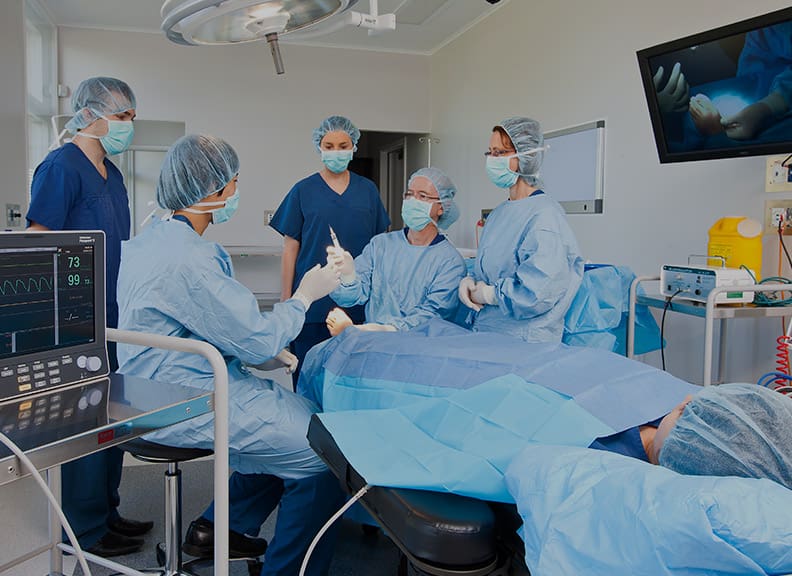
Private Health Insurance: Why Many Filipinas Buy It Anyway
Private health insurance in Australia is optional, but recommended for anyone who wants to skip public waiting lists, choose their own doctor, or cover services Medicare ignores especially dental, optical, ambulance, and physio. A basic hospital + extras policy for a single adult starts at $100‑150 per month.
When private insurance makes sense for a Filipina expat
You have young children: Public dental waiting lists can be 12+ months for non‑emergency work. Private extras cover two check‑ups a year.
You need physiotherapy (common for nurses and aged care workers). Medicare pays zero. Private extras reimburse 60‑80%.
You want to avoid this scenario: “My GP says I need a hip replacement. The public wait is 14 months. Private hospital: 3 weeks.”
That is the difference.
The Lifetime Health Cover (LHC) loading – a penalty you must know
If you do not buy private hospital cover by 1 July after your 31st birthday, you pay a 2% loading on top of your premium for every year you delay. The loading stays for 10 years.
Example: A 40‑year‑old Filipina who buys her first policy pays 20% more than a 30‑year‑old for the same cover – for a decade.
Avoid it: Buy a basic hospital policy before you turn 31, even if you don’t think you’ll use it.
Two real policy examples (2026, Melbourne)
| Provider | Product | Hospital cover | Extras (dental/optical/physio) | Monthly premium (single, 30‑35yo) |
|---|---|---|---|---|
| HCF | “Young Futures” | Basic (public hospital only) | $0 excess, 60% back on dental | $98 |
| Bupa | “Silver Plus” | Moderate (private hospital, excludes pregnancy) | 70% back on dental, $200 optical | $148 |
How Your Visa Type Changes Your Healthcare Access
This is where generic travel blogs stop. You will go deeper because you understand the Filipino migration landscape.
| Visa Subclass | Medicare eligible? | Mandatory insurance? | What you actually need |
|---|---|---|---|
| Subclass 189 / 190 (permanent skilled) | ✅ Yes | No, but recommended | Enrol in Medicare immediately. Consider private hospital cover to avoid waitlists. |
| Subclass 482 (TSS / Skills in Demand) – temporary work | ❌ No | ✅ Yes – OVHC required (visa condition 8501) | Overseas Visitor Health Cover (OVHC) . Minimum product must cover GP, hospital, and ambulance. Most Filipina nurses on 482 use Allianz or Bupa OVHC. |
| Subclass 500 (Student) | ❌ No | ✅ Yes – OSHC required | Overseas Student Health Cover (OSHC) . BUPA, Medibank, and AHM are common. Covers GP, limited hospital, and ambulance. |
| Subclass 820/801 (Partner – temporary stage) | 🟨 Sometimes | Varies | If you hold a valid Medicare card through your partner, you are covered. If not, you must maintain private insurance. Do not assume – check the Home Affairs letter. |
OVHC (Overseas Visitor Health Cover): Mandatory health insurance for most temporary work visa holders. It must meet the Department of Home Affairs’ minimum requirements: cover for GP visits, hospital admission, and emergency ambulance. It does not cover pre‑existing conditions for the first 12 months.
OSHC (Overseas Student Health Cover): Same concept, but for student visas. It includes a limited safety net for psychiatric and pregnancy services.
💸 If you are on a Subcclass 482 visa as a nurse or aged care worker, you are already navigating migration paperwork, job contracts, and possibly cross‑border banking needs. Understanding health insurance is step one. Step two is protecting your savings and remittances while you transition. For structured advice on financial transitions (asset protection, cross‑border accounts, remote income), visit CQ.
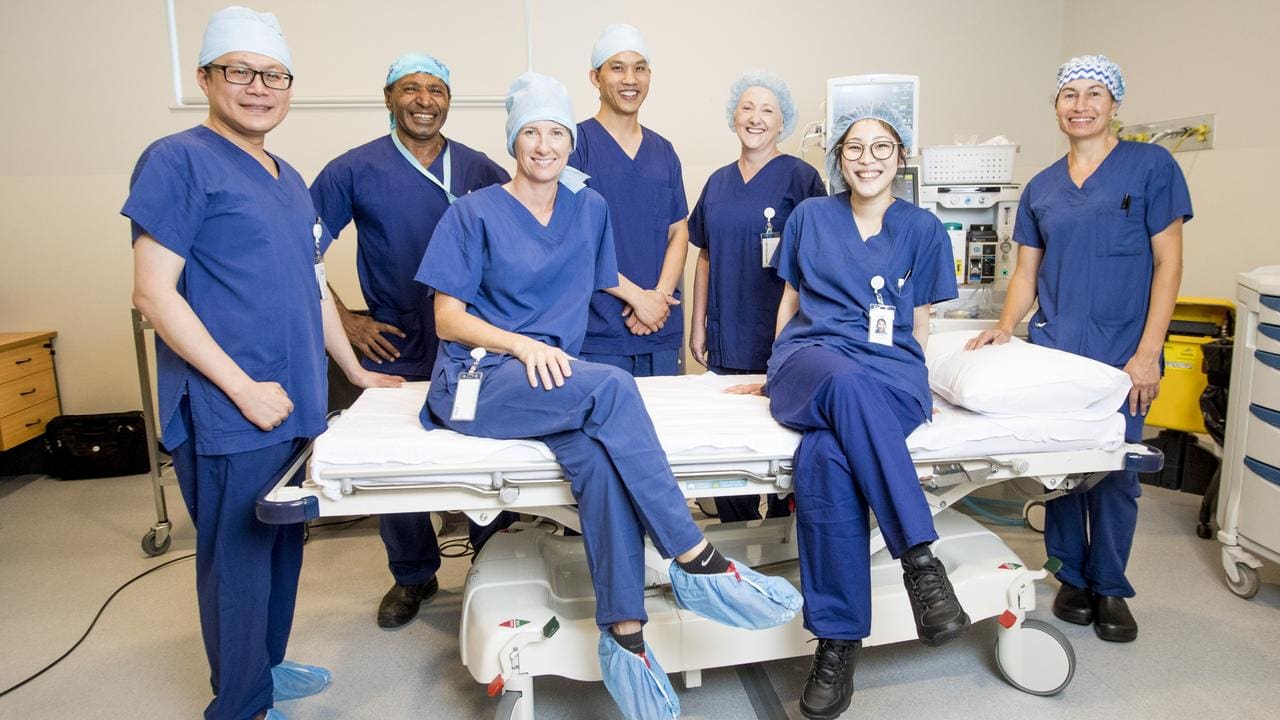
The Filipino Nurse Pathway : AHPRA Registration & New Rules
Filipino nurses wishing to work in Australia must register with AHPRA (Australian Health Practitioner Regulation Agency). The standard route requires passing the NCLEX‑RN (computer exam) and the OSCE (practical exam in Australia). An April 2025 streamlined pathway exempts some nurses from the OSCE but only those with 1,800 hours of recent experience in a “comparable country” (UK, US, Ireland, Canada, New Zealand). The Philippines is not a comparable country. Most Filipino nurses still sit both exams.
The two‑step OBA pathway (Outcome‑Based Assessment)
NCLEX‑RN – Computer exam at a Pearson VUE centre. Cost ~$400 USD.
OSCE – Practical exam in Adelaide, Brisbane, Melbourne, Perth, or Sydney. Cost ~$4,000 AUD. You must demonstrate clinical skills on actors and mannequins.
English requirements: IELTS Academic 7.0 in each band, or OET (Occupational English Test) grade B in each section. No exceptions.
The “comparable jurisdiction” trap
Many Filipino nurses see the April 2025 change and think they can skip the OSCE. You cannot. The regulation explicitly lists “comparable countries” , the Philippines is not one of them. The only shortcut is if you have already registered as a nurse in the UK or Ireland and worked there for at least 18 months.
What to do: Budget for both exams. Expect the full process to take 12‑18 months from application to registration.
The Hidden Barriers: Language, “Pasma” and Family Pressure
English fluency does not equal medical literacy
Many Filipino‑Australians speak excellent conversational English but struggle to describe symptoms to a GP. Why? Because Australian medicine uses direct, depersonalised language:
- “Rate your pain on a scale of 1 to 10”
- “When did you first notice this change in bowel habit?”
- “Do you have a living will?”
In the Philippines, a doctor might ask: “Ano pong nararamdaman ninyo?” That is open, relational, inviting storytelling. The Australian GP’s questions feel like an interrogation. The patient freezes, says “okay lang” (it’s fine), and leaves without proper treatment.
Australian hospitals and clinics offer free professional interpreters over the phone or in person. Many Filipinos do not realize this because they assume asking for language support means their English is ‘not good enough.’ In reality, interpreters are considered normal professional practice, especially during important medical discussions
Folk illness: “Pasmá,” “Bangungot,” and the untranslatable
Pasmá is the belief that sudden cold water on a hot body can cause muscle paralysis or stroke. A Filipino patient may refuse cold drinks after a hot shower. An Australian doctor will see this as “no medical basis.” The patient feels dismissed. The doctor feels confused.
Bangungot refers to sudden death during sleep, attributed to nightmare or supernatural causes. In medical terms, it may be Brugada syndrome or arrhythmia. But a Filipino family will not volunteer that the deceased “ate a heavy rice meal and slept on his stomach.” They will say “bangungot,” and the Australian coroner will record “unknown cause.”
Family as decision‑maker vs patient autonomy
In Philippine culture, healthcare decisions are rarely individual. The eldest child, the ate, or the parents decide. In Australia, the system assumes patient autonomy. You decide, you sign, you consent.
A Filipino daughter may bring her mother to the GP and try to answer all the questions for her. The GP will stop her: “I need to hear from the patient.” The mother, who does not speak fluent English, stays silent. The consultation fails.
Ask for a professional interpreter. Let the interpreter translate the GP’s questions word‑for‑word, and the patient’s answers word‑for‑word. Then, after the consultation, the daughter can clarify any cultural concerns with the GP separately.
Sources & Further Reading:
- SBS Filipino podcast: “Health literacy barriers for Filipino‑Australians” (2023)
- Qualitative study: “Filpino women in rural Tasmania: healthcare access and cultural safety” (Australian Journal of Primary Health, 2021)

How to Actually Navigate the System
Find a GP who speaks Tagalog / Ilocano / Bisaya → Use healthdirect.gov.au search filter “language”.
Download the Medicare app and link it to myGov. You can check your claims and safety net status.
Keep a digital folder of all specialist referrals, test results, and imaging reports. Australian GPs do not share a central patient record. You are responsible for your history.
Know your rights: You can ask for a free professional interpreter for any Medicare‑funded service. Call the Translating and Interpreting Service (TIS) on 131 450.
Emergency? Call 000. Ambulance coverage in Australia varies by state. ONLY Queensland and Tasmania provide state-funded ambulance coverage for residents, while other states may require private insurance, ambulance subscriptions, or out-of-pocket payment depending on eligibility and circumstances. Buy it separately ($50‑100/year) or rely on your private insurance.
Prescriptions: Generic brands are often much cheaper than the brand name. Ask the pharmacist: “Is there a generic version?”
The Psychological Shift Nobody Talks About – Conclusion
The shift from Philippine healthcare to Australia’s system is not a smooth upgrade. It is a collision of two different models of care:
| Philippines | Australia |
|---|---|
| Relational – who you know | Procedural – follow the rule |
| Visible urgency – family at bedside | Quiet efficiency – patient alone |
| Hierarchical – doctor as authority | Consultative – patient as partner |
| Out‑of‑pocket heavy | Subsidised but bureaucratic |
Neither model is broken. They simply prioritise different forms of care.
Many Filipina migrants initially struggle with the emotional distance of Australian healthcare. The waiting rooms are quieter, the process feels stricter, and urgency is filtered through systems rather than personal relationships. Over time, however, many learn that Australian healthcare often expresses care through structure, consistency, and uninterrupted attention rather than visible emotional reassurance.
You may still miss the alaga of a Philippine nurse who calls you ‘ma’am/sir’ and checks on you repeatedly. But you may also begin to appreciate the Australian GP who spends fifteen focused minutes on a single issue without interruptions, queue pressure, or constant ‘sandali lang.’
The next time you sit inside an Australian waiting room, notice how many people arrive alone, speak softly, and wait quietly without demanding attention. What first appears emotionally distant may simply reflect a different philosophy of care
Australia vs Philippines – Healthcare Data Comparison
The gap between the two systems is not just financial. It reflects two different philosophies of care: one built around institutional structure, the other around human improvisation and relational urgency.
| Indicator | Australia | Philippines | Source |
|---|---|---|---|
| Total health expenditure per capita (PPP, USD) | $6,140 | $118.80 | NationMaster / WHO |
| Hospital beds per 1,000 people | 3.8 | 1.0 | NationMaster |
| Out‑of‑pocket spending (% of private health expenditure) | ~10% | >50% | WHO Global Health Expenditure |
| Life expectancy (years) | 83.9 | 71.2 | WHO Statistics 2025 |
| Nurse‑to‑1000 population | 12.6 | 4.2 | WHO Nurses & Midwives |
| Universal health coverage index (0‑100) | 89 | 58 | WHO UHC Service Coverage |
☕ If this kind of independent research matters to you, buy me a coffee. It’s cheaper than therapy, and it helps me decode the next system.
☕ Buy Me a CoffeeQuestions Rarely Ask Out Loud
No. Philippine HMOs and private insurance are not recognised. You need Australian OVHC, OSHC, or Medicare.
Not legally required, but recommended to avoid public waitlists and cover dental/optical/ambulance.
Only in Queensland and Tasmania. Everywhere else, you pay $500‑1,200 unless insured.
Typically 12‑18 months including NCLEX, OSCE, and English exams.
A 2% premium penalty for each year you delay buying private hospital cover after age 31.
Some parts of Australian healthcare only reveal their logic after you’ve lived inside them. If you’ve noticed a quiet system, cultural tension, or migrant reality around healthcare that rarely gets discussed, we’d like to hear it.



12 Responses
This is an incredibly eye-opening read. As a Westerner, I never realized how our quiet, structured healthcare environment could feel so cold or rejecting to someone from a relational culture. Your breakdown of the psychological shift—and the cultural misunderstandings around concepts was deeply fascinating. Thank you for this beautiful perspective shift!
Coming from Germany, our waiting rooms are just as silent and procedural, so I take that for granted. But reading how cold that clinical distance feels to someone from the Philippines was a huge eye-opener. It’s fascinating how different cultures express care. Great piece!
Spot on about the ambulance rules and the “gap fee” shock. Coming from the Philippines, you just assume universal healthcare covers everything, including the ride to the hospital. Finding out an ambulance can cost $1,000 out-of-pocket in states outside QLD and TAS is exactly the kind of reality check expats need. Great, practical guide.
Even a lot of Aussies don’t realise that only Queensland and Tassie cover ambulance trips through state funding. Moving interstate and getting hit with a $1,000 bill is a brutal surprise. This is an excellent, practical reality check for anyone moving here.
The section on the “comparable jurisdiction” trap is a massive public service. So many colleagues back home think the 2025 rule changes mean an automatic shortcut for the Philippines. Budgeting the $4,000 AUD for the OSCE and preparing for the strict communication criteria is the raw truth everyone needs to hear before moving.
I have been browsing online more than three hours today yet I never found any interesting article like yours It is pretty worth enough for me In my view if all website owners and bloggers made good content as you did the internet will be a lot more useful than ever before. You’re exceptional!
I love how you defined the shift from “relational urgency” to “procedural order.” It perfectly captures why the quietness of Western medical settings can feel so isolating or cold to expats who view family presence as a core part of healing. Thanks for articulating this so beautifully!
This is a brilliant take. As an American, our healthcare conversations are always focused on insurance networks and massive hospital bills, so looking at it through a cultural lens is fascinating. The contrast between the chaotic, family-centered warmth of the Philippines and the clinical, quiet efficiency of Australia is so true. It must be a massive shock for Filipino nurses who are used to a deeply relational style of care to adapt to the highly independent, procedural environment of an Australian ward. Such an insightful look at the human side of medicine!
Its like you read my mind! You seem to know so much about this, like you wrote the book in it or something. I think that you can do with a few pics to drive the message home a bit, but other than that, this is fantastic blog. A fantastic read. I’ll certainly be back.
Your writing has a way of resonating with me on a deep level. I appreciate the honesty and authenticity you bring to every post. Thank you for sharing your journey with us.
Your passion for your subject matter shines through in every post. It’s clear that you genuinely care about sharing knowledge and making a positive impact on your readers. Kudos to you!
I real glad to find this site on bing, just what I was looking for : D also bookmarked.