
Australian slang isn’t really about the words. Spend enough time around Australians and you start noticing the same three moves on repeat: words get shortened, big moments get talked down, and insults turn into proof someone likes you. Catch the pattern and the slang stops sounding random, it starts reading like a code for who’s in.
Most guides hand you fifty words and call that understanding. This one looks at what’s actually going on underneath: why the shortening happens, why the insults are affectionate, why the understatement never lets up, and exactly where newcomers trip taking it at face value.
I remember standing in my mother-in-law’s kitchen my first Christmas in an Australian family, completely lost. Someone called the heat outside “a stinker.” Someone else said they were “rooted” after twelve hours on the tools. My husband leaned over and translated half the room for me like he’d done it a hundred times, because he had. That’s the moment slang stopped being a list of words to memorize and started being the actual texture of how that family talked to each other.
Outside Australia, the reputation arrives before the language does. Ask someone who’s never visited and the same three words come up: laid-back, blunt, friendly. What rarely makes it into that picture is how much of the friendliness is delivered through the bluntness, not separate from it. Most outsiders hear the accent and the slang as charm. Fewer clock it as a system actively working to keep everyone, regardless of money or title, sounding like nobody’s better than anyone else.
NOTE: This article has been fully revised from its original version. Everything below reflects current conditions, verified facts, and updated practical details as of this revision.
Table of Contents

What Australian Slang Actually Is
Notice it enough times and Australian slang turns out to run on three habits: aggressive abbreviation, mandatory understatement, and insults used as a sign of closeness instead of hostility. It works less like vocabulary and more like a filter, testing whether someone is relaxed enough to drop formality and self-aware enough not to oversell themselves. Get the words right but miss the habit underneath, and the slang starts working against you instead of for you.
This is not a quirk of a “laid back” culture, the explanation most travel content settles for. It’s a deliberate linguistic mechanism for enforcing egalitarianism in a country that prizes the appearance of social flatness even where real hierarchy exists. The Australian National Dictionary, the country’s authoritative historical record of Australian English, has documented this pattern for decades: new slang doesn’t emerge randomly, it emerges to compress, deflate, or needle anything that risks sounding important.
The Three Moves Behind Almost Every Term
Move 1: Shorten It, Then Soften the Ending
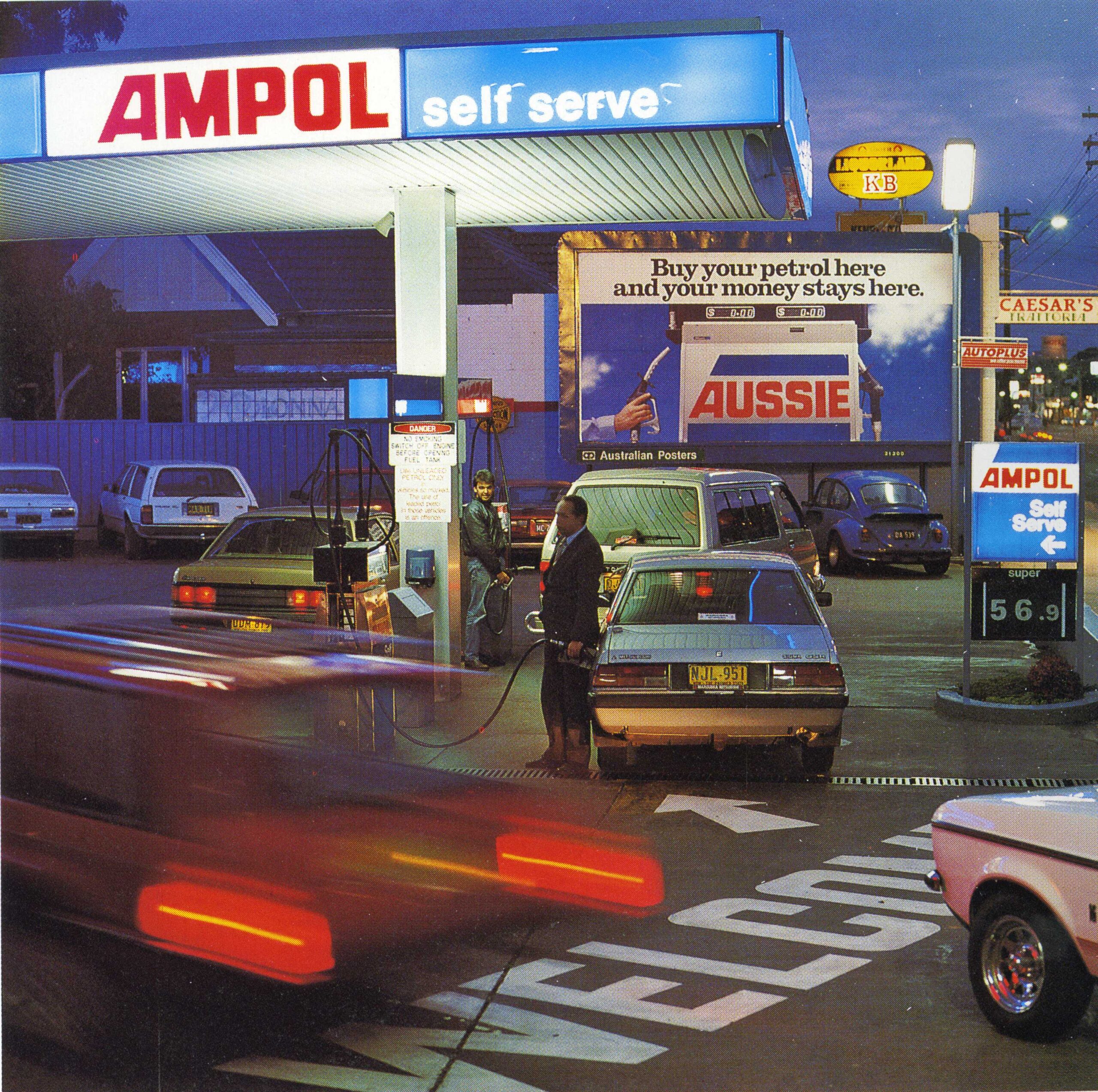
Take a word, cut it down, and finish it with an -o, -ie, or -a sound. Afternoon becomes arvo. Service station becomes servo. Mosquito becomes mozzie. Sunglasses become sunnies. Ambulance officer becomes ambo. Tradesperson becomes tradie. Nobody seems to care how serious the subject is. A petrol stop and an emergency responder get exactly the same treatment.
Move 2: Downplay Everything, Even the Big Stuff
Extreme events get downgraded on arrival. A serious car accident might be described as “a bit of a stack.” Genuine excitement gets filed under “not bad.” A crisis gets met with “she’ll be right.” This isn’t politeness and it isn’t denial, it’s a social agreement that overt enthusiasm or overt alarm reads as performance, and performance reads as untrustworthy.
AUSSIE: “How was the surgery?” “Yeah, not too bad.”
MEANING: The surgery was successful and the person is in genuine relief, but saying so directly would sound like fishing for sympathy or attention.
The trap for newcomers is taking the literal words at face value instead of reading the gap between the words and the actual situation. “Not too bad” sits on a sliding scale from mildly fine to genuinely excellent, and the only way to calibrate it is context, tone, and who’s speaking.
Move 3: The Insult Is the Compliment
Calling a close friend “you idiot,” “you dickhead,” or “you’re an absolute jerk, mate” isn’t an attack, it’s an admission ticket. Mockery directed at you, delivered with the right tone among the right people, signals that you’ve been accepted enough to be teased without anyone worrying you’ll take it personally. The reverse is also true: excessive politeness from someone you’d expect casual treatment from can read as distance, not respect.
The same license extends past insults aimed at people directly. Workplace requests borrow it too: “go harass the admin” doesn’t mean harass anyone, it means push, follow up, don’t let it drop. The aggressive verb is doing urgency, not permission for rudeness. Reading it literally, and hesitating to chase something out of politeness, misses the actual instruction.
"Mate": The Word Doing Five Different Jobs
No single word shows this better than “mate.” Most explanations stop at “it means friend,” which is true and almost beside the point. Watch how it actually gets used and the word is quietly doing at least five different jobs, and which one is active depends entirely on tone, context, and who’s speaking.
As a genuine term of affection, used between close friends, it signals real closeness, often substituting for a first name. As a greeting to a total stranger, it functions as a neutral, low-commitment way to open an interaction without the formality of “sir” or the presumption of a first name you don’t have. As a de-escalation tool, dropped into a tense exchange (“settle down, mate”), it signals “I’m not your enemy” while still asserting a boundary. As a warning, the same word, delivered flatter and with a harder edge, can precede a direct confrontation, the linguistic equivalent of a raised hand. As workplace shorthand, it flattens the address between a junior staff member and a senior one without erasing the actual reporting line underneath.
How You Can Actually Tell the Difference
Newcomers consistently ask some version of the same question: how do you actually tell the difference between an insult that’s affection and an insult that’s hostility, in the moment, without years of immersion to calibrate against? Three signals do most of the work.
Audience. Banter happens in front of others or within an established one-on-one relationship. A stranger insulting you with no shared context, no group present, and no prior relationship is far more likely to be genuinely hostile.
Reciprocity. Real banter runs in both directions over time. If only one person is dishing it out and the other never gets to return it, the “joke” framing is doing cover work for something else.
Tone stability. Affectionate insults are usually delivered with a flat, unbothered tone, often immediately followed by a normal, friendly continuation of the conversation. A shift in volume, a pause waiting for a reaction, or a tone that doesn’t relax afterward are all signs the line has actually been crossed rather than played with.

A Working Glossary, Organized by What the Word Actually Does
Alphabetical glossaries are easy to scan and useless for understanding function. Below, terms are grouped by the social job they perform, with the trap most newcomers fall into noted for each category.
| Term | Literal Meaning | What It Actually Signals |
|---|---|---|
| Righto | Okay, alright | Acknowledges an instruction or plan with zero deference attached; agreement without performance |
| No drama | No problem | Sibling of “no worries,” slightly more pointed: an explicit signal that a request wasn’t inconvenient enough to comment on further |
| Crack on | Get moving, continue | A start-command that shuts down hesitation; implies the conversation about whether to proceed is over |
| Knock off | Finish work for the day | Marks a clean boundary between work time and personal time, used regardless of industry or seniority |
| That’s rubbish | That’s not true, that’s nonsense | A direct rejection of a claim delivered flatly enough that it rarely reads as an attack on the person making it |
| Talk shit | To say untrue or exaggerated things, or trash-talk | Runs the same tone-dependent range as insults do: teasing among friends, genuine criticism when the tone shifts |
| Fuckwit | A deeply foolish or incompetent person | Sits outside the affectionate range that covers “dickhead” or “drongo,” this one skews toward real contempt more reliably than the milder insults |
| Fair dinkum | Genuine, honest, true | Used to mark sincerity in a culture suspicious of overstatement, often deployed when someone suspects they’re not being believed |
| Reckon | I think / I suppose | Softens an opinion so it doesn’t sound like a declaration, common even when someone is completely certain |
| No worries | No problem | Functions as “you’re welcome,” “that’s fine,” and “don’t mention it” simultaneously; refusing to accept it gracefully (over-thanking) can feel awkward |
| She’ll be right | It will be fine | A pressure-release phrase used to downgrade anxiety in others, not always a statement of fact |
| Having a go | Making a genuine attempt | Effort is valued over outcome; “at least they had a go” can excuse a poor result entirely |
| Chuck a sickie | Take an unscheduled day off work, often when not actually sick | Tolerated within limits; doing it too often or too obviously breaks the unspoken quota |
| Flat out like a lizard drinking | Extremely busy | Exaggerated imagery used precisely because direct statements of busyness can sound like a complaint or a boast |
| Bogan | A person seen as unsophisticated, often associated with working-class markers | Can be self-applied affectionately or used as a class-coded insult; tone determines which |
| Drongo / galah | A foolish or clumsy person | Mild, usually affectionate; used on friends far more than strangers |
| Sledging | Trash talk, usually in sport | A sanctioned, almost ritualized form of insult exchange, governed by unwritten limits both sides understand |
| Esky | An insulated cooler box | Genericized brand name, near-universal across the country regardless of actual manufacturer |
| Brekkie / barbie / snag | Breakfast / barbecue / sausage | Domestic, everyday diminutives, signal comfort and informality rather than any deeper meaning |
| Deadset | Genuinely, seriously | An intensifier used to flag that, unusually, the speaker actually means exactly what they’re saying |
| Knackered | Exhausted | Acceptable to say plainly; tiredness is one of the few states Australians will admit to without deflection |
| Dickhead | A foolish or contemptible person | Runs the same range as “idiot” or “drongo,” delivered among friends it’s affection, delivered flatly at a stranger it’s a real insult, tone is the only differentiator |
| Fruit loop | An eccentric or slightly unhinged person | Marks someone’s behaviour as odd without real judgement, closer to fond exasperation than criticism |
| Bloody hell | An exclamation of surprise, frustration, or emphasis | “Bloody” is one of the few intensifiers considered mild enough for polite company; near-universal across class and context |
| F**k / f**kin’ | Profanity, used as an intensifier | Semantic content is close to zero, the job is emphasis, not meaning; shows up across nearly every social register including some professional ones |
| F**k it | An expression of resigned dismissal | Functions as decision-making shorthand: abandoning caution or a plan in favour of just proceeding |
| Woop woop / the back of Bourke | A remote, far away place | Used to describe geographic distance and, by extension, social or cultural distance from “the action” |

Where Foreigners Get It Wrong
The mistakes that matter aren’t vocabulary mistakes, they’re misreads: wrong tone, wrong timing, or catching the pattern in some situations and missing it in others. Five patterns account for most of the friction newcomers report.
Taking irony at face value. When a delayed flight or a botched order gets met with “yeah, that’s just great,” the literal words and the actual meaning are opposites. Responding to the literal version, with sympathy or agreement, signals that the irony wasn’t caught, which is its own small social marker.
Treating banter-insults as real insults. Responding to “ya drongo” with visible hurt, a formal correction, or an explanation of why that’s not appropriate doesn’t read as setting a boundary. It reads as not understanding the game, which can quietly end the banter rather than earn respect for raising a concern.
Overusing slang as a non-native speaker. This is the trap that’s almost never mentioned in vocabulary lists. Slang used sparingly and accurately signals comfort and integration. Slang used constantly and slightly off, peppering every sentence with terms picked up from a list, reads as performance, the linguistic equivalent of trying too hard. Restraint earns more credibility than coverage.
Mistaking workplace casualness for flat hierarchy. Swearing in front of a manager or joking with a boss doesn’t mean the actual reporting structure or decision-making authority has disappeared. The casual register operates on top of a real hierarchy, it doesn’t replace it. Newcomers who read casual speech as an invitation to bypass normal professional boundaries usually misjudge where the actual lines sit.
Assuming heavy slang use signals lower intelligence or education. This is one of the more persistent misreadings among newcomers from cultures where formal register is tied closely to perceived competence. In Australia, code-switching into heavy slang, even among highly educated professionals, is often a deliberate signal of comfort and trust rather than a default register limitation. The same person who speaks in dense slang with friends will frequently switch to precise, formal English in a negotiation or a clinical setting without missing a beat. Mistaking the casual register for the speaker’s ceiling rather than a choice is a common and avoidable error.
The Psychology Underneath: Why a Wealthy, Comfortable Country Talks Like It's Broke

Regional and Generational Variation
Slang density and style shift by region and generation, though the underlying pattern (compression, understatement, banter-as-affection) holds nationally. Rural and regional areas tend to lean harder on traditional terms, “fair dinkum,” “reckon,” “having a go,” while major cities show faster turnover and more overlap with global internet slang among younger speakers.
It’s worth separating genuinely Australian-origin slang from generic internet English that happens to be used by young Australians, terms like “lit” or “FOMO” are global, not national, and don’t carry the same cultural function described in this article. The terms covered here are specifically the ones that emerged from, and continue to reinforce, the Australian social code: compression, deflation, and mateship through mockery.
Frequently Asked Questions
The core grammar (compression, understatement, banter) is consistent nationwide, but density and specific terms vary. Regional and rural areas generally use more traditional slang more frequently than capital cities, where speech can shift closer to standard English depending on context.
Used selectively and accurately, no. Overused or mistimed, it can read as either trying too hard or misjudging the room. The safest approach for newcomers is to listen for which terms colleagues in a given workplace already use comfortably, then mirror that specific register rather than importing terms from outside it.
Mild swearing is common and often not considered offensive in many Australian workplaces, particularly trades, hospitality, and informal office cultures. It still operates inside boundaries tied to seniority, context, and relationship, and it is not a universal pass; some industries and workplaces remain formal.
No fixed pattern, it’s contingent on three things: industry, geography, and how much someone’s identity is tied to signaling class mobility. Trades and hospitality retain slang density at any seniority, formality isn’t the currency there. Corporate and executive tracks compress it faster, since formality reads as status. Rural and regional Australia doesn’t code-switch the way metro professional circles do, age matters less than location. And some people shed slang deliberately as they climb, using it as proof of distance travelled, while others keep it on purpose, treating it as loyalty to where they started. What holds constant across all of that isn’t the vocabulary, it’s the underlying habit: deflection, understatement, refusing to overclaim. That survives even where the surface slang thins out.
Mirroring doesn’t buy invisibility, that’s the wrong target. Delivery and accent will mark a newcomer regardless of whether the word itself was used correctly. The signal that actually matters is how the room responds to the attempt: laughter and an unprompted explanation is inclusion, the same mechanism that governs friendly insults, being corrected and teased is what closeness looks like, not rejection. A flat correction or silence is the rarer version worth reading as a boundary. Safety isn’t measured by sounding native. It’s measured by whether the miss gets treated as endearing.
Code-switching, not a change in identity. Many Australians move fluidly between heavy slang with friends and precise, formal English in negotiations, healthcare, or international business, often within the same hour. The casual register is a choice tied to context and trust, not a fixed limit on the speaker’s vocabulary or capability.
Every culture runs some version of a status-leveling system. What makes this one unusual is that it’s almost entirely verbal, and unpaid. No institution enforces it. Nobody’s job is to catch someone getting too big for themselves.
The correction happens peer to peer, in real time, at zero administrative cost, every time someone reaches for a diminutive instead of a title, or downplays a win instead of naming it outright. That’s the actual mechanism: distributed enforcement, no central authority required, because the language itself does the policing. Hear it that way once and the slang stops looking like colour. It starts looking like infrastructure. Not decoration on top of the culture, one of its load-bearing walls.