
Heatstroke in the Philippines is becoming a serious concern for tourists, yet many continue to underestimate the danger. They arrive expecting warm sunshine and beautiful beaches, carrying assumptions about heat that were formed in very different climates. What they encounter is a combination of high temperature and persistent humidity that behaves differently from the dry heat many are used to. The result is a risk that builds quietly and can escalate faster than most visitors anticipate.
The misunderstanding is not simply a matter of carelessness. It stems from a deeper perceptual gap. Travellers judge the situation based on temperature numbers alone, believing that if the thermometer does not show extreme readings, the danger must also be moderate. In the Philippines, this assumption breaks down because humidity dramatically changes how the body experiences and responds to heat.
NOTE: This article was just updated in 2026 from its original version. All information below reflects current conditions, verified facts, and updated practical details as of this revision.
Table of Contents
Why Travellers Underestimate Heatstroke in the Philippines
Most tourists underestimate heatstroke in the Philippines because their previous experiences with heat do not prepare them for this environment. They have felt hot before, perhaps during summer in Australia, Europe, or North America and assume they know how their body will react. They pack sunscreen, wear light clothing, and tell themselves they will simply drink more water. This confidence feels reasonable until the reality of tropical humidity sets in.
The core issue is one of perception versus physiology. A temperature reading of 34°C or 35°C may not sound alarming. What travellers often fail to account for is that high humidity prevents efficient sweating and cooling. The heat index, which reflects how the body actually experiences the temperature, can reach 45°C or higher even when the thermometer shows less. This creates a deceptive comfort at first. The day feels manageable, even pleasant, while the body’s core temperature is already rising.
Many visitors also bring behavioural patterns that increase their vulnerability. They schedule full days of outdoor activity during peak heat hours, move between attractions without sufficient rest in shaded or air-conditioned spaces, and push through early signs of fatigue because they do not recognise them as warnings. These patterns are not reckless in themselves. They are simply the result of applying expectations from drier or milder climates to a very different tropical reality.
READ: Types of Foreign working visa and work permits in the Philippines

What’s Actually Happening with Heatstroke in the Philippines
When the body overheats in high humidity, its primary cooling mechanism; evaporation of sweat becomes much less effective. Sweat forms on the skin but does not evaporate quickly, so heat is not removed efficiently. At the same time, the heart works harder to circulate blood to the skin in an attempt to release heat. This combination places increasing stress on the cardiovascular system and major organs.
Heatstroke in the Philippines is not a sudden event for most people. It develops gradually through stages that are easy to dismiss if you are not familiar with them. Early fatigue and dizziness can be mistaken for jet lag or normal tiredness from travel. As the condition progresses, the body’s ability to regulate temperature fails. Core temperature rises rapidly, leading to confusion, nausea, and eventually more severe neurological effects.
The environment plays a significant role in accelerating this process. Urban areas with concrete and limited shade radiate additional heat. Popular tourist spots often have long stretches with little protection from direct sun. Even activities that seem relaxed, walking along a beach, waiting for a boat, or exploring outdoor attractions can become risky when combined with high humidity and sustained exposure.
Check PAGASA’s heat index updates and take extra precautions.
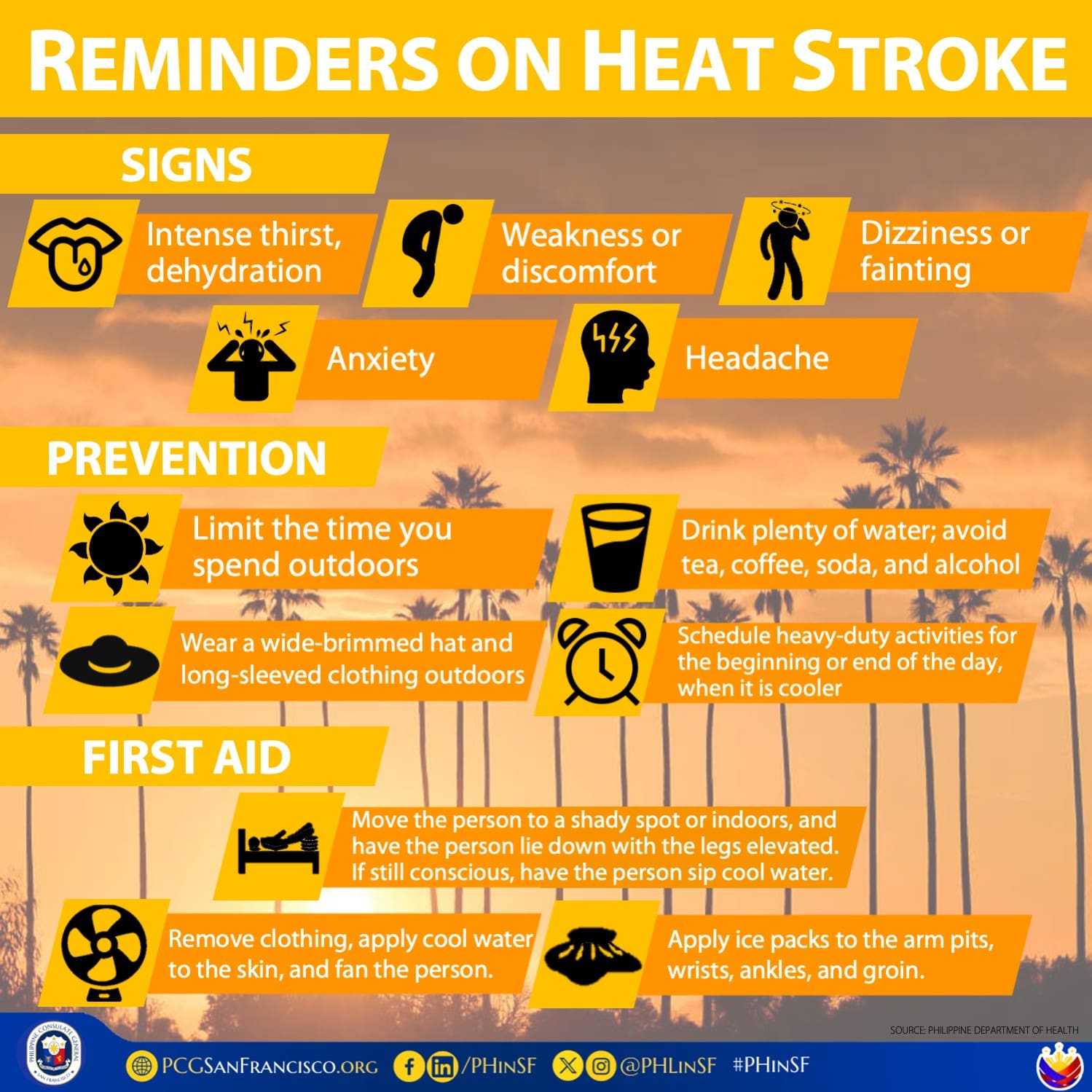
Behavioural Patterns That Increase the Risk
Tourists frequently follow patterns that unintentionally heighten their exposure to heatstroke in the Philippines. They tend to be more active during the hottest parts of the day because that is when they want to see the sights. They underestimate how much fluid they need and often replace water with coffee, alcohol, or sweetened drinks that do not hydrate effectively. They wear clothing or carry bags that trap heat against the body without realising it.
Another common pattern is the reluctance to slow down or seek shade. Many visitors feel pressure to make the most of their limited time and continue their plans even when they start feeling unwell. They interpret early symptoms as minor inconveniences rather than signals that the body is struggling to cope. This overconfidence is particularly common among travellers from cooler climates who have less experience with prolonged humid heat.
These behaviours are understandable. Most people do not come to the Philippines expecting their dream vacation to carry a hidden physiological threat. The gap between expectation and reality is what makes the risk so easy to underestimate.
How the Environment Makes the Risk Worse
The physical setting in the Philippines adds layers of risk that are not immediately obvious. Many popular destinations have limited natural shade during peak hours. Concrete surfaces and crowded streets reflect and radiate heat upward. Public transport and waiting areas are often not air-conditioned, turning routine movement into sustained exposure.
Even places celebrated for their beauty: islands, beaches, and scenic viewpoints can become high-risk zones when visitors spend long periods outdoors without adequate protection. The combination of direct sunlight, high humidity, and physical activity creates conditions where the body’s cooling system is under constant pressure.
Infrastructure plays a role as well. While shade structures and cooling options exist in some areas, they are not always sufficient for the volume of tourism the country now receives. The environment does not announce its danger loudly. It works quietly, raising core temperature over hours until the effects become difficult to ignore.
What Changes When You Stop Underestimating Heatstroke in the Philippines
The shift happens when travellers stop treating heatstroke in the Philippines as something that only happens to other people. They begin to respect the environment instead of trying to push through it. They adjust their pacing, seek shade more deliberately, and listen to their bodies earlier rather than later.
This does not mean living in fear or cancelling plans. It means developing a more accurate perception of risk. Understanding that the heat here works differently allows for smarter decisions — starting activities earlier in the day, taking proper breaks, staying hydrated with water rather than caffeine or alcohol, and recognising that feeling “fine” does not always mean everything is fine.
The real insight is this: heatstroke in the Philippines is not random bad luck. It is the predictable result of underestimating a climate that demands more caution than many visitors are used to giving.
Most tourists continue to treat the Philippines like any other warm destination. Those who take the time to understand the unique interaction between heat, humidity, and human physiology move through the country with greater awareness and safety. That awareness does not diminish the experience. It simply makes it more sustainable.
ALSO READ: Best Time to Visit Philippines



9 Responses
A brief yet thoughtful analysis that enriches the conversation.
We are so used to drinking water when we’re thirsty. But in this tropical humidity, you dehydrate way faster than your brain registers it. I didn’t realize I needed to chug water constantly until I was dizzy and nauseous.
Somebody essentially lend a hand to make significantly articles Id state That is the very first time I frequented your website page and up to now I surprised with the research you made to make this actual submit amazing Wonderful task
Your blog is a constant source of inspiration for me. Your passion for your subject matter shines through in every post, and it’s clear that you genuinely care about making a positive impact on your readers.
Ive read several just right stuff here Certainly price bookmarking for revisiting I wonder how a lot effort you place to create this kind of great informative website
helloI like your writing very so much proportion we keep up a correspondence extra approximately your post on AOL I need an expert in this space to unravel my problem May be that is you Taking a look forward to see you
Usually I do not read article on blogs however I would like to say that this writeup very compelled me to take a look at and do so Your writing taste has been amazed me Thanks quite nice post
Your writing has a way of resonating with me on a deep level. I appreciate the honesty and authenticity you bring to every post. Thank you for sharing your journey with us.
Your blog is a beacon of light in the often murky waters of online content. Your thoughtful analysis and insightful commentary never fail to leave a lasting impression. Keep up the amazing work!